 blog
7 Affordable Kitchen Backsplash Alternatives to Tile
Last Updated: October 25, 2026
Quick Summary
The most affordable kitchen backsplash alternatives to tile are painted walls, peel-and-stick panels, and moisture-rated wallpaper, with installed costs of $3 to $12 per square foot. Beadboard, metal panels, and brick veneer cost more up front but last 10 to 20 years, so compare options by cost per year of service.
- A painted kitchen backsplash costs $3 to $7 per square foot installed and lasts 2 to 5 years.
- Peel-and-stick backsplash panels run $4 to $12 per square foot installed and suit renters.
- Beadboard panels cost $8 to $16 per square foot installed and last 10 or more years.
- Brick veneer and metal panels belong behind the cooktop because they tolerate heat and grease.
- Wallpaper and chalkboard paint belong only on low-splash walls away from the sink and stove.
Table of Contents
- Why Homeowners Look for Affordable Kitchen Backsplash Alternatives to Tile
- Side-by-Side Cost Comparison of Tile Alternatives
- Peel-and-Stick Backsplash: The Rental-Friendly Option
- Painted Kitchen Backsplash: Low Cost, High Prep
- Backsplash Panels for Kitchens: Beadboard, Brick, and Metal
- Easy-to-Clean Backsplash Materials for Busy Kitchens
- Matching the Material to the Wall: Location, Grease, and Moisture
- Planning Your Backsplash Upgrade with Handy Gonzo's Home Improvements
- Frequently Asked Questions
Why Homeowners Look for Affordable Kitchen Backsplash Alternatives to Tile
Tile is the default choice for a kitchen wall, but it is rarely the cheap one. Between the tile itself, thinset, grout, spacers, and the labor to set it all level, a tiled backsplash can swallow a renovation budget before the cabinets are even hung. That is why so many homeowners start hunting for affordable kitchen backsplash alternatives to tile. At Handy Gonzo's Home Improvements, we have spent more than three and a half decades installing and repairing kitchen surfaces across the DFW area.
The trade-off is real, though. Every alternative saves money somewhere, and that saving usually shows up as a shorter lifespan, more prep work, or a material that dislikes heat and steam. Below, we break down the realistic options, what each one costs to install, and where each one actually belongs in a working kitchen.
Side-by-Side Cost Comparison of Tile Alternatives
Most backsplash roundups tell you a material is "budget-friendly" and stop there. That is not a number you can take to a contractor. The table below converts each option into installed cost per square foot and a sample total for a typical 30-square-foot backsplash, materials and labor combined.
| Option | Material Cost (per sq ft) | Installed Cost (per sq ft) | Sample Total (30 sq ft) | Expected Lifespan |
|---|---|---|---|---|
| Painted wall (kitchen-rated enamel) | $1-$3 | $3-$7 | $90-$210 | 2-5 years |
| Peel-and-stick panels or tile sheets | $2-$8 | $4-$12 | $120-$360 | 3-7 years |
| Wallpaper (moisture-rated, low-splash wall only) | $2-$6 | $4-$10 | $120-$300 | 2-4 years |
| Beadboard panels (painted, sealed) | $3-$8 | $8-$16 | $240-$480 | 10+ years |
| Chalkboard paint | $2-$4 | $4-$8 | $120-$240 | 2-5 years |
| Metal panels (stainless or aluminum) | $8-$20 | $15-$35 | $450-$1,050 | 15+ years |
| Brick veneer | $6-$15 | $15-$30 | $450-$900 | 20+ years |
| Ceramic tile (baseline for comparison) | $3-$10 | $15-$40 | $450-$1,200 | 20+ years |
A few patterns fall out of those numbers. Paint and peel-and-stick win on day-one price but lose on cost per year of service: a $150 painted wall replaced every four years costs about $38 per year, while a $360 beadboard install that lasts 15 years costs about $24 per year.
Labor is the swing factor. Paint and peel-and-stick are genuinely DIY-able for most homeowners, which pulls the installed cost down toward the material price. Beadboard needs accurate cuts around outlets and corners.
Sample totals above are planning ranges, not quotes. Wall condition, local labor rates, and outlet count move the number more than the material choice does.
Peel-and-Stick Backsplash: The Rental-Friendly Option
A peel-and-stick backsplash is a self-adhesive panel or tile sheet that presses onto a clean, primed wall without thinset or grout. It is the fastest way to change a kitchen wall, and it comes off with modest effort, which makes it the obvious pick for renters and landlords.
The catch is surface prep. Peel-and-stick needs a smooth, dust-free, fully cured wall. Fresh drywall compound, greasy drywall, or a textured surface will cause edges to lift within months. Clean the wall, sand any ridges, prime it, and let it dry completely before you peel the backing.
How Peel-and-Stick Holds Up Near a Stove
Directly behind a cooktop, peel-and-stick is the weakest link in this list. Adhesive softens with sustained heat, and grease finds every lifted edge. Keep peel-and-stick at least a few feet from the burners, or choose a heat-rated panel for the zone behind the stove. In a rental kitchen with a microwave and a kettle, it holds up fine. Behind a gas range, expect to replace it.
Painted Kitchen Backsplash: Low Cost, High Prep
A painted kitchen backsplash is exactly what it sounds like: a scrubbable, moisture-rated paint rolled onto the wall above the counter. It is the least expensive option on this list by a wide margin, and it lets you match any color in the room.
The prep is where the cost hides. Paint needs a smooth wall, and most kitchen walls behind counters are not smooth. Patches, old adhesive, and uneven drywall all telegraph through a glossy finish. You also need a paint rated for kitchens, typically a semi-gloss or satin enamel that resists moisture and wipes clean. For more on interior painting finishes and techniques, see our services page.
Where paint fails is heat and scrubbing. Behind a stove, steam and grease break down the film faster than anywhere else in the house. Plan on touching up the splash zone every couple of years.
Backsplash Panels for Kitchens: Beadboard, Brick, and Metal
Backsplash panels for kitchens cover a wide range: beadboard, brick veneer, and metal sheets all install as panels rather than individual tiles, which cuts labor dramatically. One panel goes up in the time it takes to set a row of tile.
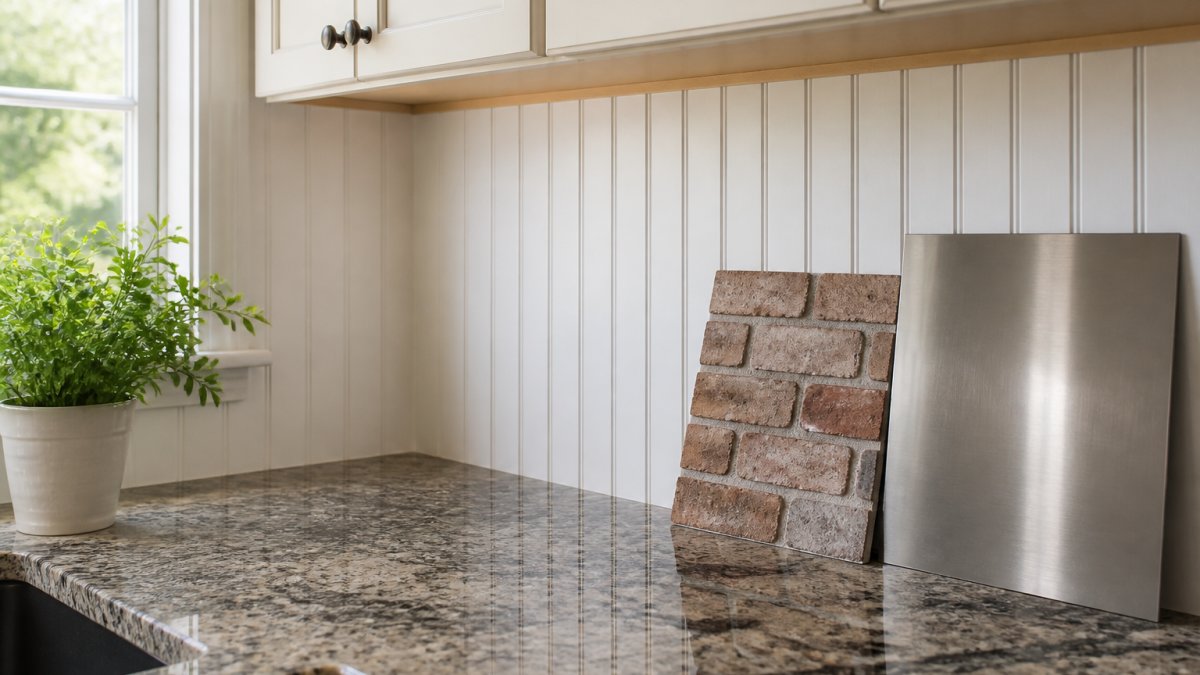
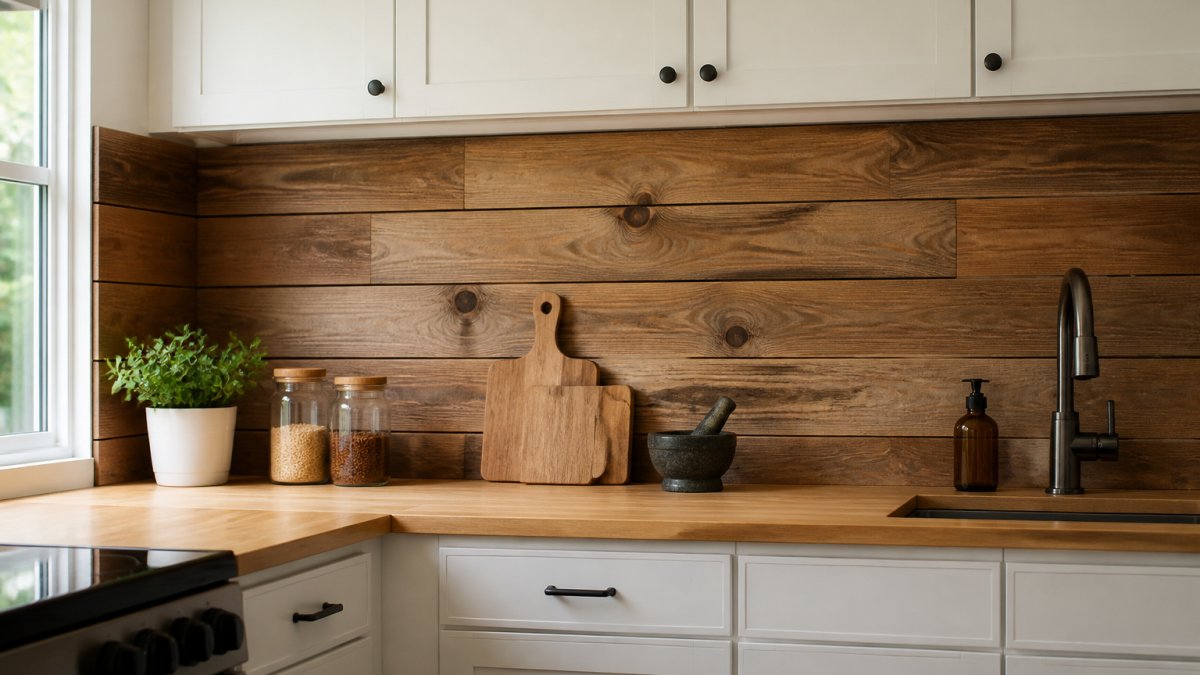
Beadboard is the traditional pick. It is affordable, hides wall imperfections, and suits farmhouse and cottage kitchens. The weakness is water: keep it out of the sink splash zone unless it is properly sealed and painted.
Brick Veneer and Metal: Heat and Moisture Considerations
Brick veneer handles heat better than almost anything else on this list, which makes it a strong choice directly behind a range. It is heavy, though, and needs a solid backing and the right adhesive. Metal panels, usually stainless or aluminum, resist grease and wipe clean in seconds, but they show every fingerprint and dent. Both materials cost more than paint or peel-and-stick, and both last far longer.
Easy-to-Clean Backsplash Materials for Busy Kitchens
The best easy-to-clean backsplash materials share one trait: no grout lines to scrub. Grout is where grease and stains collect, and it is the main reason tile becomes a chore. Smooth panels, sealed metal, and glossy painted surfaces all wipe down with a damp cloth and a mild degreaser.
For a busy family kitchen, rank the options by cleaning effort:
- Metal panels: wipe and done, no seams to scrub
- Painted enamel: easy until the finish dulls, then it traps residue
- Beadboard, sealed: easy on the flat face, fussy in the grooves
- Brick veneer: the texture holds grease, so it needs a stiff brush
- Peel-and-stick: easy to clean but quick to lift at the edges
Matching the Material to the Wall: Location, Grease, and Moisture
The mistake we see most often is choosing a material for looks and ignoring where it sits. A kitchen wall is not one surface. It is at least three zones, and each one asks different things of a backsplash.
| Material | Behind Cooktop | Behind Sink | Low-Splash Wall | Key Limitation |
|---|---|---|---|---|
| Painted enamel | Not recommended | Acceptable if moisture-rated | Good | Film breaks down under sustained heat and scrubbing |
| Peel-and-stick | Not recommended | Acceptable away from direct spray | Good | Adhesive softens with heat; edges lift with grease |
| Wallpaper | No | No | Good | Steam and grease stain and peel the paper |
| Beadboard (sealed) | Acceptable with heat-rated finish | Acceptable if sealed | Good | Grooves trap moisture if the seal fails |
| Chalkboard paint | No | No | Good | Not scrubbable; erases poorly when greasy |
| Metal panels | Good | Good | Good | Fingerprints and dents show; check heat rating |
| Brick veneer | Good | Acceptable if sealed | Good | Texture holds grease; heavy substrate required |
Behind the cooktop, heat and grease rule. Brick veneer and metal panels belong here because they tolerate sustained warmth and wipe clean.
Behind the sink, moisture rules. Sealed beadboard, metal, and moisture-rated paint work; unsealed wood and wallpaper do not. The splash zone extends roughly 12 to 18 inches above the counter and about a foot to each side of the basin.
On the open wall away from both, almost anything works, including wallpaper and chalkboard paint, which are decorative rather than protective. That is where the cheap options earn their place.
Two more checks before you commit. First, confirm the product's fire rating and any clearance the manufacturer specifies near a range; local code and the installation instructions govern, and a heat-rated panel is not the same as a non-combustible one. Second, check the substrate. Brick veneer and metal panels need a solid backing, and peel-and-stick needs a smooth, fully cured, primed wall. A material that is right for the zone still fails if the wall behind it is wrong.
Planning Your Backsplash Upgrade with Handy Gonzo's Home Improvements
The right material depends on your budget, your wall condition, and how much heat and moisture the surface will face. If you are ready to move past DIY patches, our kitchen remodeling team can walk you through the options, and our kitchen remodeling services cover installation from prep to final seal. For smaller jobs like patching, prepping, or hanging panels, you can book handyman services, and when you are ready to talk numbers, our contact page is the fastest way to request a quote.
Every material on this list has a place. The trick is matching it to the wall it sits on, not to a photo you saved.
Frequently Asked Questions
Which kitchen backsplash alternatives are the most affordable?
Peel-and-stick sheets and painted surfaces usually cost the least up front because you skip tile, grout, and much of the labor. Backsplash panels for kitchens, such as beadboard or thin brick veneer, land in the middle once you add adhesive and trim. Metal sheets cost more per square foot but install quickly. Get a written quote that separates materials, labor, and timeline so you can compare total installed cost, not just the sticker price on a box.
Are peel-and-stick backsplash panels durable near a stove?
Peel-and-stick backsplash products hold up well in dry zones, but heat and grease are the weak points. Behind a cooktop, adhesive can soften and edges can lift over time. Keep peel-and-stick at least a few feet from the burners, or choose a heat-resistant panel or metal sheet directly behind the stove. Wipe grease promptly with a mild cleaner, and press down any lifted corner before it spreads. In rental units, removable versions make sense because they come off without damaging drywall.
What is the easiest backsplash material to clean?
Smooth, non-porous surfaces win: painted waterproof finishes, metal panels, and quality peel-and-stick vinyl wipe clean with a damp cloth. Beadboard and brick have grooves and texture that trap grease and need a brush. Grout lines on traditional tile are the real cleaning headache, which is why many homeowners switch. Whatever you pick, seal porous materials and clean splashes near the stove weekly rather than waiting for a deep clean.
Can I install an affordable backsplash myself, or should I hire a pro?
Peel-and-stick and painted kitchen backsplash projects are realistic weekend DIY jobs if your wall is flat and clean. Panels and brick veneer need accurate cuts around outlets and a level first row, which trips up beginners. Surface preparation decides the outcome: sand, patch, and prime before anything goes up. If your wall is uneven or you want a seamless finish, a crew that handles prep and installation in one visit usually saves rework.
Choosing a backsplash should not feel like a gamble. Handy Gonzo's Home Improvements brings 35+ years of construction knowledge to every kitchen, with digital quoting that breaks down materials, labor, and timeline before work begins, a dedicated crew that stays on your job from start to finish, and clean job sites kept tidy daily so your home stays livable. Get started with Handy Gonzo's Home Improvements and finish your kitchen with a backsplash built for the way you actually cook.