 comparison
Bathroom Remodel Contractors vs DIY in DFW: Costs
Table of Contents
- Bathroom Remodel Contractors vs DIY: The Real DFW Trade-Off
- Quick Comparison: Hiring a Contractor vs Doing It Yourself
- Average Cost of Bathroom Remodel in DFW: What to Expect
- Bathroom Renovation Permit Requirements in Dallas-Fort Worth
- The Hidden Risks of DIY: Where Homeowners Get Burned
- What Professional Bathroom Remodel Contractors Actually Handle
- How to Choose a Bathroom Remodel Contractor in DFW
- Conclusion: Making the Call for Your DFW Bathroom
- Frequently Asked Questions
Last Updated: September 6, 2026
Bathroom Remodel Contractors vs DIY: The Real DFW Trade-Off
Deciding between bathroom remodel contractors vs DIY renovation in DFW is a calculation of time, risk, and the true cost of a mistake.
A full gut renovation of a master bath demands specific trade knowledge in plumbing rough-in, electrical code compliance, waterproofing, and tile installation. A bathroom remodel contractor brings all of those disciplines under one roof, along with liability coverage that protects your home.
DIY mistakes surface years later as subfloor repair needs, ventilation failures, and structural integrity questions. Below, we break down the real costs, the permit landscape, and the specific risks for your DFW home.
Quick Comparison: Hiring a Contractor vs Doing It Yourself
A professional contractor handles project management, subcontractor coordination, scheduling, and material procurement. A DIY approach means you become the general contractor, the laborer, and the quality control department simultaneously.
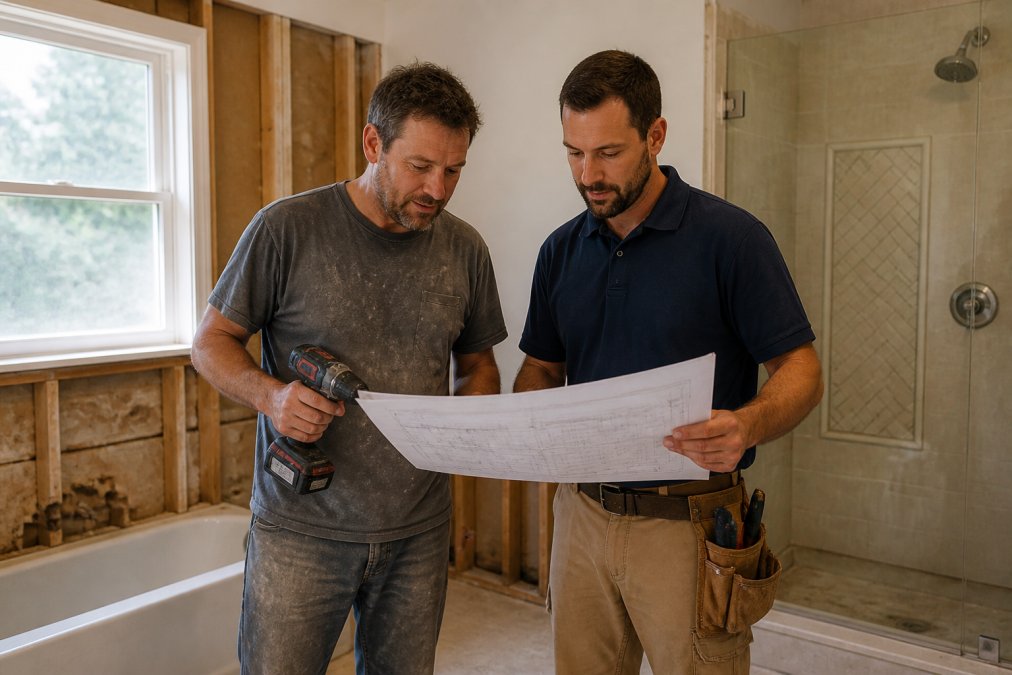
Hiring a bathroom remodel contractor costs more upfront but transfers risk. Doing it yourself saves on labor costs but exposes you to budget overruns, change orders you impose on yourself, and the possibility of paying a professional later to fix what went wrong.
| Factor | Hiring a Contractor | DIY Renovation |
|---|---|---|
| Upfront cost | Higher; includes labor and material markup | Lower; materials only |
| Time commitment | Weeks, mostly hands-off | Months of evenings and weekends |
| Risk exposure | Transferred to contractor | Fully on homeowner |
| Quality control | Professional standards | Depends on your skill |
| Permits and inspections | Contractor handles | Homeowner responsibility |
| Best for | Full gut renovations, master bath remodels | Cosmetic updates, single-fixture swaps |
Average Cost of Bathroom Remodel in DFW: What to Expect
Pricing for a bathroom renovation in DFW varies widely based on scope, square footage, and finish materials, scaling significantly between a cosmetic refresh and a full gut renovation.
The average cost of bathroom remodel in DFW depends heavily on whether you are replacing fixtures in place or moving plumbing lines. A contractor provides a detailed breakdown of these line items, whereas a DIY budget often misses hidden costs like dumpster rental, tool purchases, and permit fees.
For accurate figures, request itemized digital quotes from multiple firms.
The ROI Question: Does a $38,000 Remodel Pay Off in DFW?
While a full gut renovation can recoup a significant portion of its cost at resale, the return is not uniform across all upgrades or all neighborhoods.
In DFW's competitive housing market, real estate agents consistently report that updated bathrooms and kitchens are the top two drivers of buyer interest. A dated bathroom can sit on the market, while a comparable home with a modernized one can attract multiple offers.
Over-improving a home relative to its neighborhood is a common mistake. A luxury spa bathroom in a neighborhood of starter homes will not yield the same return as a solid, mid-range remodel.
The Hidden Cost of DIY: Tools, Materials, and Your Time
The true cost of a DIY bathroom renovation extends far beyond the price of tile and fixtures:
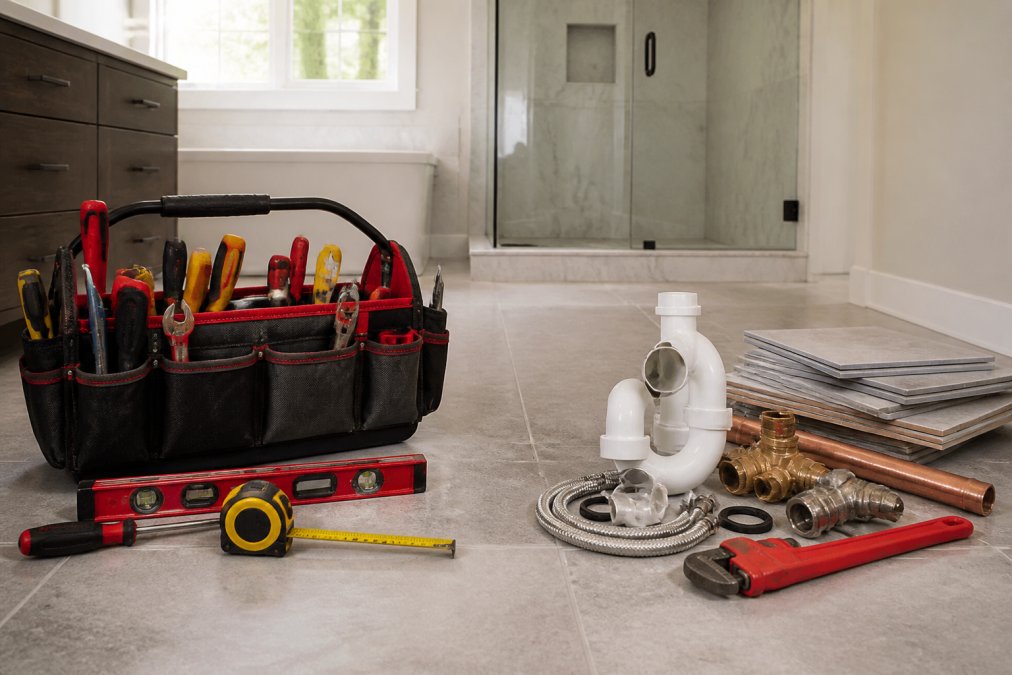
- Tool Purchases: A tile saw, wet saw, specialty drill bits, and a high-quality level can easily add hundreds of dollars to your budget. Renting a tile saw is an option, but it adds scheduling pressure to your project timeline.
- Material Waste: Beginners typically over-order tile and other materials to account for cutting errors. A 10-15% waste factor is standard for professionals, but a DIYer should plan for closer to 20-25% to avoid a second trip to the store and a potential mismatch in dye lots.
- Dumpster Rental: A full gut renovation produces debris that cannot be disposed of in regular trash pickup. A roll-off dumpster rental in the DFW area typically costs between $300 and $500 for a week.
- Permit Fees: Pulling a permit for plumbing and electrical work in Dallas or Fort Worth involves a fee, which varies by the scope of the project and the municipality.
- Opportunity Cost: The most significant hidden cost is your own time. A project that stretches over months of evenings and weekends has a real value, especially if it delays other priorities or requires you to take unpaid time off work.
Cost Breakdown: Where Your Money Goes
To make an informed decision, it helps to understand how a professional contractor allocates your budget. While percentages vary by project, a common pattern for a full gut renovation in DFW is:
- Labor (40-50%): This is the largest line item, covering the skilled trades: plumbing, electrical, drywall, tile setting, and carpentry.
- Materials (30-40%): This includes tile, fixtures, vanity, lighting, and plumbing rough-in supplies.
- Overhead & Profit (10-20%): This covers the contractor's business costs, insurance, and profit margin.
A DIY project eliminates the overhead and profit line item, but it does not eliminate the labor cost. Your labor is free, but it comes at the cost of your time and the risk of errors that may require a professional to correct.
Bathroom Renovation Permit Requirements in Dallas-Fort Worth
Bathroom renovation permit requirements in Dallas-Fort Worth differ by municipality. Most cities, including Dallas and Fort Worth, require permits for plumbing, electrical, or structural changes. Replacing a vanity or painting does not typically trigger a permit, but moving a drain line or adding an outlet does.
The permitting process protects structural integrity and ensures electrical code compliance. A professional contractor knows the local codes and schedules inspections correctly. A DIY homeowner must research their city's requirements, pull the permits, and coordinate with inspectors.
The City of Dallas development services permit guidelines outline which bathroom projects require approval. Homeowners who skip permits risk failed inspections, fines, and complications when selling the home, since unpermitted work often surfaces during the buyer's inspection period.
A City-by-City Guide to DFW Permits
The DFW metroplex is not a single jurisdiction. Each city has its own building codes, fee schedules, and inspection processes. Here is a practical look at what to expect in some of the most common DFW suburbs:
- Dallas: The City of Dallas requires a permit for any project that involves plumbing, electrical, or structural changes. This includes moving a drain line, adding a GFCI outlet, or altering a load-bearing wall. The application can be filed online through the Dallas Development Services portal. Inspections are typically required at rough-in and final stages.
- Fort Worth: Similar to Dallas, Fort Worth requires permits for plumbing and electrical work. The city's development services department handles permit applications. Be prepared for a plan review if your project involves significant structural changes.
- Plano: Plano's building inspection department requires permits for any work that involves plumbing, electrical, or mechanical systems. The city has a detailed online guide for homeowners, and inspections are scheduled through their automated system.
- Richardson: Richardson follows the same general pattern, requiring permits for plumbing and electrical modifications. The city's building inspection division is the point of contact for permit applications.
- Arlington: Arlington requires permits for any bathroom remodel that involves plumbing or electrical work. The city's permit center can provide guidance on the specific requirements for your project.
The DIY Permit Process: A Step-by-Step Reality Check
If you are planning a DIY bathroom renovation, the permit process is your responsibility. Here is what it typically involves:
- Research Your City's Requirements: Visit your city's development services or building inspection website. Look for a homeowner's guide or a list of projects that require permits.
- Prepare Your Documents: You will likely need to submit a detailed description of the work, along with diagrams or plans. Some cities require a licensed engineer or architect to stamp plans for structural changes.
- Submit Your Application: This can often be done online, but some cities still require in-person filing. There is a fee associated with the permit.
- Schedule Inspections: Once the permit is issued, you are responsible for scheduling the required inspections at the correct stages of the project. Failing to call for an inspection before closing up a wall can result in having to tear it back open.
The Cost of Skipping Permits
Unpermitted work can lead to:
- Failed Inspections: If you do pull a permit but fail an inspection, you will be required to correct the issue and pay for a re-inspection.
- Fines: Cities can levy fines for unpermitted work, which can easily exceed the cost of the permit itself.
- Insurance Denials: If unpermitted work causes damage, such as a water leak from faulty plumbing, your homeowner's insurance policy may deny the claim.
- Resale Complications: Unpermitted work often surfaces during a home inspection. A buyer may walk away from the deal or demand a significant price reduction to cover the cost of bringing the work up to code.
A professional contractor handles the entire permit process, from application to inspection scheduling. This is not just a convenience; it is a layer of protection that ensures the work meets code and is documented for future resale.
The Hidden Risks of DIY: Where Homeowners Get Burned
DIY renovation risks extend far beyond aesthetic imperfections. If you injure yourself while working on your home, your health insurance covers medical care, but a contractor carries workers' compensation that protects their crew. If a DIY project causes water damage due to faulty waterproofing, your homeowner's policy may deny the claim because the work was not performed by a licensed professional.
Common DIY Bathroom Renovation Mistakes That Cost Thousands
The most expensive mistakes are about sequence and systems. Installing tile before addressing subfloor repair leads to cracked grout. Failing to waterproof a shower pan causes leaks that damage ceilings below. Incorrect venting leads to moisture buildup and mold behind walls.
DIYers also underestimate the complexity of electrical work. Bathrooms require dedicated circuits and GFCI protection per code. An amateur installation that passes no inspection creates a safety hazard, and the cost to hire a professional to redo it typically exceeds what the DIY effort saved.
DIY also carries a significant opportunity cost. A professional crew working full-time completes the same bathroom renovation in a fraction of the time, keeping the home livable during active construction.
What Professional Bathroom Remodel Contractors Actually Handle
A full-service bathroom remodel contractor manages the entire process from demolition to final finish, coordinating subcontractors, scheduling inspections, and managing material delivery. Project management is the core value a contractor provides.
In Texas, a general contractor is not required to hold a state license, which makes vetting critical. A reputable contractor carries general liability insurance and workers' compensation, protecting you from liability if someone is injured on your property. The Texas Department of Licensing and Regulation offers guidance on what credentials to verify. A contractor with a dedicated, multi-trade crew, rather than a rotating cast of day laborers, delivers consistent quality. Ask about crew continuity before signing a contract.
The Texas Department of Licensing and Regulation contractor resources offer guidance on what credentials to verify. A contractor with a dedicated, multi-trade crew, rather than a rotating cast of day laborers, delivers consistent quality. Ask about crew continuity before signing a contract.
How to Choose a Bathroom Remodel Contractor in DFW
Choosing the right bathroom remodel contractor in DFW requires verifying licensing and insurance, references, and the scope of work. Request recent references and photos of work completed in the last year or two.
Scrutinize the written proposal. A detailed scope of work prevents budget overruns and change orders, specifying exact finish materials, fixtures, and timeline. Digital quoting with a clear breakdown sets expectations before work begins.
The Better Business Bureau contractor hiring tips recommend getting multiple bids and checking complaint history. In DFW, where the market is crowded, a family-owned business with a consistent track record often provides more accountability than a large franchise operation.
Conclusion: Making the Call for Your DFW Bathroom
The decision between bathroom remodel contractors vs DIY renovation in DFW comes down to your tolerance for risk and the true value of your time. A DIY approach works for cosmetic refreshes. A full gut renovation is where professional expertise pays for itself.
Handy Gonzo's Home Improvements brings over three and a half decades of construction knowledge to DFW bathroom projects. Our digital quoting provides a transparent breakdown of materials, labor, and timeline, so you know exactly what to expect before work begins. A dedicated, multi-trade crew stays with your project from start to finish, and we keep job sites clean daily to keep your home livable during construction.
Get started with Handy Gonzo's Home Improvements and get a free estimate for your bathroom remodel today.
Frequently Asked Questions
Is it cheaper to DIY a bathroom renovation?
DIY can lower labor costs, which often make up 40-50% of a professional project. However, material mistakes, tool rentals, and fixing code violations can erase those savings. A DIY project also has no warranty. If you need to hire subcontractors for plumbing or electrical work, the price gap narrows quickly. Get a free estimate from a contractor to see the true cost difference before you commit.
What is the 30% rule for bathroom renovations?
The 30% rule is a budgeting guideline suggesting you spend no more than 30% of a room's value on its renovation. For a bathroom in a DFW home valued at $400,000, that sets a rough ceiling around $30,000. It helps prevent over-improving a home beyond what the neighborhood supports, which matters if you plan to sell within a few years.
What are the bathroom renovation permit requirements in Dallas-Fort Worth?
Permit rules vary by city, but most DFW municipalities require permits for structural changes, plumbing rough-in, electrical work, and sometimes for moving walls or fixtures. Cosmetic updates like painting or replacing a vanity typically do not require one. A licensed contractor handles the permit process and schedules the required building inspections. Working without a permit can lead to fines and complications when selling your home.
How long does a professional bathroom remodel take compared to DIY?
A professional bathroom remodel typically takes 3 to 5 weeks from demolition to finish. A DIY project can stretch to 2 or 3 months, especially when working evenings and weekends. Delays often come from waiting on subcontractors, ordering the wrong materials, or correcting mistakes. If the bathroom is your only one, the longer timeline affects your household's daily routine.