 comparison
Best Pet-Friendly Flooring for Home Renovations
Table of Contents
- What Makes Flooring Pet-Friendly
- Best Flooring for Dogs and Other Pets
- Waterproof Flooring for Pets: Luxury Vinyl Plank
- Luxury Vinyl Plank for Pets: Durability and Style
- Tile Flooring for Pets: Pros, Cons, and Traction
- Laminate and Hardwood: When They Work for Pet Homes
- Installation, Subfloors, and Renovation Planning
- Lifecycle Cost and Repairability
- Frequently Asked Questions
Last Updated: October 21, 2026
What Makes Flooring Pet-Friendly
Pet-friendly flooring balances durability, water resistance, and comfort underfoot, qualities that matter when your household includes dogs, cats, or other animals. The best flooring for pets withstands daily pet activity, resists scratches from claws, and handles accidents without permanent damage. At Handy Gonzo's Home Improvements, we work with homeowners across the DFW area to select and install flooring that survives muddy paws, spills, and high traffic while maintaining the aesthetic you want.
The core challenge is finding a material that doesn't sacrifice style for practicality. Many homeowners assume they must choose between a floor that looks good and one that performs under pet pressure. That's not true. Modern flooring options deliver both durability and design.
What separates a pet-friendly choice from a poor one comes down to three factors: scratch resistance, water resistance, and ease of cleaning. A floor that handles one but fails at another will disappoint within months. Scratch-resistant surfaces protect against claw marks. Water-resistant materials prevent damage from accidents and muddy paws. Easy maintenance means you're not spending hours trying to restore the surface after a spill.
Best Flooring for Dogs and Other Pets
The flooring landscape for pet homes has expanded significantly. Years ago, homeowners with dogs defaulted to tile or carpet. Today, luxury vinyl plank, water-resistant laminate, and engineered hardwood offer realistic aesthetics with superior pet performance. Each material handles daily pet activity differently depending on your specific situation.
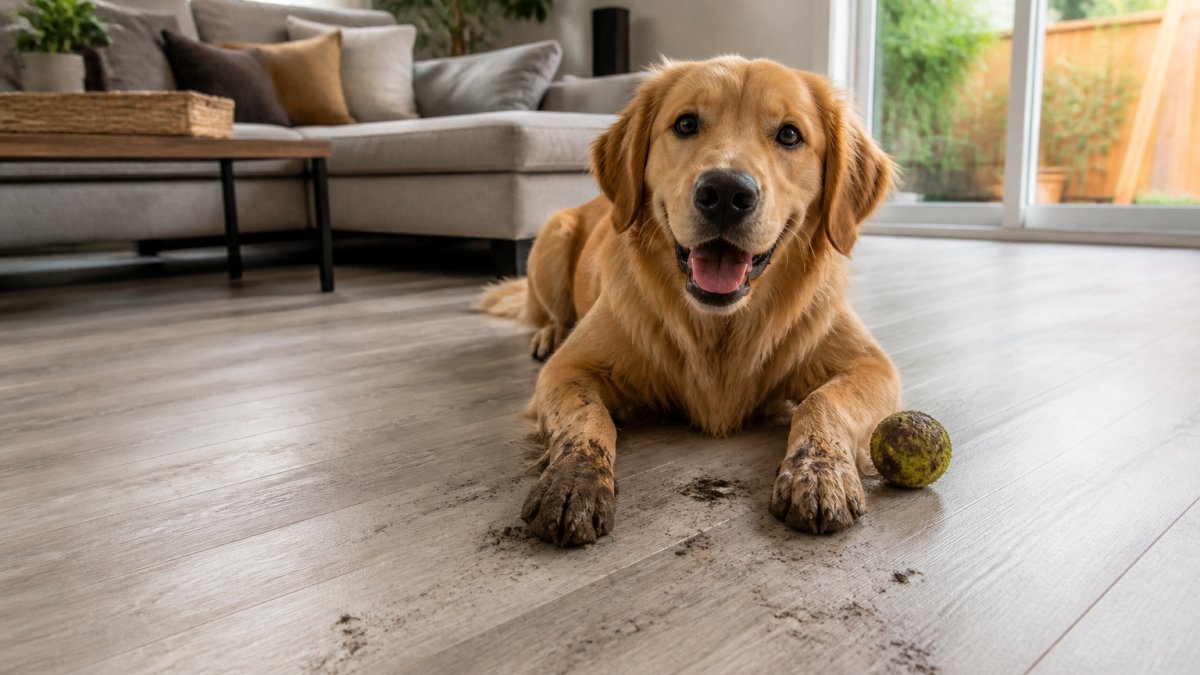
Scratch Resistance and Daily Pet Activity
Scratch resistance determines how long your floor looks new under active pet use. Large dogs with long claws, energetic cats, and households with multiple pets create constant wear. The wear layer, the protective top coating on resilient flooring, directly impacts how visible claw marks become.
Luxury vinyl plank excels here. The wear layer on quality LVP products ranges from 0.3mm to 0.6mm thick, providing substantial protection against scratching. Tile offers inherent scratch resistance because porcelain and ceramic are harder than claws. Laminate varies widely; water-resistant laminate performs better than standard laminate, but still trails vinyl and tile for claw damage prevention.
Hardwood floors are vulnerable to scratching, particularly from large dogs with sharp nails. Even engineered hardwood, which has a plywood core for stability, shows claw marks more readily than resilient options. If you're committed to hardwood, expect visible wear patterns over time and budget for refinishing every 7-10 years if pet traffic is heavy.
Water Resistance and Pet Accidents
Water resistance separates materials that survive accidents from those that don't. Puppies and senior pets have accidents. Spilled water bowls happen. Muddy paws track moisture indoors. A flooring material that swells, warps, or stains under moisture becomes a liability in a pet home.
Luxury vinyl plank is waterproof by design. The core material doesn't absorb water, so spills don't penetrate the surface. This makes LVP the top choice for pet households where accidents are expected rather than surprising. Tile is equally waterproof, though grout lines can absorb moisture if not sealed properly.
Water-resistant laminate resists moisture better than standard laminate, but it's not waterproof. Standing water or prolonged moisture exposure can cause swelling at the edges or seams. Hardwood, even engineered varieties, absorbs water and swells when exposed to moisture. Solid hardwood is particularly vulnerable; engineered hardwood offers some protection from the plywood base but still risks warping if accidents aren't cleaned immediately.
Waterproof Flooring for Pets: Luxury Vinyl Plank
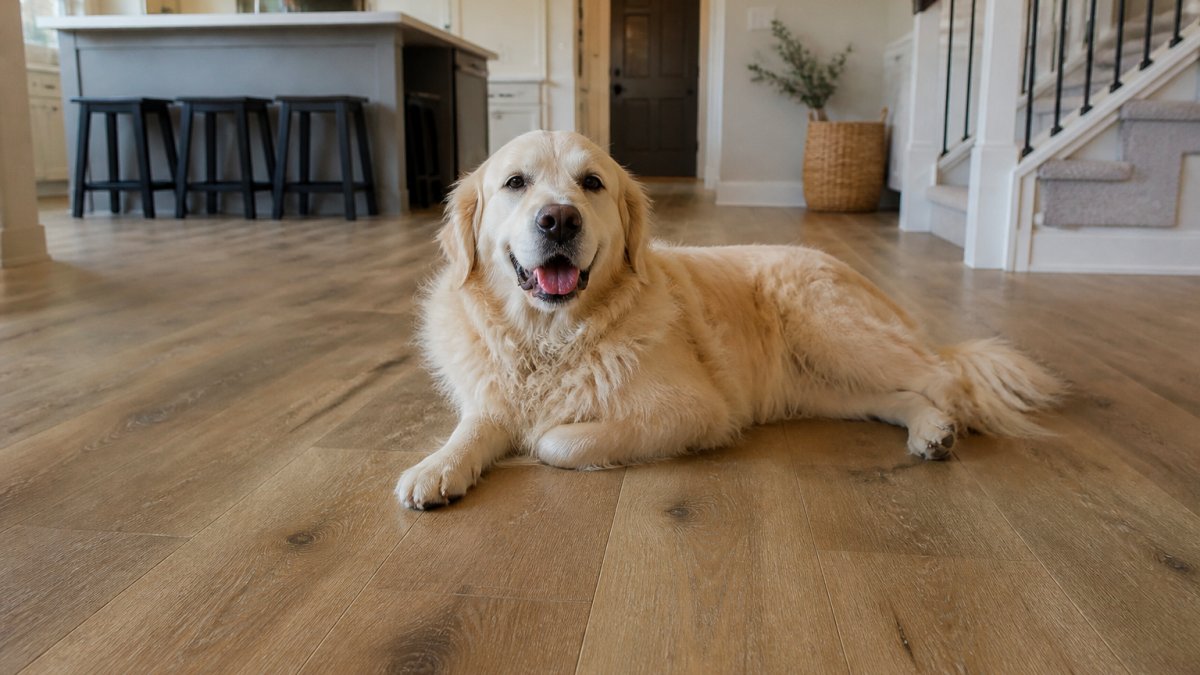
Luxury vinyl plank dominates the pet-friendly flooring market for good reason. It combines waterproof protection, scratch resistance, and design flexibility in one material. LVP mimics the look of hardwood or tile while delivering performance that solid materials can't match.
The construction of luxury vinyl plank explains its pet-friendly reputation. The core is a rigid or semi-rigid base layer that resists moisture and impact. Above that sits the wear layer, which protects against scratches and staining. The top layer offers realistic wood-grain or stone textures. This layered approach means water stays on the surface and doesn't penetrate to the core.
Installation matters for waterproof performance. Luxury vinyl plank installed with proper underlayment and sealed seams performs better than hastily installed product. A professional installation ensures moisture doesn't seep through gaps or around edges. This is where working with an experienced renovation team like Handy Gonzo's Home Improvements adds real value, proper installation maximizes the waterproof benefits you're paying for.
Luxury Vinyl Plank for Pets: Durability and Style
Luxury vinyl plank offers aesthetic range that other durable materials struggle to match. You can choose designs that look like authentic hardwood, reclaimed barn wood, or natural stone without the maintenance burden of those materials. This flexibility matters because pet-friendly doesn't mean ugly.
The durability of LVP extends beyond scratch and water resistance. The material resists staining from pet accidents, mud, and food spills. Cleaning is straightforward: sweep, vacuum, or mop with a damp cloth. No special treatments or sealants required.
Comfort underfoot is another advantage. Luxury vinyl plank feels warmer than tile and less hard underfoot than hardwood. Pets with older joints or arthritis benefit from the slight cushioning that quality LVP provides. The surface is also less slippery than tile or polished hardwood, reducing injury risk from pets running or playing.
The lifespan of luxury vinyl plank in pet homes can be substantial with normal use. Repairability is mixed: if a plank is damaged, you can often replace just that section, but matching an older product can be difficult if the line is discontinued.
Tile Flooring for Pets: Pros, Cons, and Traction
Porcelain tile represents the opposite end of the durability spectrum from hardwood. It's nearly indestructible, waterproof, and easy to clean. For pet owners, tile offers uncompromising durability, claws won't scratch it, accidents won't damage it, and muddy paws clean up in seconds.
The primary drawback of tile is traction. Smooth glazed tile becomes slippery when wet, creating a hazard for pets running indoors. Older dogs and cats with mobility issues struggle on tile floors.
Grout lines are the second weakness. Grout absorbs water and stains unless sealed. Pet accidents, spilled water, and muddy paws all test grout durability. You'll need to reseal grout periodically to maintain water resistance and appearance.
Comfort underfoot is poor on tile. The hard, cold surface is uncomfortable for extended periods and offers no cushioning for aging joints. Pets spend significant time on flooring, and tile's hardness becomes a consideration for their comfort and health.
Tile works best in specific rooms: entryways, bathrooms, and kitchens where moisture and easy cleaning matter most. For main living areas where pets spend significant time, tile's drawbacks outweigh its durability benefits.
Laminate and Hardwood: When They Work for Pet Homes
Laminate and hardwood represent compromise choices for pet homes. Both offer aesthetic appeal and can work in specific situations, but neither is ideal for households with active pets.
Water-resistant laminate performs better than standard laminate in pet environments. The improved moisture resistance reduces swelling from accidents, but it's not waterproof. A spilled water bowl or pet accident that sits unattended will cause damage. Laminate also shows scratches from claws more visibly than vinyl or tile.
Hardwood, whether solid or engineered, requires the most maintenance in a pet home. Scratches are inevitable and visible. Water damage from accidents can cause permanent warping or staining. Refinishing is necessary every 7-10 years if pet traffic is heavy. The upfront cost and ongoing maintenance make hardwood a poor choice for most pet households.
That said, hardwood works if you have older pets with minimal activity, live in a small space where traffic is light, or are willing to accept visible wear as part of the floor's character. Engineered hardwood is slightly more pet-friendly than solid hardwood because the plywood core resists moisture better.
Installation, Subfloors, and Renovation Planning
The right flooring material fails if installation is poor. Subfloor condition, underlayment selection, and seam sealing all affect how well your new floor performs under pet activity.
Before selecting flooring, assess your existing subfloor. Is it concrete, plywood, or another material? Concrete subfloors require a moisture barrier before installing vinyl or laminate. Plywood subfloors need to be level and structurally sound.
Underlayment is often overlooked but critical for pet homes. A quality underlayment provides moisture protection, sound dampening, and comfort. For luxury vinyl plank, underlayment reduces noise from pet paws and adds cushioning. For laminate, underlayment is essential for moisture protection.
Seam sealing matters for waterproof performance. Luxury vinyl plank installed without sealed seams allows moisture to penetrate at joints. Professional installation includes sealing seams with appropriate sealant. This step is easy to skip but critical for long-term water resistance.
During renovation, plan for the livable home environment during active construction. Flooring installation creates dust and noise. If you're replacing flooring in a main living area, coordinate with other renovation work to minimize disruption.
Lifecycle Cost and Repairability
The true cost of flooring extends beyond the initial purchase and installation. Lifecycle cost includes maintenance, repairs, and eventual replacement. For pet homes, this calculation shifts the value proposition.
Luxury vinyl plank typically costs less upfront than hardwood or tile and requires minimal maintenance. Cleaning is simple and inexpensive. If a plank is damaged, you can often replace just that section.
Tile has high upfront cost and low maintenance, but grout sealing adds periodic expense. Replacement of damaged tiles is possible but requires matching the original product.
Hardwood has high upfront cost, high maintenance, and periodic refinishing expense. Repairs are limited to refinishing, which is expensive. Over 15-20 years, hardwood costs significantly more than vinyl when accounting for refinishing, repairs, and potential water damage.
Water-resistant laminate offers lower upfront cost than vinyl but higher maintenance risk. Damage from pet accidents can require section replacement or full floor replacement.
For pet homes, the lifecycle cost calculation favors luxury vinyl plank or tile, depending on your priorities. If you value low maintenance and cost, vinyl wins. If you prioritize durability and don't mind grout maintenance, tile is competitive.
Choosing pet-friendly flooring is ultimately a renovation decision that balances performance, aesthetics, and budget. When you're ready to move forward with a flooring renovation, get a clear picture of your subfloor condition, timeline, and budget. Our dedicated crew handles installation properly, ensuring your new flooring performs as intended. Get a Free Estimate and let's discuss the best pet-friendly flooring option for your home.
Frequently Asked Questions
What is the best flooring for homes with dogs and cats?
Luxury vinyl plank and porcelain tile rank highest for mixed pet households. Both resist scratches from claws, handle water from accidents and muddy paws, and endure daily pet activity without showing wear quickly. Luxury vinyl plank offers warmth underfoot and realistic wood styling, while tile provides superior stain resistance and is easier to disinfect. Your choice depends on whether you prioritize comfort (vinyl) or maximum durability (tile).
Is luxury vinyl plank or laminate better for pets?
Luxury vinyl plank outperforms laminate for pet homes. LVP is fully waterproof and resists scratches from claws, while standard laminate absorbs moisture from pet accidents and can swell or warp. Water-resistant laminate exists but still cannot match LVP's durability in high-moisture scenarios. LVP also offers better sound dampening and comfort underfoot, making it the practical choice for families with dogs or cats.
Is tile too slippery for dogs?
Standard glazed tile can be slippery and increase injury risk for pets. Textured tile, matte finishes, and non-slip tile options significantly improve traction. Porcelain tile with a honed or brushed surface provides grip without sacrificing cleanability. If you choose tile, specify non-slip or textured surfaces during your renovation to keep your pets safe while maintaining the water-resistant benefits tile provides.
How do you protect new floors from pet scratches and stains?
Start with scratch-resistant flooring materials like luxury vinyl plank or porcelain tile. Add a protective underlayment during installation to reduce impact noise and cushion claws. Trim your pet's nails regularly to minimize scratching. Use area rugs in high-traffic zones and pet beds to reduce direct claw contact on exposed surfaces. For spills, clean immediately to prevent staining, luxury vinyl and tile both handle quick cleanup well.