 comparison
Consistent Crew vs. Clear Expectations: Which Builds Client Trust
Table of Contents
- Why Consistent Crew and Clear Expectations Both Matter
- The Case for a Consistent Crew Throughout Your Project
- The Case for Clear Expectations Before Work Begins
- Questions to Ask a Contractor Before Hiring
- How to Manage Home Renovation Expectations
- Building a Contractor Communication Plan Template
- The Consistency vs. Clarity Trade-off: Finding Your Balance
- Frequently Asked Questions
Last Updated: August 29, 2026
Why Consistent Crew and Clear Expectations Both Matter
When you hire a contractor for a kitchen remodel or bathroom update, you're making a decision that affects your home, your wallet, and your daily life for weeks or months. The real tension is deciding which to prioritize when you can't have both at full strength.
At Handy Gonzo's Home Improvements, we've worked with homeowners in the DFW area and seen how this choice shapes the entire project experience. A consistent crew builds trust through familiarity and reduces rework. Clear expectations set before day one prevent misunderstandings and scope creep. The strongest projects have both, but when forced to choose, the decision depends on your specific situation.
The Case for a Consistent Crew Throughout Your Project
A consistent crew throughout the project means the same skilled workers show up day after day, learning your home's quirks and your preferences as they work. This continuity reduces mistakes, accelerates problem-solving, and builds genuine trust.
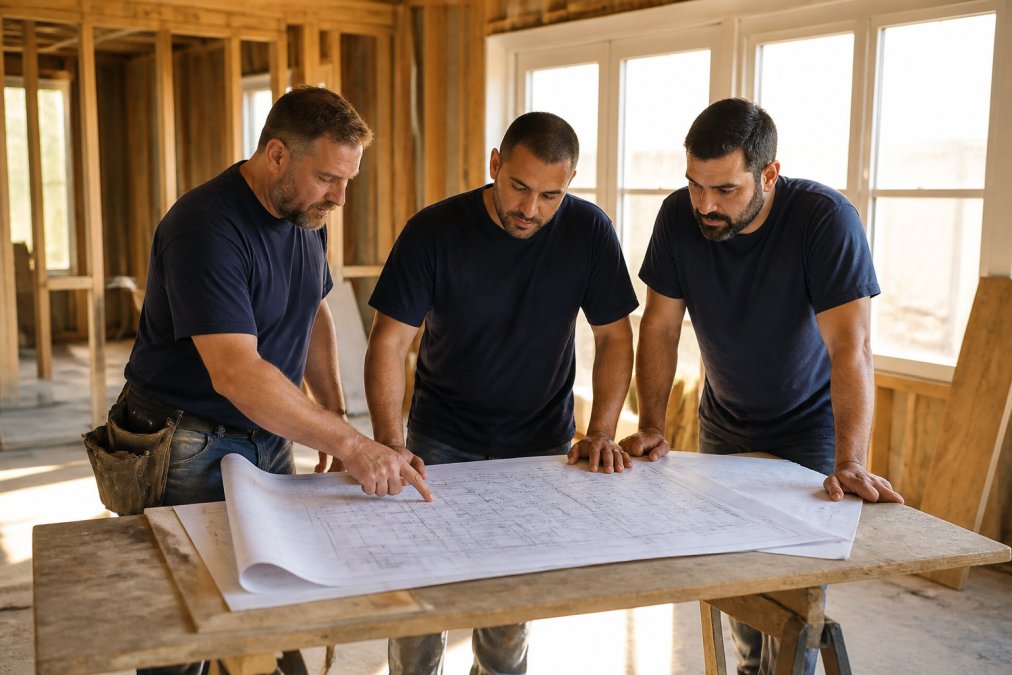
When the same team handles your project from start to finish, they understand the sequence of work and don't repeat mistakes or miss dependencies. A plumber who was there when the framing happened understands the pipe routing better than one parachuting in for a single day. Unexpected issues get solved faster when the team already understands your home's layout and previous decisions.
Trust builds differently with a consistent crew. You see the same faces every day, learn their work habits, and can spot quality issues because you understand their standards. A homeowner dealing with the same crew for six weeks develops confidence that wouldn't exist with rotating subcontractors (peer-reviewed research).
The downside is real: a consistent crew works best on larger projects where the same skill sets are needed throughout. A small bathroom update might not justify keeping a full team on-site if work is front-loaded with demolition and plumbing. You also depend on crew availability; if your preferred team is booked, you either wait or accept a different group.
The Case for Clear Expectations Before Work Begins
Clear expectations set before the first nail is driven prevent the majority of contractor disputes. This means a detailed written scope, a fixed timeline with milestone dates, a complete materials list, and transparent cost breakdown. No ambiguity.
The power of clear expectations is eliminating the most common source of conflict: misalignment about what "done" actually means. One homeowner thinks the kitchen remodel includes new cabinet hardware; the contractor thought it meant cabinet refacing only (the FTC). Clear expectations written down prevent this from becoming a $2,000 argument in week three.
A detailed scope also protects against scope creep (pmi.org). When everything is specified in writing, scope changes become visible requests with associated costs and timeline impacts, not surprise additions.
Clear expectations set realistic timelines. A contractor who commits to specific milestone dates creates accountability. You know what to expect each week and when you'll have your kitchen back.
The limitation of clear expectations alone is that they can't account for every contingency. A hidden structural issue, supply chain delay, or unexpected code requirement can make a contract that says "kitchen done by March 15" impossible. Clear expectations without a consistent crew to navigate them becomes rigid and frustrating.
Questions to Ask a Contractor Before Hiring
Before you commit to any contractor, ask specific questions about how they approach consistency and expectations.
About their crew: Ask who will be on your job site every day and get names. Ask if the same crew will handle your project from start to finish or if different teams will rotate through. Ask what happens if a key person gets sick or leaves mid-project. Vague answers signal that consistency isn't a priority.
About the scope: Ask for a written scope of work before signing anything, listing every task, material, and finish. Ask what's specifically excluded. Ask how changes get handled. A contractor with a clear change order process expects to document everything.
About the timeline: Ask for a detailed schedule with milestone dates, not just start and end dates. "Kitchen remodel: March 1 to April 15" is useless; "Demolition complete by March 8, rough plumbing and electrical by March 15, drywall by March 22" is useful. Ask what happens if the timeline slips.
About communication: Ask how often you'll hear from them and in what form. Ask who your point of contact is if the project manager is unavailable.
About the estimate: Ask for a detailed breakdown of costs: materials, labor, overhead, profit. A line item that says "kitchen remodel: $45,000" tells you nothing. Ask what's included in the labor rate and what's billed separately.
About references: Call references from projects completed in the last 12 months. Ask specifically about consistency, communication, and whether unexpected costs or delays occurred.
How to Manage Home Renovation Expectations
Managing expectations is an active process, not a one-time conversation.
Before work begins: Document everything in writing. Take photos of existing conditions. Walk through the space with the contractor and note concerns. Get the scope, timeline, and budget in writing.
Set a communication rhythm: Agree on how often you'll touch base. For a major renovation, weekly check-ins make sense. Put it in writing.
Use a shared tracking system: Tools like monday.com or Buildertrend let both you and the contractor see the same project timeline and task list in real time.
Establish a change order process: When something unexpected comes up, handle it with a written change order specifying what's being added, the cost, and timeline impact. Don't let changes happen verbally.
Schedule regular walkthroughs: Every two weeks, walk through the space with the contractor. Catch issues early when they're cheaper to fix.
Manage the chaos: Plan for active construction disruption. If your kitchen is being remodeled, set up a temporary kitchen elsewhere. A homeowner prepared for disruption stays satisfied even when timelines slip.
| Expectation | How to Set It | How to Reinforce It |
|---|---|---|
| Crew consistency | Ask contractor who will work on your project daily | Weekly walkthrough with same team; ask about staffing changes |
| Scope clarity | Get detailed written scope before signing | Review scope at kickoff; document any changes in writing |
| Timeline | Get milestone dates, not just start/end dates | Weekly progress check; compare actual vs. planned schedule |
| Communication | Agree on frequency and format upfront | Stick to the agreed rhythm; escalate if contractor misses check-ins |
| Budget | Get itemized cost breakdown | Track actual spending against estimate; approve changes before work begins |
| Quality standards | Walk through finished work regularly | Take photos; address quality issues immediately |
Building a Contractor Communication Plan Template
A contractor communication plan spells out how you and your contractor will stay aligned throughout the project, preventing misunderstandings and keeping both parties accountable.
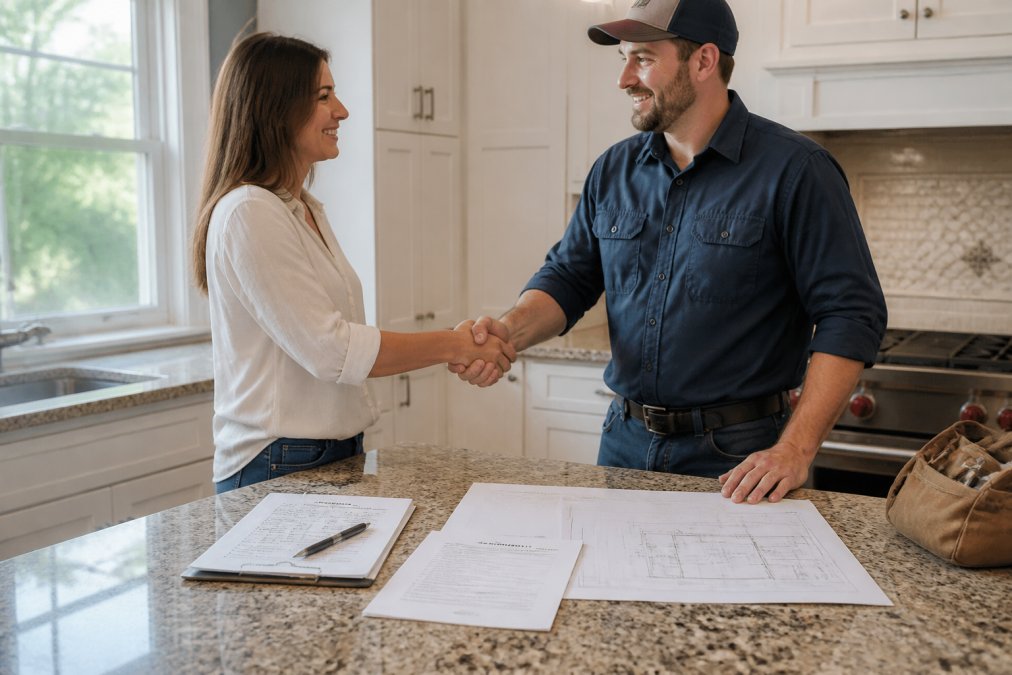
Project Communication Plan
Project: [Kitchen Remodel / Bathroom Update / etc.] Homeowner: [Your name, phone, email] Contractor: [Contractor name, phone, email] Primary Point of Contact: [Who you'll call with questions] Project Manager: [Name and contact info] Start Date: [Date] Completion Target: [Date]
Communication Schedule
- Daily check-in: [Time and format, e.g., "4 PM text message with photo update"]
- Weekly progress meeting: [Day and time, e.g., "Friday 3 PM, in person at job site"]
- Milestone review: [When, e.g., "After demolition complete, before rough-in starts"]
Scope of Work [Attach detailed scope document listing all tasks, materials, and finishes]
Timeline with Milestones
- Demolition: [Dates]
- Rough plumbing/electrical: [Dates]
- Drywall: [Dates]
- Finishing: [Dates]
- Final walkthrough: [Date]
Budget
- Materials: [Amount]
- Labor: [Amount]
- Contingency: [Amount, typically 10-15% of total]
- Total: [Amount]
Change Order Process Any work outside the original scope requires a written change order signed by both parties before work begins, specifying what's being added, the cost, and timeline impact.
Quality Standards
- Job site cleanliness: [Specify expectations, e.g., "Debris removed daily, work area swept each evening"]
- Material storage: [Where materials will be kept, how they'll be protected]
- Work hours: [Start time, end time, weekend work policy]
- Parking: [Where crew will park]
Escalation Process If issues arise:
- Discuss with the crew lead or project manager immediately
- If unresolved within 24 hours, escalate to the contractor
- If still unresolved, schedule a formal meeting with all parties
Contractor Signature: _________________ Date: _______ Homeowner Signature: _________________ Date: _______
A contractor willing to sign this document takes the project seriously. One who resists detailed planning might create surprises later.
The Consistency vs. Clarity Trade-off: Finding Your Balance
Most projects can't maximize both consistency and clarity simultaneously. A smaller project might have excellent clarity but rotating crews. A larger project might have a dedicated crew but looser documentation.
Choose consistency-first if: Your project is large (kitchen and bathroom together, a full addition, major structural work). The work spans 8+ weeks. You value psychological safety and reduced rework over maximum documentation. You're willing to accept some flexibility in the timeline because you trust the crew to solve problems intelligently.
Choose clarity-first if: Your project is smaller (single bathroom, painting, focused renovation). You need a fixed timeline and budget. You're less comfortable with construction chaos and want to minimize surprises. You prefer detailed specifications rather than relying on crew expertise.
Combine both if you can: This is the ideal. You get a dedicated crew that learns your home and builds trust, plus detailed documentation that prevents scope creep and sets clear expectations. This requires a contractor with the discipline to document everything and the stability to keep the same crew.
Handy Gonzo's Home Improvements prioritizes both. We maintain a dedicated crew trained across multiple trades, so you get consistency and the same skilled people every day. We also deliver transparent digital quoting with clear breakdowns of materials, labor, and timeline. We know from 35+ years of experience that homeowners are most satisfied when they have both consistency and clarity working together.
The decision between consistent crew and clear expectations isn't a choice between two options. It's a choice about which to prioritize first, knowing that the strongest projects combine both. A consistent crew builds trust and reduces rework. Clear expectations prevent scope creep and surprises. When you work with a contractor who understands the value of both and has the discipline to deliver on both, your renovation becomes less chaotic and more aligned with your vision.
Get a free estimate from Handy Gonzo's Home Improvements today. We'll provide transparent digital quoting with a detailed breakdown of materials and labor, assign a dedicated crew trained across multiple trades, and keep you informed throughout the project. With over 35 years of experience in the DFW area, we've learned that the best projects start with clear expectations and consistent execution.
Frequently Asked Questions
Q: Why is a consistent crew important for home renovation projects?
A: A consistent crew reduces rework, accelerates project timelines, and builds familiarity with your home's layout and your preferences. When the same team members stay throughout the project, they understand what's already been done, catch potential issues early, and maintain continuity in craftsmanship. This consistency also strengthens trust because you develop a working relationship with your crew, making communication easier and reducing the stress of constantly explaining your vision to new people.
Q: How do you set clear expectations with a contractor before work begins?
A: Start with a detailed written scope of work that outlines all deliverables, materials, timelines, and costs. Request a digital quote that breaks down labor, materials, and timeline separately. Establish a communication cadence (daily updates, weekly check-ins, etc.) and define how changes will be handled. Discuss project milestones and what happens if timelines shift. The more specific your written expectations, the fewer surprises you'll encounter mid-project.
Q: What are the risks of changing construction crews mid-project?
A: Crew changes introduce rework, quality inconsistencies, and project delays. New team members need time to understand the project's current state, your preferences, and any custom details the original crew established. This learning curve costs time and money. Additionally, different crews may have different standards or interpretations of the work, leading to gaps or misaligned finishes. Communication also suffers because new crew members lack context, increasing the chance of mistakes and client frustration.
Q: How does proactive communication prevent project delays?
A: Proactive communication keeps all parties aligned on timelines, resource allocation, and potential obstacles. When contractors report progress regularly and flag risks early, homeowners can address concerns before they cascade into larger delays. Clear feedback loops allow teams to resolve scope questions immediately rather than discovering misalignment weeks into the work. Consistent progress reporting also builds accountability and ensures the project stays on track against agreed milestones, reducing the likelihood of surprises that derail schedules.
Q: What should be included in a contractor's project scope of work?
A: A comprehensive scope includes specific deliverables (e.g., 'new tile backsplash, cabinet refacing, plumbing fixture replacement'), materials and finishes with brand names, project timeline with start and end dates, payment schedule and total cost breakdown, cleanup and site maintenance expectations, warranty terms, and change order procedures. It should also define what is not included to prevent scope creep. Reference drawings or photos when possible. The more detailed the scope, the fewer misunderstandings occur and the easier it is to manage expectations throughout the project lifecycle.