 how-to
How to Choose a Bathroom Contractor in Dallas
Last Updated: October 30, 2026
Quick Summary
To choose a bathroom contractor in Dallas, first verify plumbing and electrical licenses, insurance, and business registration, then confirm who pulls the permit. Next, compare at least three detailed estimates line by line, normalizing allowances so the bids are truly comparable before you choose.
- Verify plumbing and electrical licenses separately with the state, since one license does not cover both trades.
- Request a certificate of insurance that names you as the certificate holder and call the insurer to confirm.
- Be wary of any contractor who suggests skipping the permit or asks you to pull it as the homeowner.
- Compare bids using the same allowance amounts, since different tile allowances make bottom-line totals misleading.
- Tie payments to completed milestones and never pay the full contract price before the final inspection passes.
Table of Contents
- Why Choosing the Right Bathroom Contractor Matters
- Step 1: Verify Licensing, Insurance, and Permits in Dallas
- Step 2: Check Reviews, References, and Past Bathroom Work
- Step 3: Compare Detailed Bathroom Remodeling Estimates
- Step 4: Review the Bathroom Remodel Contract Before Signing
- Red Flags and Common Contractor Scams to Avoid
- Planning Your Bathroom Remodel Timeline and Next Steps
- Frequently Asked Questions
Why Choosing the Right Bathroom Contractor Matters
A bathroom remodel is a significant project, and it can take weeks to finish. A good bathroom contractor in Dallas can make that process smooth. A bad one can leave you with leaks, failed inspections, and a bill that keeps growing.
The choice you make at the start shapes everything that follows. Most problems can be traced back to the hiring decision, not the construction itself.
Step 1: Verify Licensing, Insurance, and Permits in Dallas
This is the step most homeowners rush, and it is the one that causes the most expensive problems later. In Texas, plumbing and electrical work are licensed at the state level, and it is important to verify each trade separately. That means you cannot simply look up a "bathroom contractor license" and assume the person is vetted. You have to verify each trade separately and confirm the contractor's business standing.
What to verify, and how to verify it
- Plumbing license: Plumbing work in Texas requires a state-issued license. Ask for the license number and verify it with the issuing state agency. The license should be held by the individual plumber or the plumbing company, not just "the guy on the crew."
- Electrical license: Electrical work requires a state license. Verify the license number with the issuing state agency. If the contractor plans to use a subcontractor, get the subcontractor's name and license number in writing.
- Business registration: Ask for proof of the contractor's business registration or assumed name certificate (DBA). A legitimate business should be able to produce this quickly. If they operate under a name that does not match any registration, ask why.
- General liability insurance: Request a certificate of insurance (COI) naming you as the certificate holder, and call the insurer to confirm the policy is active and covers remodeling work. A COI that lists only the contractor as the certificate holder is easier to fake; one that names you is harder to walk back.
Permits: what usually requires one in Dallas
Most bathroom remodels that move plumbing, add or relocate electrical, or change the footprint require a permit from the local building authority. Common triggers include:
- Relocating or adding a toilet, sink, shower, or tub drain
- Adding a new electrical circuit, outlet, or light fixture
- Moving or adding a wall
- Changing a window or exterior door
Cosmetic work, paint, tile replacement over existing backer board, swapping a vanity without moving plumbing, often does not require a permit. But "often" is not "always." The safest move is to call the city's permit office or check the online permit portal before work starts, and to ask the contractor to show you the permit application before demolition begins.
Who pulls the permit, and why it matters
In most residential bathroom remodels, the contractor pulls the permit as the responsible party. That is usually the right arrangement because the permit ties inspections to the contractor's license and insurance.
Ask the contractor to include the permit number and the scheduled inspection dates in the written contract. Inspections typically happen in phases, rough-in plumbing and electrical before drywall, then final inspection after finishes.
A quick verification checklist
Before you compare bids, confirm each of these in writing:
- Plumbing license number verified on the state board lookup
- Electrical license number verified through TDLR
- Certificate of insurance with you named as certificate holder
- Workers' compensation carrier and policy number
If a contractor cannot clear this checklist, the lowest bid in the world is not worth the risk.
The article lists what to verify before hiring and the common permit triggers, summarised below.
| Item | What to check | Note |
|---|---|---|
| Plumbing license | State-issued license number | Verify with the issuing state agency |
| Electrical license | State license number | Verify with TDLR |
| General liability insurance | Certificate of insurance | Name yourself as certificate holder |
| Workers' compensation | Carrier and policy number | Required even for injuries on your property |
| Permit trigger | Moving plumbing or adding circuits | Relocating walls or windows also needs one |
| Cosmetic work | Paint, tile swap, vanity swap | Often no permit, but confirm first |
Step 2: Check Reviews, References, and Past Bathroom Work
Online reviews are a starting point, not the final answer. Read reviews on several platforms and look for patterns. Repeated comments about missed deadlines or poor communication matter more than a single angry review.
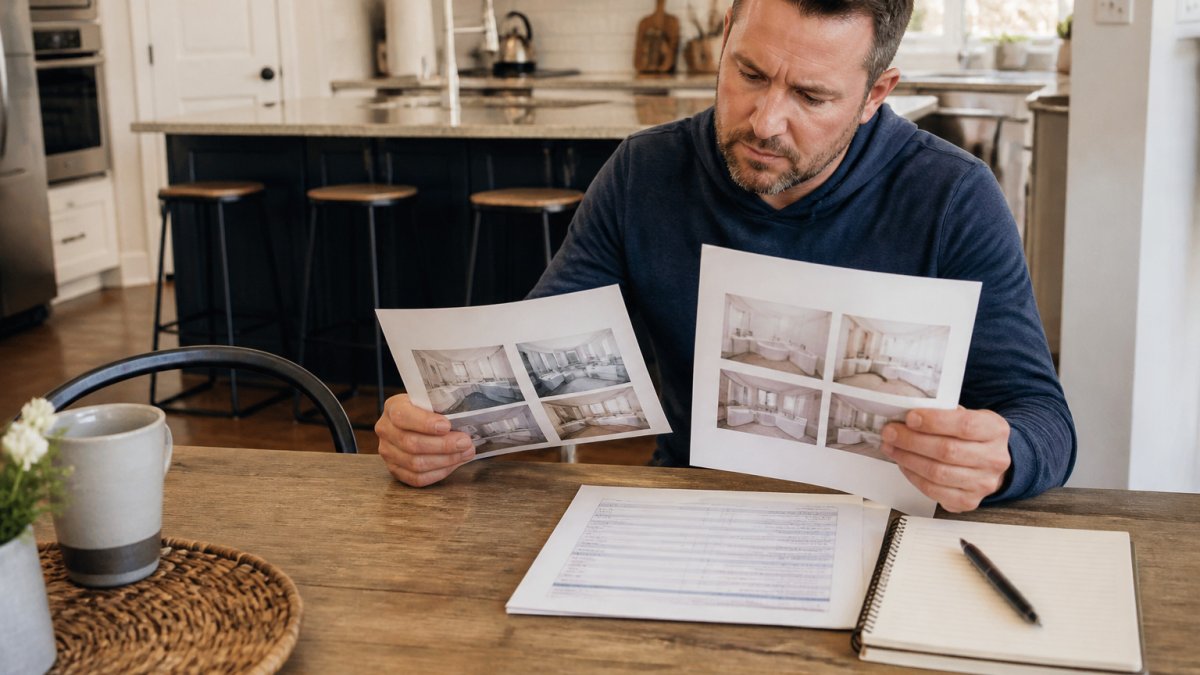
Ask for references and call them. Good questions include:
- Did the project finish close to the agreed timeline?
- Were there surprise costs, and how were they handled?
- Did the crew keep the home clean and secure?
- Would you hire this contractor again?
Ask to see photos of recent bathroom projects, ideally from the last year or two. Notice the details: grout lines, tile alignment, caulking, and how the shower pan transitions to the floor.
Step 3: Compare Detailed Bathroom Remodeling Estimates
Getting three bids is the easy part. Comparing them correctly is where most homeowners get into trouble, because contractors do not bid the same way. One bid may include demolition and haul-away; another may list it as a separate line item you approve later. One may include a lower tile allowance; another may include a higher one.
The right approach is to normalize every bid against the same checklist before you compare price. Ask each contractor to break their estimate into the categories below, and require them to state what is included, what is excluded, and what is an allowance.
The line items every bathroom bid should separate
- Demolition and disposal: Tear-out of tile, tub, vanity, toilet, and drywall, plus dumpster rental and haul-away fees. Ask whether disposal is included or billed separately.
- Rough plumbing: Moving or replacing supply and drain lines, plus the permit and inspection fees tied to plumbing.
- Rough electrical: New circuits, GFCI outlets, exhaust fan wiring, and any panel work. Ask whether a licensed electrician is doing this or the general crew.
- Waterproofing: Cement backer board, waterproof membrane, and the method used in the shower pan. This is the single most important line item for long-term leak prevention, and it is often the first thing a low bid cuts.
Allowances: the hidden variable in bathroom bids
An allowance is a placeholder dollar amount for a material the homeowner has not selected yet, usually tile, fixtures, or a vanity. Bids with different tile allowances are not directly comparable, even if the labor is identical.
A practical approach: choose your tile and fixtures before you request final bids, or ask each contractor to quote a specific mid-grade product line so the bids are truly apples to apples.
How to read a payment schedule
A fair payment schedule is tied to completed milestones, not to the calendar. A common structure is a modest deposit at contract signing, a payment at rough-in inspection, a payment at tile and finish installation, and a final payment after the punch list is complete.
Ask each contractor to put the payment schedule in the written contract with specific milestone descriptions. "Progress payment" is too vague; "payment due after rough plumbing inspection passes" is enforceable.
Questions that expose a weak bid
- Which items in this bid are allowances, and what happens if I go over?
- Is the permit fee included, and who schedules inspections?
- What is the change-order process, and how are change-order prices calculated?
- What is the workmanship warranty, and how long does it last?
What actually drives bathroom remodel cost
Bathroom budgets vary widely based on a few factors: the size of the room, whether the layout changes, whether plumbing must be relocated, the condition of the existing walls and subfloor, the tile and fixture selections, and whether the home is older and needs code upgrades. A cosmetic refresh with the same layout costs far less than a full gut with relocated plumbing.
Step 4: Review the Bathroom Remodel Contract Before Signing
The contract protects both you and the contractor. Read every line before you sign, and do not sign anything with blank sections.
Look for these protections:
- A detailed scope of work that matches the estimate
- A payment schedule tied to completed work, not large up-front payments
- A written timeline with a plan for delays
- Warranty terms for labor and materials
Avoid contracts that require a large deposit with no clear reason. A reasonable deposit is common, but a payment schedule that front-loads most of the cost is a warning sign.
Red Flags and Common Contractor Scams to Avoid
Some warning signs show up again and again in complaints from homeowners:
- Asking for a large cash payment before any work begins
- Refusing to provide a license or insurance certificate
- Pressure to sign today with a "special price"
- No physical business address or local phone number
- Estimates given without visiting the home
If a contractor shows several of these signs, walk away. Trust your instincts. Many homeowners say they wish they had listened to early doubts.
Planning Your Bathroom Remodel Timeline and Next Steps
A bathroom remodel timeline depends on the scope. A simple update may take a couple of weeks, while a full gut renovation with new plumbing can take considerably longer.
Handy Gonzo's Home Improvements provides digital quotes with a clear breakdown of materials, labor, and timelines, and works with a dedicated crew from start to finish. Learn more about our bathroom remodeling services and what to expect from start to finish. If you want to confirm we serve your area, check our service area before reaching out.
When you are ready to compare estimates, contact our team to request a written quote and talk through your project. Whichever contractor you choose, use the steps above to make a confident decision.
Frequently Asked Questions
How do I choose a bathroom remodeling contractor?
Start by confirming the contractor holds a current license and carries liability and workers' compensation insurance. Ask for proof of both and verify them directly with the issuing agency or insurer. Then check reviews, request references from recent bathroom projects, and visit a completed job if possible. Get at least three written estimates with the same project scope so you can compare them fairly. Choose the contractor who answers your questions clearly and puts the scope, price, and timeline in writing.
What questions should I ask a bathroom contractor before hiring?
Ask how long the company has operated locally, whether it has done similar bathroom projects, and who will be on your crew day to day. Ask how the price is structured, what is excluded from the estimate, and how change orders are handled. Confirm who pulls permits and schedules inspections in Dallas. Ask how often you will receive updates and who your point of contact will be. Request the names of recent clients and any warranty terms for both labor and materials.
How many quotes should I get for a bathroom remodel?
Three written quotes is a practical minimum for most homeowners. Each quote should be based on the same written scope, including fixtures, tile, plumbing, electrical changes, and demolition. If one bid is far lower than the others, ask what has been left out before comparing totals. Quotes that describe materials and labor separately make it easier to see where the differences come from.
How long does a bathroom remodel usually take?
The timeline depends on scope. Ask the contractor for a written schedule with milestones. Ask the contractor for a written schedule with milestones, and confirm how delays from material backorders or inspections will be communicated.