 how-to
7 Ways to Save Money on Kitchen Cabinet Installation
Last Updated: October 26, 2026
Quick Summary
You can save money on kitchen cabinet installation by keeping your existing layout, refreshing solid cabinet boxes with refacing or refinishing instead of replacing them, and choosing stock or semi-custom cabinets over custom units. Comparing quotes line by line and timing your purchase around promotions or surplus lines also lowers the bill.
- Labor runs $50 to $200 per linear foot, or $125 to $500 per cabinet box.
- A full installed cabinet project runs $4,000 to $13,000, averaging near $6,500.
- Stock or semi-custom installation costs $100 to $650 per linear foot, or $2,000 to $13,000 total.
- Ask contractors to quote removal, disposal, trim, and permits as separate lines.
- Buy all cabinets at once to avoid mismatched dye lots.
Table of Contents
- What Drives Kitchen Cabinet Installation Cost
- Step 1: Keep the Existing Kitchen Layout
- Step 2: Refresh Existing Cabinetry Instead of Replacing It
- Step 3: Weigh Stock Cabinets vs. Custom Cabinets
- Step 4: DIY Kitchen Cabinet Installation vs. Hiring a Professional
- Step 5: Compare Installation Quotes the Right Way
- Step 6: Time Your Purchase: The Best Time to Buy Kitchen Cabinets
- Step 7: Trim Costs on Hardware, Doors, and Finishes
- Frequently Asked Questions
What Drives Kitchen Cabinet Installation Cost
Kitchen cabinet installation cost comes down to three things: labor, materials, and the small line items that quietly add up. A 2026 estimate from Captivating Cabinets' installation cost guide puts labor at $50 to $200 per linear foot, or $125 to $500 per cabinet box. That range alone explains why two neighbors with similar kitchens can get quotes thousands of dollars apart.
The cabinet price tag is only part of the bill.
Here's what most people miss:
- Labor share: One 2026 remodeling analysis from Lars Remodeling & Design estimates labor at 25% to 35% of a kitchen budget, with cabinets at 30% to 40%.
- Removal and disposal: Tearing out old cabinets costs time and hauling fees.
- Wall and plumbing fixes: Old cabinets often hide damaged drywall or shifted supply lines.
- Trim and filler pieces: These finish the job and rarely appear in first quotes.
- Permits and inspection: Some layouts require them, some don't.
A full-kitchen installed cabinet project runs $4,000 to $13,000, with a national average near $6,500, according to a 2026 estimate from iBuyer. Your goal is to land below that without cutting corners.
A Realistic Line-Item Cost Breakdown
Ask for costs separately so you can compare bids.
| Line Item | What It Covers | Typical Range | What Moves the Number |
|---|---|---|---|
| Cabinet boxes and doors | Stock, semi-custom, or custom units | $2,000-$13,000 total for stock/semi-custom (per HomeLight) | Style, material, size, and whether you choose stock vs. custom |
| Labor | Installation of boxes, doors, drawers, and trim | $50-$200 per linear foot; $125-$500 per cabinet box | Kitchen size, cabinet count, layout complexity, local labor rates |
| Removal and disposal | Tearing out old cabinets and hauling away debris | $300-$1,500 | Number of cabinets, whether hauling is included, dump fees |
| Wall and utility repairs | Patching drywall, moving outlets, fixing plumbing | $200-$3,000+ | Age of home, whether layout changes, hidden damage |
| Trim, filler, and toe-kick | Finishing pieces that close gaps and finish edges | $150-$800 | Number of corners, ceiling height, cabinet style |
| Permits and inspection | Local permit fees and inspection scheduling | $50-$500 | Jurisdiction, whether electrical or plumbing moves are involved |
| Delivery | Shipping from manufacturer or supplier to your home | $100-$500 | Distance, order size, whether curbside or inside delivery |
What Actually Swings the Estimate
- Layout changes: Moving a sink or stove can involve plumbing and electrical work.
If cost questions are piling up, our FAQs page covers pricing, process, and what actually moves the number.
Step 1: Keep the Existing Kitchen Layout
Keeping your current layout can help limit the scope of a project.
Greenwood Cabinetry recommends avoiding those relocations unless they're truly necessary. New cabinets can drop into the same footprint with far less disruption.
Pros:
Cons:
- You inherit the old layout's flaws
- Storage may stay awkward in tight kitchens
Consider whether your current layout works for you before deciding whether to change it.
Step 2: Refresh Existing Cabinetry Instead of Replacing It
Refreshing beats replacing when your cabinet boxes are solid. For small repairs and updates, see our handyman services. Kitchen Cabinet Depot lists refacing, refinishing, and repurposing as real ways to cut cabinet costs. You keep the structure and change the surface.
Step 3: Weigh Stock Cabinets vs. Custom Cabinets
A 2026 estimate from HomeLight places stock or semi-custom installation at $100 to $650 per linear foot, or $2,000 to $13,000 total. Custom sits well above that.
| Option | Lead Time | Cost Level | Best For |
|---|---|---|---|
| Stock | Days to weeks | Lowest | Standard sizes, tight budgets |
| Semi-custom | 4-8 weeks | Middle | Odd spaces, some flexibility |
| Custom | 8-12+ weeks | Highest | Unusual layouts, exact fit |
Step 4: DIY Kitchen Cabinet Installation vs. Hiring a Professional
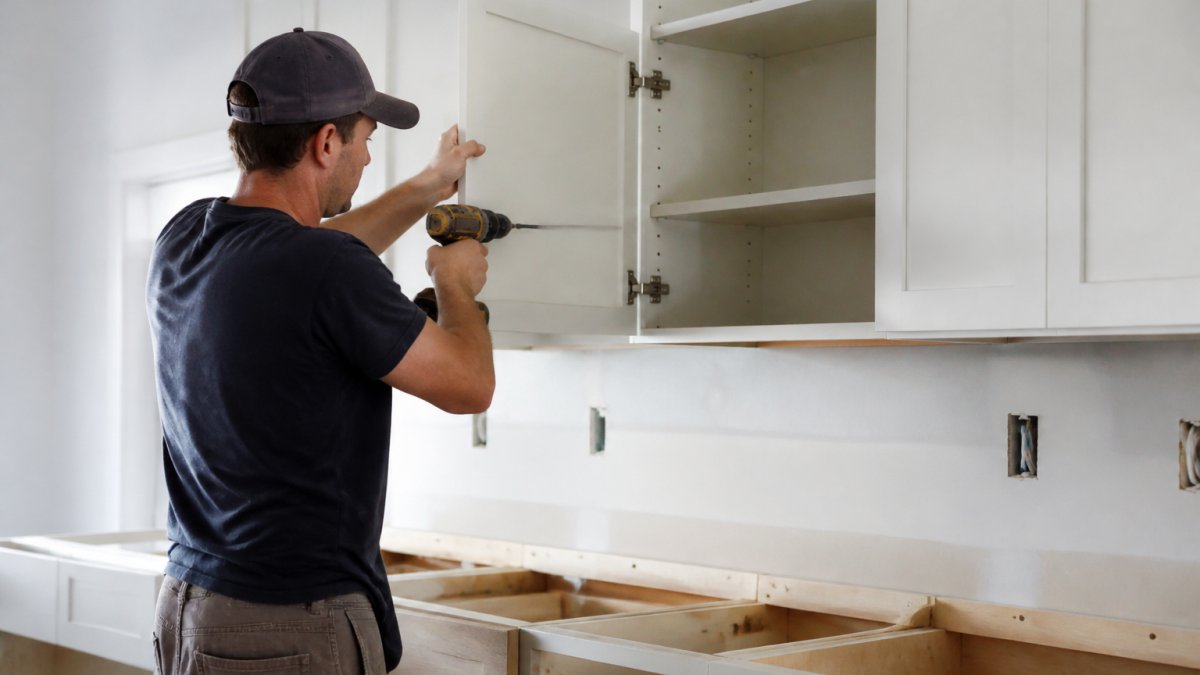
DIY kitchen cabinet installation vs. hiring a professional is the decision that saves or costs you the most. Installation is heavy, precise work. Cabinets must be level, square, and anchored to studs. A small error shows up as crooked doors and gaps that never close.
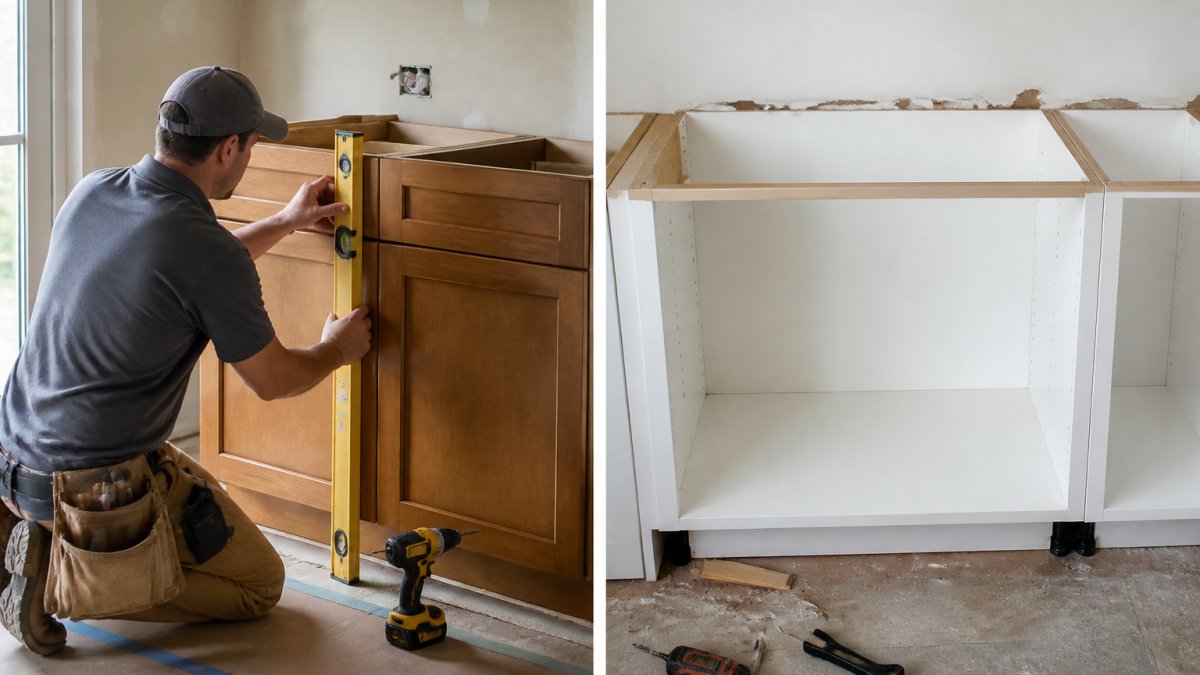
DIY pros: No labor bill, full control of the schedule. DIY cons: Heavy lifting, wall damage risk, and no warranty if something fails.
If you'd rather hand it off, our kitchen remodeling team can help with your project.
A Decision Framework: When DIY Pays and When It Doesn't
Use this checklist to judge whether DIY is worth the risk for your kitchen:
Common DIY Mistakes and What They Cost to Fix
Watch out: skipping a stud finder to save ten minutes can cost you a cabinet full of dishes and a drywall repair.
The Bottom Line on DIY vs. Professional
Our kitchen remodeling services come with digital quoting that breaks out materials, labor, and timeline, so you can see exactly what you're paying for. When you're ready, contact us to request your own installation quote.
Step 5: Compare Installation Quotes the Right Way
Compare quotes line by line, not by the bottom number.
Our kitchen remodeling services come with digital quoting that breaks out materials, labor, and timeline, so you can see exactly what you're paying for. When you're ready, contact us to request your own installation quote.
Step 6: Time Your Purchase: The Best Time to Buy Kitchen Cabinets
A few timing tactics that work:
- Ask about discontinued and surplus lines
- Check ready-to-assemble options for lower prices
- Order during store promotions rather than peak spring remodel season
- Buy all at once to avoid mismatched dye lots
Pros: Real discounts on the same product. Cons: Limited colors and sizes, and no waiting if you need a custom fit.
Patience pays here. A few weeks of waiting can beat a rushed order.
Step 7: Trim Costs on Hardware, Doors, and Finishes
Hardware and finishes are where small choices add up fast. Houzz suggests comparing door styles, swapping some wall cabinets for open shelving, and choosing simpler cabinet options to save.
Frequently Asked Questions
Is it cheaper to install kitchen cabinets yourself?
DIY may avoid a labor charge, but the overall cost depends on the project and any work needed to correct mistakes. Consider the scope and your experience when deciding whether to do the work yourself or hire a professional.
Can I save money by keeping my existing kitchen layout?
Keeping the existing kitchen layout may limit the scope of changes. Consider whether the current layout works for you before deciding whether to change it.
Are stock cabinets cheaper than custom cabinets?
Stock cabinets cost less because they come in fixed sizes and finishes, so you buy off the shelf instead of paying for custom build time. The trade-off is fit: stock sizes may leave gaps that need filler strips, and finish choices are limited. Custom cabinets fit odd spaces and match your exact style but carry a higher price. For many kitchens, semi-custom sits in the middle and gives more size options than stock without full custom pricing.
How can I compare kitchen cabinet installation quotes fairly?
Ask each contractor for a line-item quote and clarify what the quoted scope includes. Ask about the timeline and how changes to the scope are handled so you can compare bids on the same basis.
Cutting cabinet costs without cutting quality takes planning, honest quotes, and the right crew. Handy Gonzo's Home Improvements brings 35+ years of experience, transparent digital quoting, and a dedicated multi-trade crew that stays on your job from start to finish. We keep job sites clean daily so your home stays livable. Get started with Handy Gonzo's Home Improvements and get a free estimate on your kitchen cabinet installation.