 how-to
Post-Construction Cleaning Services Cost Guide
Table of Contents
- Understanding Post-Construction Cleaning Services
- Post-Construction Cleaning Cost Per Square Foot Breakdown
- Factors That Affect the Final Price
- Getting an Accurate Post-Construction Cleaning Estimate
- Cleaning Phases and Service Levels
- Post-Construction Cleaning Checklist for Budget Planning
- Post-Construction Cleaning Time Estimate and Schedule
- Cost-Saving Strategies and What You Can Do Yourself
- Frequently Asked Questions
Last Updated: October 7, 2026
Understanding Post-Construction Cleaning Services
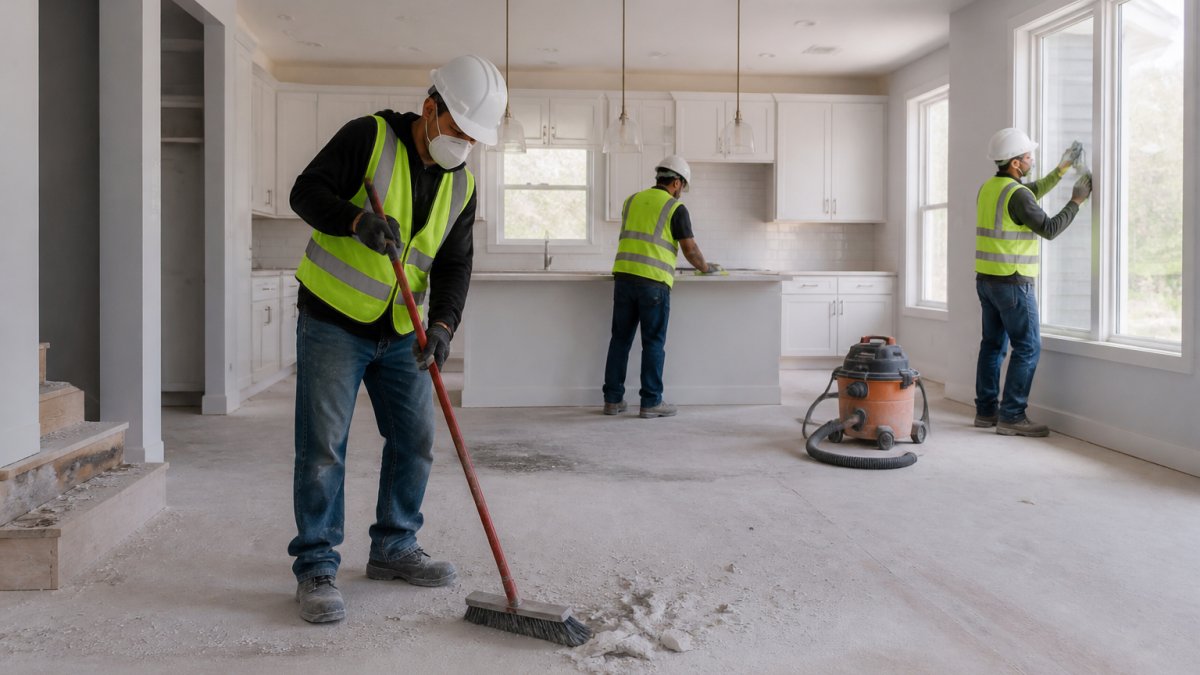
Construction sites generate three types of mess. Fine dust settles on every surface. Larger debris fills corners and closets.
At Handy Gonzo's Home Improvements, we understand that post-construction cleaning services cost guide pricing depends heavily on what type of work you've completed. A kitchen renovation creates different cleanup needs than a whole-house addition or new construction.
Most projects fall into two categories: rough cleaning and final cleaning. Rough cleaning happens immediately after construction ends. Final cleaning comes after all trades finish their work.
Post-Construction Cleaning Cost Per Square Foot Breakdown
The per-square-foot method gives you a quick budget estimate. However, this approach has real limitations. A small, heavily damaged space costs more per square foot than a large, lightly dusty one.
Residential Pricing Ranges
Residential post-construction cleaning typically ranges based on the cleaning phase and project type. First-pass cleaning runs lower than final cleaning. Final cleaning requires more attention to detail and takes longer.
Most residential properties see costs that vary by cleanup intensity. Light cleanup costs less than deep cleaning. The condition of your home before construction also matters. A brand-new build requires different work than a renovation inside an occupied house.
Factors that push costs higher include:
- Extensive paint splatters on trim and fixtures
- Adhesive residue on floors and walls
- Fine dust throughout the entire home
- Multiple levels requiring extra labor time
- Specialized cleaning for delicate finishes
Factors that lower costs include:
- Minimal debris volume
- Single-story homes or small spaces
- Protected areas that stayed relatively clean
- Pre-construction prep that contained dust
Commercial Pricing Ranges
Commercial properties typically cost more per square foot than residential work. Commercial spaces often have larger floor areas, which can lower the per-square-foot rate. However, commercial projects frequently involve specialized finishes and materials that require careful handling.
According to ServiceMaster Clean's construction cleanup guide, commercial post-construction cleaning pricing reflects the complexity of the space. Retail environments, office buildings, and industrial spaces each have unique cleanup requirements.
Commercial cleanup often includes:
- Floor preparation and polishing
- Window cleaning on multiple panes
- HVAC duct cleaning
- Detailed fixture and hardware cleaning
- Specialized surface treatments
The final cost depends on building size, finish quality, and material types. A 10,000-square-foot office building needs different work than a 10,000-square-foot warehouse.
Factors That Affect the Final Price
Your post construction cleaning services cost guide estimate depends on several real variables. Understanding these factors helps you get accurate quotes and avoid surprises.
Project Scope and Renovation Type
A bathroom update generates far less debris than a kitchen renovation. A kitchen remodel involves removing cabinets, countertops, flooring, and often walls. Bathrooms require similar work but in a smaller space.
New-construction cleanup differs from renovation cleanup. New builds accumulate construction dust throughout the entire structure. Renovations concentrate debris in specific areas.
The type of finishes also matters. Natural stone requires different cleaning than drywall. Hardwood floors need different treatment than tile. Specialty materials like marble or polished concrete demand extra care and cost more to clean properly.
Property Condition and Debris Volume
A property with heavy debris requires more labor hours. A property with minimal dust requires less time and fewer crew members.
Construction dust and fine particles settle everywhere during active work. Sawdust, mortar dust, and drywall dust cling to surfaces and accumulate in corners. Paint splatters on windows, trim, and fixtures. Adhesive residue hardens on floors.
Properties with:
- Multiple rooms affected
- High ceilings
- Complex layouts
- Delicate finishes
All cost more to clean than simpler spaces. A straightforward rectangular room with basic finishes cleans faster and cheaper than a space with crown molding, recessed lighting, and specialty paint finishes.
Getting an Accurate Post-Construction Cleaning Estimate
A detailed estimate requires specific information about your project. Vague requests lead to vague quotes. Detailed requests lead to accurate pricing.
What to Provide When Requesting a Quote
Start with basic project details. Tell the contractor:
- Total square footage of the area needing cleaning
- Type of project (new construction, renovation, kitchen, bathroom, addition)
- Which rooms or areas need cleaning
- Condition of the space (heavy debris, light dust, mixed)
- Type of flooring and wall finishes
- Any specialty materials or delicate surfaces
Include details about what happened during construction. Did crews protect certain areas? Did dust spread throughout the home? Are there specific problem areas with heavy debris or residue?
Describe what you want cleaned. Do you want windows cleaned? Interior only or exterior too? Should the contractor clean inside cabinets and closets? What about deck cleaning or porch cleaning?
Handy Gonzo's Home Improvements provides digital quoting that breaks down materials, labor, and timeline clearly. This transparent approach helps you understand exactly what you're paying for.
Red Flags in Cleaning Estimates
Watch for estimates that seem too low. Unrealistic pricing often means incomplete work or hidden charges later.
Red flags include:
- Vague descriptions of what's included
- No breakdown between labor and materials
- Unwillingness to specify crew size
- No timeline or schedule provided
- Prices significantly lower than other quotes
- Refusal to provide references or recent work examples
Trustworthy estimates include specific details. You should know exactly what cleaning phases are covered. You should understand how many crew members will work on your project. You should see a timeline for when the work happens.
Ask about what's excluded. Many estimates exclude certain tasks. Knowing what's NOT included prevents surprises. Common exclusions include exterior cleaning, specialized treatments, or post-cleanup touch-ups.
Cleaning Phases and Service Levels
Understanding the three cleaning phases helps you decide what to hire out and what you can handle yourself.
Rough Cleaning Phase
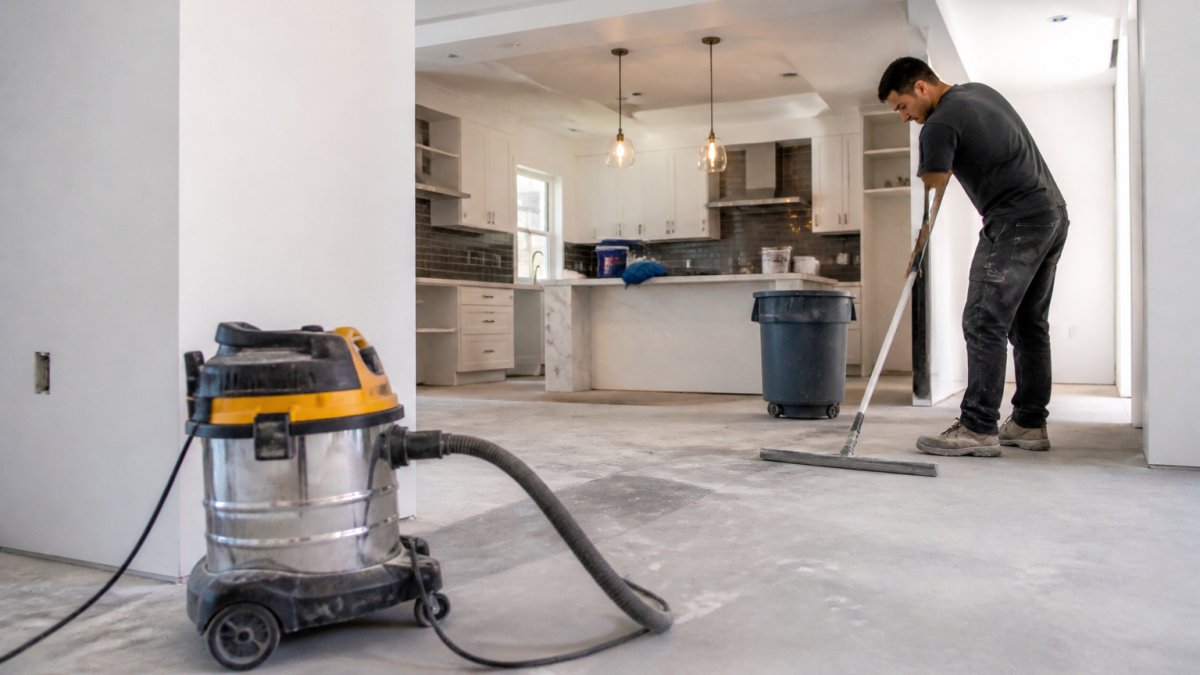
Rough cleaning happens immediately after construction crews finish. This phase removes large debris, sweeps floors, and clears work areas. It's the dirtiest phase.
Rough cleaning includes:
- Removing construction debris and waste
- Sweeping and vacuuming all surfaces
- Clearing dust from horizontal surfaces
- Basic floor cleaning
- Removing protective coverings
Rough cleaning does NOT include detailed work. Windows don't get cleaned. Trim doesn't get wiped down. Fixtures don't get polished. This phase focuses on making the space usable and safe.
Most homeowners can handle rough cleaning themselves with rental equipment. A shop vacuum, broom, and basic cleaning supplies work for this phase. However, hiring professionals saves significant time and physical effort.
Final Cleaning Phase
Final cleaning comes after all trades finish work. This is detailed, meticulous work. Every surface gets attention.
Final cleaning includes:
- Detailed dusting of all surfaces
- Window and glass pane cleaning
- Trim and fixture cleaning
- Floor polishing and finishing
- Appliance and hardware cleaning
- Detailed interior cleaning of cabinets and closets
- Paint splatter and adhesive residue removal
Final cleaning makes your home move-in ready. This phase takes significantly longer than rough cleaning and requires more skill. Professional crews handle final cleaning better than most homeowners.
Touch-Up Cleaning Phase
Touch-up cleaning happens after final cleaning, if needed. This phase addresses any spots missed or new mess created during final stages.
Touch-up cleaning includes:
- Addressing specific problem areas
- Spot-cleaning surfaces
- Final detail work
- Addressing any damage or marks from previous phases
Many projects need a touch-up phase. Final trades sometimes create new dust or mess. Touch-up cleaning ensures everything meets your standards before final walkthrough.
Post-Construction Cleaning Checklist for Budget Planning
Use this checklist when planning your post-construction cleaning services cost guide budget. Check off items you'll hire professionals to handle versus tasks you'll do yourself.
| Task | Hire Professional | Do Yourself | Notes |
|---|---|---|---|
| Debris removal | ✓ | Heavy and time-consuming | |
| Rough floor sweeping | ✓ | Manageable with basic equipment | |
| Fine dust removal | ✓ | Requires specialized vacuums | |
| Window cleaning | ✓ | Tedious work on multiple panes | |
| Paint splatter removal | ✓ | Risk of surface damage | |
| Trim and fixture cleaning | ✓ | Detailed work takes time | |
| Floor polishing | ✓ | Requires professional equipment | |
| Appliance cleaning | ✓ | Basic cleaning you can do | |
| Cabinet interior cleaning | ✓ | Straightforward but time-consuming | |
| Touch-up spot cleaning | ✓ | After professional final cleaning |
Post-Construction Cleaning Time Estimate and Schedule
Knowing how long cleaning takes helps you plan your move-in timeline and understand labor costs.
Crew Size and Labor Hours
Crew size directly affects how fast the work gets done. A larger crew finishes faster but costs more per hour. A smaller crew takes longer but may cost less overall.
Most residential projects use crews of two to four people. Larger commercial projects use bigger teams. The crew size depends on:
- Total square footage
- Debris volume
- Cleaning phase
- Project timeline
- Budget constraints
A two-person crew working eight hours handles less work than a four-person crew working the same time. However, a two-person crew might cost less total if your project doesn't require speed.
Labor hours multiply by crew size to get total labor cost.
Timeline Expectations by Project Size
Small projects finish quickly. Large projects take longer.
Small residential projects (under 2,000 square feet):
- Rough cleaning: 1-2 days
- Final cleaning: 2-3 days
- Total timeline: 3-5 days
Medium residential projects (2,000-5,000 square feet):
- Rough cleaning: 2-3 days
- Final cleaning: 3-5 days
- Total timeline: 5-8 days
Large residential projects (over 5,000 square feet):
- Rough cleaning: 3-5 days
- Final cleaning: 5-7 days
- Total timeline: 8-12 days
Commercial projects vary widely based on building type and size. A 10,000-square-foot office building might take two weeks. A 50,000-square-foot warehouse might take a month.
These timelines assume standard construction debris and no major complications. Projects with extensive damage, specialty finishes, or heavy debris take longer.
Cost-Saving Strategies and What You Can Do Yourself
Hiring professionals for everything costs the most. Doing everything yourself takes the most time.
Handle rough cleaning yourself if you have time and physical ability.
Hire professionals for final cleaning. This phase requires skill, attention to detail, and specialized equipment.
Consider hiring for specific problem areas only.
Prepare your space before professionals arrive. Clear areas where possible. Protect items you don't want cleaned.
Ask about package deals. Some contractors offer discounts for hiring them for both rough and final cleaning.
Schedule cleaning during off-peak times if possible.
Frequently Asked Questions
How much does post-construction cleaning typically cost per square foot?
Post-construction cleaning cost per square foot depends on the cleaning phase and project complexity. Your actual price depends on property condition, the scope of work, local labor rates, and whether the project is a renovation or new construction.
What is included in a post-construction cleaning estimate?
A complete post-construction cleaning estimate should detail all labor hours, crew size, specific tasks (dust removal, debris hauling, window cleaning, floor finishing), materials and equipment, disposal fees, and timeline. The estimate must distinguish between rough and final cleaning phases and specify what surfaces and areas are covered. Ask whether window panes, exterior surfaces, and specialty items like paint splatters or adhesive residue are included. Any exclusions should be listed clearly so there are no surprises.
How long does post-construction cleaning take?
Post-construction cleaning duration depends on property size, project scope, and crew size. Larger homes or commercial properties may take a week or more. Multiple cleaning phases spread the work over the project timeline: rough cleaning happens as construction progresses, and final cleaning occurs just before occupancy. Request a detailed timeline when you receive your post-construction cleaning estimate.
What factors affect the cost of post-construction cleaning?
Key cost factors include property square footage, type of project (new construction versus renovation), cleaning phases required, construction dust and debris volume, surface materials (hardwood, tile, carpet), window count and type, regional labor rates, and whether disposal is included. Renovation cleanups often cost more than new-construction cleanups because existing finishes must be protected. Commercial properties typically cost more than residential due to larger square footage and specialized cleaning requirements. Always confirm what tasks are covered in your post-construction cleaning estimate.
Post-construction cleaning is essential work that protects your investment. The cost varies based on project size, debris volume, and the cleaning phases you need. When you're ready to move forward, Handy Gonzo's Home Improvements provides transparent digital quoting that breaks down materials, labor, and timeline clearly. We maintain clean job sites throughout your project and deliver detailed estimates before work begins. Get a free estimate and see exactly what your project costs.