 comparison
Quartz vs Granite Countertops for DFW Kitchens
Table of Contents
- Quartz vs Granite: Which Countertop Wins for Your DFW Kitchen?
- Cost Comparison: Quartz vs Granite Prices in DFW
- Quartz vs Granite Maintenance Guide: Daily Care and Upkeep
- Heat, Scratch, and Stain Resistance: A Head-to-Head Test
- Aesthetic Flexibility: Matching Your DFW Home's Style
- Countertop Installation Timeline: From Template to Cooktop
- Making the Choice: A Decision Framework for Your Kitchen
- Frequently Asked Questions
Last Updated: September 9, 2026
Quartz vs Granite: Which Countertop Wins for Your DFW Kitchen?
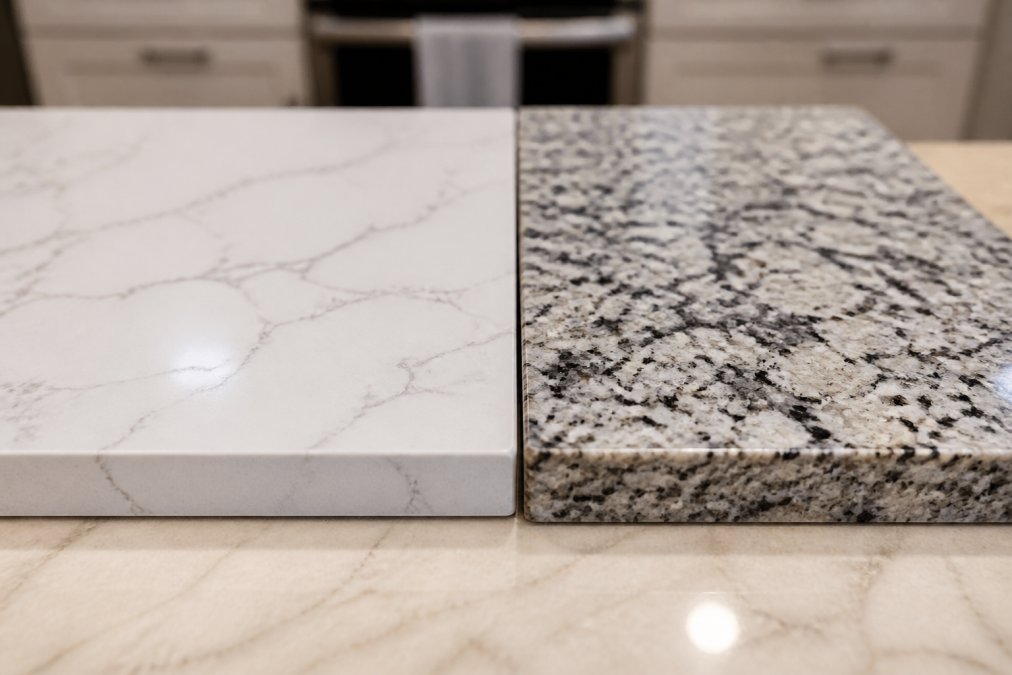
The quartz vs granite decision is the most common crossroads in DFW kitchen remodels, and choosing wrong can cost you thousands. At Handy Gonzo's Home Improvements, we've installed both materials across the Metroplex for over three and a half decades, and neither is universally superior. Quartz is an engineered stone made from crushed minerals bound with resin, while granite is a natural stone quarried from the earth, and that core difference drives everything from pricing to daily upkeep.
Granite wins on heat resistance and unique natural beauty, while quartz wins on maintenance and consistency. Below, we break down the real costs, maintenance realities, and a decision framework for your specific kitchen layout.
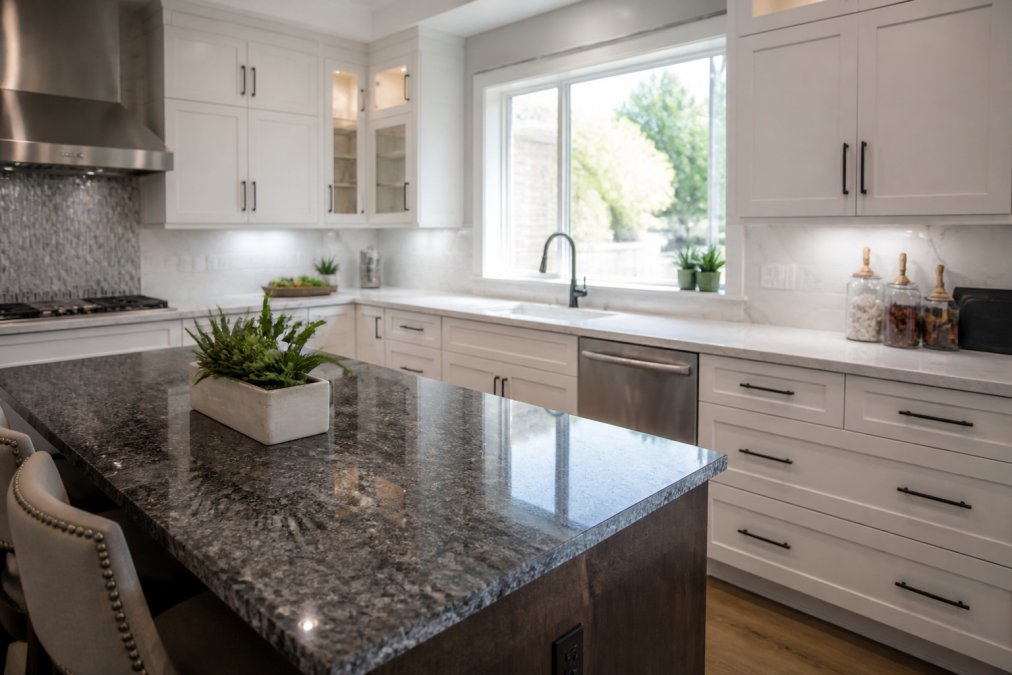
Natural Stone vs Engineered Stone: The Core Difference
Granite is a quarried natural stone, meaning every slab is unique. Quartz, by contrast, is manufactured in a factory, allowing for consistent color and pattern across large installations.
This distinction matters for more than looks. Natural granite is porous and requires periodic sealing to prevent staining, while quartz is non-porous and never needs sealing (naturalstoneinstitute.org). As the Natural Stone Institute's countertop guidance explains, understanding the porosity of your stone is the first step in proper care. For DFW families who cook daily and don't want another chore on their list, that difference alone often settles the debate.
Cost Comparison: Quartz vs Granite Prices in DFW
Granite generally offers a lower entry point, with premium quartz brands typically costing more, though the gap narrows when you factor in the lifetime cost of sealants and staining risk.
The price you see quoted should always include fabrication and installation, not just the raw material. Edge profiles, cutouts for sinks, and the number of seams all add labor hours that shift the final number.
The Total Cost of Ownership (TCO): Beyond the Initial Quote
Most price comparisons stop at the per-square-foot quote, but that misses the real financial picture. A true Total Cost of Ownership (TCO) analysis over a 20-year horizon reveals the difference is often smaller than the sticker price suggests, and in some scenarios, quartz ends up cheaper.
Upfront Costs to Itemize:
- Material grade: Granite is graded from commercial (thinner, more prone to fissures) to premium (thicker, rarer color). Quartz pricing is more uniform, but premium lines like Cambria's Brittanicca or Silestone's Dekton command a surcharge.
- Slab size and seams: A standard kitchen layout may require multiple granite slabs, while quartz slabs are typically larger, so larger kitchens often need fewer slabs, reducing seam counts and waste.
- Edge profile: A basic eased edge is included in most quotes. A beveled or ogee profile, or a mitered edge for a thicker, modern look, can add to the cost.
- Cutouts and sink type: Undermount sink cutouts and cooktop cutouts add to the cost. A farmhouse sink requires more complex fabrication, also adding to the cost.
- Template and installation: Professional templating (laser or digital) is often bundled, but some fabricators charge separately. Installation labor is also a factor in the total cost.
Hidden Costs of Granite Ownership:
- Sealing: Quality penetrating sealers and professional resealing add to the long-term maintenance cost. Over 20 years, this can accumulate to a significant amount in maintenance alone.
- Stain and etch risk: A missed seal cycle or a spilled glass of red wine on an unsealed area can require professional poultice treatment or, in worst cases, a partial replacement.
- Chip repair: Edge chips in granite are common with heavy cookware. Color-matched epoxy repair can be costly, and the fix is often visible.
Hidden Costs of Quartz Ownership:
- Heat damage: A hot pan directly on quartz can cause thermal shock, leading to a crack that is nearly impossible to repair invisibly. Replacement of a damaged section can be costly including fabrication.
- Resin degradation: Harsh chemical cleaners (bleach, oven cleaner) can dull the surface over time, requiring professional refinishing that costs $200-$400.
The 20-Year TCO Comparison (Typical DFW Kitchen, 40 sq ft):
| Cost Component | Granite (Mid-Grade) | Quartz (Mid-Grade) |
|---|---|---|
| Initial installed cost | $2,800 - $4,000 | $3,200 - $4,800 |
| Sealing (20 years) | $1,500 - $3,000 | $0 |
| Repairs (average) | $400 - $800 | $200 - $600 |
| Total 20-Year Cost | $4,700 - $7,800 | $3,400 - $5,400 |
What This Means for Your Budget:
If you plan to stay in your home for 10+ years, quartz's zero-maintenance profile often delivers a lower TCO despite the higher upfront price. If you're flipping a home or plan to move within 5 years, granite's lower entry cost may make more sense, provided you keep up with sealing.
When comparing quotes, ask for a line-item breakdown of materials, labor, and timeline. This transparency is something we build into every digital quote at Handy Gonzo's Home Improvements, because surprise costs are the number one complaint we hear from homeowners.
Quartz vs Granite Maintenance Guide: Daily Care and Upkeep
A quartz vs granite maintenance guide comes down to one question: how much time do you want to spend caring for your countertops? Quartz requires only soap and water for daily cleaning, and its non-porous surface resists staining from wine, coffee, and cooking oils without any periodic treatment.
Granite demands more attention. You'll need to reseal periodically to maintain stain resistance, and acidic spills left sitting can etch the finish. Protected granite products like Cosentino Sensa now come with a manufacturer-applied treatment that reduces sealing frequency, offering a middle ground.
Sealing, Cleaning, and Repair: What to Expect
Sealing is the biggest differentiator in upkeep. Standard granite needs resealing every one to two years, while treated options like Sensa and all quartz surfaces skip this step (msisurfaces.com). For cleaning, both tolerate mild dish soap and water, but avoid harsh chemical cleaners on quartz as they can degrade the resin binder.
Repairs also differ. A chip in granite can sometimes be filled with color-matched epoxy, though the repair may remain visible. Quartz chips are harder to hide because the pattern is consistent. In either case, a heavy impact can damage both, so using a cutting board is non-negotiable.
Heat, Scratch, and Stain Resistance: A Head-to-Head Test
Granite wins the heat test outright. You can place a hot pan directly on a granite surface without damage, while quartz can discolor or crack from sudden, extreme temperature changes. If you regularly pull sheets from a 400-degree oven and set them down immediately, granite is the safer choice.
Quartz wins on scratch and stain resistance. Its resin binder creates a harder, less porous surface that resists both scratching and penetration from common kitchen stains. Granite is more prone to chipping at the edges and can absorb oils that darken the stone over time if the seal fails.
| Property | Granite | Quartz |
|---|---|---|
| Heat resistance | Excellent, direct contact OK | Good, use trivets for hot pans |
| Scratch resistance | Good, can chip on edges | Excellent |
| Stain resistance | Requires sealing | Non-porous, no sealing needed |
| Maintenance | Periodic resealing required | Daily soap-and-water cleaning |
| Appearance | Unique, natural variation | Consistent, engineered patterns |
Aesthetic Flexibility: Matching Your DFW Home's Style
Granite offers the depth and movement of natural stone that many buyers associate with luxury. Its veining, speckling, and color variation are inherently organic, suiting traditional and rustic styles. Quartz delivers a cleaner, more uniform look that pairs naturally with modern and contemporary kitchens.
Patterns, Edge Profiles, and Custom Dimensions
Design flexibility is where engineered stone shines. Quartz manufacturers like Silestone and Cambria produce consistent patterns across large slabs, meaning your island and perimeter counters will match perfectly. Natural granite slabs are cut from a single block, so you may see noticeable variation between different slabs of the same stone type.
Edge profiles also factor into the aesthetic. Both materials can be fabricated with standard eased edges, beveled edges, or more ornate ogee profiles, though custom edges add cost. For a seamless look across a large kitchen footprint, quartz's consistency is a clear advantage.
Countertop Installation Timeline: From Template to Cooktop
A countertop installation timeline typically spans two to three weeks from template to final placement. The process starts with a template visit, where fabricators measure your cabinets and create a digital or physical template of the exact dimensions needed.
After templating, fabrication takes seven to ten days for cutting, edging, and polishing. Installation itself is usually completed in a single day, though it can stretch longer with complex corners or multiple seam points. A dedicated crew handling the full process prevents coordination headaches.
Making the Choice: A Decision Framework for Your Kitchen
If you cook with high heat daily and want a unique natural surface, granite is the better fit. If you prioritize low maintenance, consistent color, and stain resistance, quartz will serve you better. For families with young children or busy schedules, quartz's zero-sealing requirement often outweighs granite's natural appeal.
A Decision Matrix for Specific Kitchen Layouts
Beyond personal preference, your kitchen's physical layout should drive the material choice:
1. The Open-Concept Island with Waterfall Edge
If your island is longer and you want a waterfall edge, quartz is often a good choice due to its consistent slab lengths, allowing for a seamless waterfall with a single mitered corner. Granite slabs vary in length, and finding a single slab long enough may mean accepting a visible seam.
2. The L-Shaped or U-Shaped Kitchen with Corner Angles
Standard 90-degree corners are manageable for both materials. But if your kitchen has non-standard angles, a 45-degree diagonal sink corner, a bay window bump-out, or an angled breakfast bar, granite's natural fissures can complicate fabrication. Quartz's uniform structure allows precise cuts without risking stress fractures. For angles under 60 degrees, most fabricators will recommend quartz to avoid breakage risk.
3. The Historic or Older DFW Home with Uneven Floors
Many DFW neighborhoods, like the M Streets, Lakewood, or older sections of Fort Worth, have homes built before 1960 with floors that have settled. Granite is heavier (about 19 pounds per square foot at 3cm thickness) and less forgiving of uneven substrate. If your cabinets aren't perfectly level, a granite slab can develop stress cracks at the seams. Quartz is slightly lighter (about 18 pounds per square foot) and its resin binder provides more flexibility, making it more forgiving on imperfect substrates. In these homes, a full re-leveling of cabinets before installation can add to the cost, a cost worth budgeting for regardless of material.
4. The High-Traffic Family Kitchen with a Prep Sink
If your layout includes a secondary prep sink near the cooktop, consider how that area will be used. Prep zones see more acidic spills (lemon juice, vinegar, tomato sauce). Quartz's non-porous surface handles these without etching. Granite in a prep zone requires vigilant sealing and immediate wipe-downs. For families who cook with kids, the prep zone is where quartz earns its keep.
5. The Outdoor Kitchen or Covered Patio Connection
DFW's climate swings from 100+ degree summers to freezing winter nights. If your countertop extends to an outdoor kitchen or covered patio, neither granite nor quartz is ideal, both can suffer from thermal cycling. For outdoor applications, consider porcelain slabs or granite with a sealed, matte finish rated for exterior use. If you're set on quartz or granite for an indoor-outdoor pass-through, quartz's resin binder is more susceptible to UV yellowing, making granite the better choice for sun-exposed edges.
Resale Value, Longevity, and Total Cost of Ownership
Both materials hold up well over decades, but the total cost of ownership favors quartz for most homeowners. The ongoing cost of sealants and staining risk with granite can offset its lower upfront price, while quartz's maintenance-free nature keeps lifetime costs predictable.
For resale, both surfaces appeal to buyers, though granite's association with "natural luxury" can carry slightly more weight in traditional markets. However, in DFW's competitive real estate market, buyers increasingly ask about maintenance. A quartz countertop with a "no sealing needed" selling point can be a stronger closing tool than granite's "needs periodic care" caveat.
The best choice is the one you'll be happy living with daily. If you're planning a remodel and want a clear breakdown of materials, labor, and timeline before work begins, the Handy Gonzo's Home Improvements team brings over 35 years of DFW kitchen experience to every project.
Frequently Asked Questions
Which material is more durable for high-traffic kitchens in DFW?
Both quartz and granite are durable, but they handle stress differently. Quartz is non-porous and highly scratch-resistant, making it tough against daily wear and stains. Granite is more heat-resistant, so you can place a hot pan directly on it without worry. For a busy family kitchen, quartz offers lower maintenance, while granite provides superior heat tolerance. Your choice depends on your cooking habits and whether you prefer no-sealing upkeep or maximum heat protection.
Does granite require more maintenance than quartz?
Yes, traditional granite requires periodic sealing, typically once a year, to prevent staining from oils and wine. Quartz is non-porous and never needs sealing. However, treated granite options like Cosentino Sensa include a factory-applied sealant and come with a 15-year warranty, reducing the maintenance gap. For a quartz vs granite maintenance guide, the core takeaway is that quartz is essentially zero-maintenance, while granite needs a simple annual sealing routine to stay protected.
How long does professional countertop installation typically take?
A typical countertop installation timeline spans 1 to 3 weeks from start to finish. This includes an initial measurement or digital template visit, which takes about an hour, followed by a fabrication period that can take 7 to 10 days. The final installation usually takes one day, with plumbing reconnection and cleanup. Factors like the number of cutouts for sinks, the edge profile, and material type can affect the fabrication time. Your contractor will provide a detailed schedule before work begins.
How do quartz and granite prices compare for kitchen renovations?
The average cost of kitchen countertop installation varies by material, slab selection, and project size. Entry-level granite slabs are often more affordable, with premium quartz brands typically priced higher due to engineered consistency and brand reputation. The total price depends on the square footage of your countertops, edge profile, and any special cutouts. Always request a detailed quote that breaks down material, labor, and timeline costs.
Which material offers better resale value for homes in the DFW area?
Both quartz and granite are strong selling points for a home. Natural granite has a long-standing reputation for adding resale value due to its timeless, upscale appeal. Quartz is increasingly favored by buyers for its modern look and zero-maintenance care. The best choice for resale depends on your home's style and neighborhood expectations. A neutral-colored quartz or a classic granite slab both appeal to a broad range of buyers, making either a smart investment for your kitchen remodel.