 how-to
Reduce Your Home Carbon Footprint: 7 Steps
Last Updated: October 23, 2026
Quick Summary
To reduce home carbon footprint, start by assessing your current energy use, then improve heating and cooling controls, seal air leaks, upgrade to efficient appliances and LED lighting, and adopt low-cost daily habits like raising your thermostat in summer and using cold water for laundry. Most homeowners see a 10-25% reduction in energy use after implementing several of these steps.
- The average home produces approximately 6-8 metric tons of CO2e per year from direct energy use alone.
- Raising your thermostat 2-3 degrees in summer saves roughly 3% on cooling costs per degree.
- LED bulbs use about 75% less energy than incandescent bulbs and last roughly 25 times longer.
- Sealing air leaks and adding insulation typically reduces heating and cooling energy use by 10-20%.
- Washing clothes in cold water uses a fraction of the energy of a hot load.
Table of Contents
- Why Your Home's Carbon Footprint Matters
- Step 1: Assess Your Current Energy Consumption
- Step 2: Improve Home Energy Efficiency and Heating Controls
- Step 3: Seal Air Leaks and Add Home Insulation
- Step 4: Upgrade to Energy-Efficient Appliances and Lighting
- Step 5: Adopt Low-Cost Ways to Save Energy at Home
- Step 6: Plan a Sustainable Home Renovation Strategy
- Track Your Progress and Next Steps
- Frequently Asked Questions
Why Your Home's Carbon Footprint Matters
Your home's energy use creates a significant environmental impact, and there are practical steps you can take to reduce home carbon footprint. Homes and businesses together account for about 31% of U.S. greenhouse gas emissions when the electricity they use is included, according to SmartEnergy's emissions research. The average home produces approximately 6-8 metric tons of CO2e per year from direct energy use alone.
You don't need to overhaul everything at once. This guide walks you through seven concrete steps to reduce your home carbon footprint, starting with what you can measure today.
Step 1: Assess Your Current Energy Consumption
Before making changes, review the past year's utility bills and note which months used the most energy.
Ask your utility about a home energy audit, many are free or low cost, to pinpoint where your home loses energy most: air leaks, poor insulation, or inefficient heating and cooling.
If a professional audit isn't available right now, you can do a basic assessment yourself:
- Check your thermostat settings and note the temperature you maintain
- Look for drafts around windows and doors
- Feel your exterior walls for cold spots in winter
- Note which appliances run most frequently
Record your current annual electricity and gas usage as a baseline, then compare in six months.
Step 2: Improve Home Energy Efficiency and Heating Controls
Upgrade a manual thermostat to a programmable or smart model so temperatures adjust automatically when you're away or asleep.
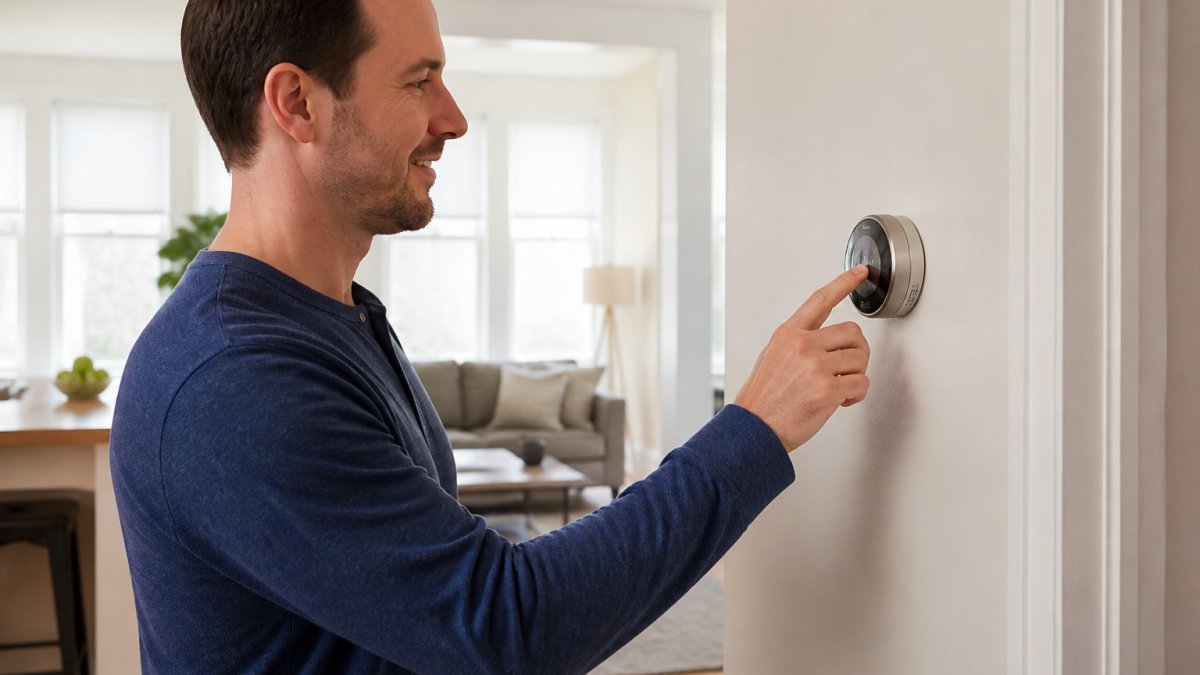
Next, seal air leaks around your HVAC system. Check where ducts connect to your furnace or air handler, loose connections waste conditioned air.
Consider these additional heating and cooling improvements:
- Close vents in unused rooms to redirect air where you need it
- Keep heating and cooling vents clear of furniture and clutter
- Have your HVAC system serviced annually, a clean filter and well-maintained equipment runs more efficiently
- Use ceiling fans to circulate air and reduce thermostat dependence
If you're planning a larger upgrade, a professional roofing service can assess your roof's condition and recommend reflective materials or better ventilation to reduce heat absorption in summer.
Step 3: Seal Air Leaks and Add Home Insulation
Walk around your home's exterior on a windy day. Feel for drafts around:
- Window and door frames
- Where pipes and wires enter the house
- Gaps around electrical outlets on exterior walls
- Cracks in the foundation or siding
Use caulk or weatherstripping to seal gaps smaller than a quarter-inch. For larger gaps, use expanding foam sealant.
Insulation works alongside air sealing. Most homes lose significant heat through the attic; if yours is under 10 inches thick, adding blown-in cellulose or fiberglass pays for itself quickly.
Check your basement or crawlspace too, insulating rim joists (where the foundation meets the walls) prevents winter heat loss.
Common air leak locations and fixes:
- Basement rim joists: spray foam insulation
- Attic access doors: weatherstripping and insulation
- Recessed light fixtures in ceilings: seal with caulk or cover with insulation
- Dryer vents: check for air leakage around the duct
Step 4: Upgrade to Energy-Efficient Appliances and Lighting
Start with lighting, the cheapest, fastest win. LED bulbs use about 75% less energy than incandescent and last roughly 25 times longer. Replace fixtures that run several hours a day first, kitchen, living room, outdoor security lighting.
For appliances, look for the ENERGY STAR label, which meets efficiency standards set by the EPA and U.S. Department of Energy (What Makes a Product ENERGY STAR?). Prioritize replacements by how hard the appliance works and how long it runs:
- Refrigerator (runs 24/7 and fights kitchen heat)
- Water heater (especially if over 10 years old)
- Washing machine (older top-load models are the biggest gap)
- Dishwasher
- HVAC system (if over 15 years old)
A kitchen remodeling project often folds efficient appliances into the overall improvement. Modern ENERGY STAR refrigerators and dishwashers can cut energy use substantially compared with units from the 2000s.
Match the Upgrade to Your Electricity Plan
In much of the state you can shop for electricity plans, and a kilowatt-hour's emissions depend on the plan: a fixed-rate plan built mostly on natural gas and coal has a very different carbon intensity than one marketed as 100% renewable or backed by renewable energy credits (RECs).
Outside the competitive retail market, ask about green-power programs and time-of-use rates. Shifting laundry, dishwashing, and EV charging to off-peak hours lowers cost and, on many grids, lowers emissions because cleaner generation often runs overnight.
Use Incentives Before You Pay Retail
Federal tax credits under the Inflation Reduction Act can cover a meaningful share of qualified heat-pump water heaters, heat pumps, and other efficient equipment, and utility and state programs add rebates on top (Home Upgrades).
Don't overlook small appliances. Unplug chargers, coffee makers, and other devices when not in use, they draw phantom power even when off. A smart power strip makes this automatic. And when you replace, recycle the old unit through your utility or retailer rather than curbside, which keeps refrigerants out of the atmosphere.
Step 5: Adopt Low-Cost Ways to Save Energy at Home
Big upgrades take time and planning, but daily habits create immediate savings, and for renters or tight budgets they may be the only levers available. Rank habits by impact so effort goes where it counts.
Rank Habits by Impact, Not by Familiarity
The biggest low-cost savings come from thermostat discipline and cooling behavior, since air conditioning dominates summer bills in most of the state.
Water heating is the next tier. Wash clothes in cold water, modern detergents work well cold, and a cold load uses a fraction of the energy of a hot one.
In the kitchen, use lids on pots, match pot size to burner size, and defrost food in the refrigerator rather than on the counter. Keep the refrigerator and freezer reasonably full, they hold temperature more efficiently, but not so packed that air can't circulate.
Habits That Fit Renters and Tight Budgets
If you rent or can't replace equipment, focus on behavior and cheap hardware:
- Install weatherstripping and door sweeps where your lease allows; removable options exist for renters.
- Use blackout curtains or reflective window film on west- and south-facing windows to cut afternoon heat gain.
- Set the thermostat higher in summer and lower in winter within your comfort range, and ask your landlord about a programmable thermostat.
- Run major appliances in the evening or early morning to avoid peak demand and, on time-of-use plans, peak prices.
- Unplug devices you don't use regularly and use power strips for entertainment centers.
- Close doors to unused rooms to concentrate cooling where you need it.
- Use natural light during the day and turn off lights when leaving a room.
Connect Habits to Your Bill and Your Grid
Track these changes against your Step 1 baseline, comparing the same months year over year because seasonal swings in a long cooling season can mask real savings. On a time-of-use or free-nights plan, shifting laundry and dishwashing off-peak lowers your bill and, on many grids, your emissions.
Food choices matter too. Meat and dairy production creates significant emissions, and eating plant-based meals several times a week reduces your overall footprint, not just your home's energy footprint.
These everyday actions deliver the biggest savings for the least cost, ranked by impact.
| Action | Impact | Savings |
|---|---|---|
| Raise thermostat in summer | Largest savings | 3% per degree |
| Use cold water for laundry | High impact | Fraction of hot load energy |
| Shorten showers by 2 minutes | High impact | Saves 5 gallons hot water |
| Air-dry dishes | Moderate impact | Eliminates heated dry cycle |
| Use lids on pots | Moderate impact | Reduces cooking energy |
| Install weatherstripping | Low cost, renter-friendly | Reduces air leaks |
| Use blackout curtains | Low cost, renter-friendly | Cuts afternoon heat gain |
Step 6: Plan a Sustainable Home Renovation Strategy
If you're planning renovations, make sustainability part of the plan, these decisions affect your home's energy use for decades.
When replacing roof, walls, or windows, choose materials that reduce heat transfer. Reflective roofing materials reduce summer cooling costs.
Insulation choices matter. Spray foam provides excellent air sealing but has a higher carbon footprint to produce.
Plan for ventilation: air sealing without it creates indoor air quality issues.
A general contractor experienced in sustainable building can help you evaluate trade-offs.
Prioritize improvements that address your home's biggest energy losses first.
Track Your Progress and Next Steps
Six months after making changes, pull your utility bills again and compare to your Step 1 baseline. Most homeowners see a 10-25% reduction in energy use after several of these steps.
Calculate your savings: cutting 100 kWh per month is roughly 1.2 megawatt-hours per year, meaningful savings at typical rates.
Keep tracking, comparing the same months year over year since seasonal changes affect consumption.
As your confidence grows, tackle bigger projects. Air sealing and insulation can be DIY for many homeowners.
When you're ready to move forward with renovations or larger efficiency upgrades, contact us for a free estimate.
Reducing your home carbon footprint is a journey, not a destination.
Every homeowner has the power to reduce their carbon footprint, whether through small daily changes or major renovations.
Frequently Asked Questions
How much can I reduce my home carbon footprint with energy efficiency improvements?
The average U.S. home produces 6-8 metric tons of CO2e annually from direct energy use. Homes and businesses together account for about 31% of total greenhouse gas emissions when electricity is included. Improving insulation, sealing air leaks, upgrading to ENERGY STAR appliances, and adjusting thermostat settings can cut your household emissions by 20-40%, depending on your current energy consumption and which upgrades you prioritize.
What are the biggest sources of household carbon emissions?
Heating and cooling typically account for 40-50% of household energy use and emissions. Water heating, appliances, and lighting make up most of the remainder. Food waste, meat and dairy consumption, and transportation also contribute significantly to your overall home carbon footprint. Focusing first on heating, cooling, and hot-water use delivers the fastest emissions reductions.
Are there low-cost ways to reduce my carbon footprint without major renovations?
Yes. Switching to LED bulbs, washing clothes in cold water, running full loads in dishwashers and laundry machines, adjusting thermostat settings by 2-3 degrees, sealing visible air leaks with caulk or weatherstripping, and reducing food waste cost little or nothing. These habits can save 5-15% on energy bills and cut emissions measurably. For renters or those with limited budgets, these steps deliver real carbon savings without contractor involvement.
Should I invest in solar energy or renewable energy options?
Solar energy reduces reliance on grid electricity and can offset a significant portion of household emissions over time. Costs and incentives vary by location and electricity plan. Before investing in solar, prioritize reducing your overall energy consumption through efficiency upgrades and behavioral changes, this lowers the system size you need and improves your return on investment. Check with your local utility for rebates and financing options.