 how-to
Slip-Resistant Tiles for Accessible Showers: A Complete Guide
Table of Contents
- Why Slip-Resistant Tiles Matter in Accessible Showers
- Understanding Shower Tile Slip-Resistance Ratings and Test Methods
- Tile Materials and Finishes for Wet-Area Safety
- Best Tile for Walk-In Shower Floors
- ADA-Compliant Shower Tile: What the Standards Require
- Installation and Grout Details That Affect Safety
- Balancing Traction, Maintenance, and Comfort
- Frequently Asked Questions
Last Updated: October 15, 2026
Why Slip-Resistant Tiles Matter in Accessible Showers
Choosing slip-resistant tiles accessible showers is one of the most important decisions in a bathroom renovation. A fall in the shower is a leading cause of home injury, especially for seniors and people with mobility challenges.
At Handy Gonzo's Home Improvements, we start with the shower floor. A slippery surface undermines everything else, even grab bars and a curbless entry won't protect someone whose feet slide out on a wet floor.
Most bathroom tiles look great dry, but add water and soap and they become skating rinks.
This guide covers what actually matters when selecting slip resistant tiles for accessible showers: how to read ratings, compare materials, and balance traction with maintenance and comfort.
Understanding Shower Tile Slip-Resistance Ratings and Test Methods
What COF Means and How It's Measured
Coefficient of Friction (COF) is the numerical measurement of how slippery a surface is. Higher numbers mean more grip. Think of it as a score from 0 to 1: 0.5 is moderate grip, 0.8 grips much better. Most slip-resistant shower tiles range from 0.60 to 0.90.
The tricky part: COF is measured in controlled lab conditions. The test doesn't account for soap residue, body oils, or hair products, and it doesn't measure how the tile feels on bare feet or performs with mobility aids like canes or walkers.
A high COF number doesn't guarantee real-world safety. The test surface is clean and conditions constant; your shower has variables. That's why installation, slope, and drainage matter as much as the lab rating.
ASTM Standards and Real-World Performance
The American Society for Testing and Materials (ASTM) sets slip-resistance standards. The most common test, ASTM D2047, slides a rubber pad across the tile and measures the force required. ASTM D6773 measures wet slip resistance differently. Some manufacturers test against both; some test against neither and just make claims.
For your shower, look for tiles tested under wet conditions. Dry COF numbers are almost useless for bathroom floors.
The federal Americans with Disabilities Act (ADA) doesn't specify an exact COF for shower floors, it requires adequate slip resistance, which is vague on purpose. But the ADA Accessibility Guidelines recommend a minimum COF of 0.60 for walking surfaces, and many accessibility experts recommend 0.70 or higher for shower floors.
Tile Materials and Finishes for Wet-Area Safety
Porcelain Versus Ceramic for Shower Floors
Porcelain tile is denser and more water-resistant than ceramic tile. It's fired at higher temperatures, making it harder and less porous. For shower floors, porcelain wins on durability: it won't absorb water and swell, won't crack as easily, and lasts longer in wet environments.
But porcelain is harder to texture effectively, many porcelain tiles need a glaze or coating for good slip resistance, while softer ceramic can be textured more deeply. For slip-resistant tiles accessible showers, we recommend porcelain with a textured finish: the durability of porcelain plus the grip of texture. Make sure the texture is real, not a printed pattern. Run your hand across it, if it feels smooth, it won't grip well when wet.
Textured Bathroom Tile: Pros and Cons
Textured tiles create friction, but texture comes with trade-offs.
Pros of textured tiles:
- Higher grip on wet surfaces
- Better traction for bare feet and mobility aids
- Visible texture provides psychological reassurance
Cons of textured tiles:
- Harder to clean; dirt and soap residue collect in the grooves
- Can feel uncomfortable on bare feet for some people
- May require more frequent scrubbing to maintain grip
- Texture can wear down over time with heavy use
Texture depth matters: lightly textured tiles clean easier but grip less; heavily textured tiles grip better but trap more dirt. For accessible showers, we recommend a medium texture, enough grip to make a real difference without making cleaning a nightmare. Smaller grout joints also trap less debris than wide ones.
Best Tile for Walk-In Shower Floors
Mosaic and Smaller-Format Tiles
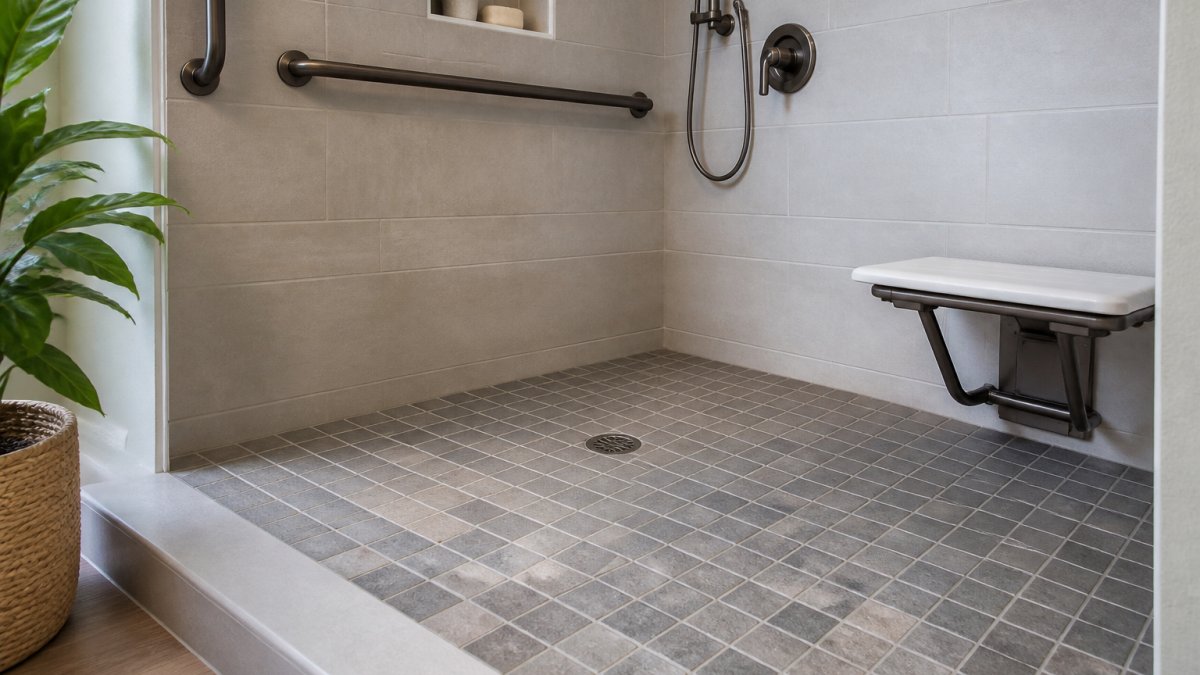
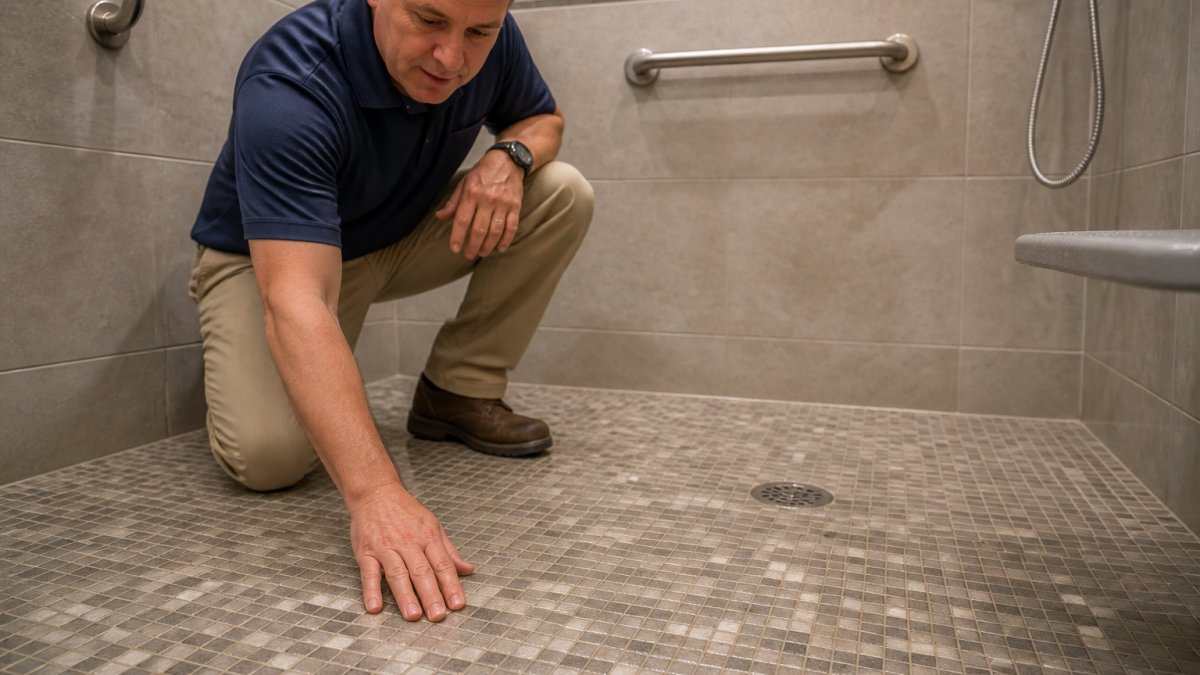
Mosaic tiles are small tiles, usually 1 inch by 1 inch or smaller, set in a grid with grout joints between each piece. All those grout lines add texture and grip, which is why mosaic performs well in wet areas. The downside: they trap water, soap, and dirt, and are harder to clean than larger tiles. Grout itself can become slippery if it's not sealed or is the wrong type.
Smaller-format tiles (2x2 or 4x4 inches) offer a middle ground: grout-line grip without mosaic's cleaning nightmare, and easier, faster installation. For accessible showers, they balance grip, durability, and maintenance. Pair them with epoxy grout (which doesn't absorb water) or a high-quality sealed grout.
Pebble Tile and Natural Stone Options
Pebble tile mimics river stones, textured, natural-looking, and good underfoot. But it's expensive, harder to install, and the irregular surface means inconsistent grout lines, potential water pooling, and crevices that trap dirt like nothing else. Natural stone (slate, granite, limestone) is beautiful but unpredictable: some is naturally slip-resistant, some is dangerously slippery when wet. Test it or ask the supplier for slip-resistance data.
For accessible showers, we usually steer away from pebble tile and natural stone unless the client specifically wants the look and understands the maintenance burden. Manufactured textured tiles give you better control over slip resistance and easier maintenance.
ADA-Compliant Shower Tile: What the Standards Require
Surface Texture and Accessibility Requirements
The ADA doesn't prescribe a specific tile type or texture, it requires surfaces be slip-resistant and safe for people with disabilities. That means the tile must work for barefoot users, people using mobility aids, and people with reduced grip strength or balance issues. The goal is adequate grip without creating a new hazard.
Texture should be consistent across the floor, sudden changes in grip can be disorienting or dangerous for someone using a cane. The surface must also be stable: tiles that shift underfoot are unsafe, so proper installation, adequate substrate, and grout that doesn't crack or deteriorate are essential.
Curbless Showers and Wheelchair Access Design
A curbless shower (also called a walk-in shower) is more accessible than a traditional shower with a curb or threshold. People in wheelchairs can enter directly. People with mobility challenges don't have to step up.
But a curbless shower creates a drainage challenge. Water must flow toward a drain or slope away from the bathroom. That's where tile selection and installation intersect.
The shower floor should slope toward the drain at about 1/8 inch per foot, consistent and unnoticeable to someone walking on it, with tile and grout that support the slope without trip hazards. Slip-resistant tiles matter even more in a curbless shower because there's no barrier; if someone loses their footing, they could slide into the bathroom.
Installation and Grout Details That Affect Safety
Tile Size, Grout Joints, and Surface Traction
How the tile is installed affects slip resistance as much as the tile itself. Large tiles mean fewer grout joints, less texture, and less grip: a 12x12 tile won't grip as well as 4x4 tiles of the same material. Grout joint width matters too, standard joints are about 3/16 inch wide. Wider joints create more texture and water flow; narrower joints reduce dirt trapping but also reduce grip.
For accessible showers, we recommend smaller tiles (4x4 inches or smaller) with standard grout joints, using epoxy or sealed urethane grout, which don't absorb water and maintain grip longer. Grout can become slippery if unsealed or the wrong type: unsanded grout is smoother than sanded, and sanded grout is better for wet areas because it has more texture.
Slope, Drainage, and Long-Term Grip
The shower floor must slope toward the drain, without it, water pools, reducing friction and creating slip hazards. The minimum slope is about 1/8 inch per foot: gentle enough to walk on unnoticed, steep enough to move water away from standing areas. Moving water is less slippery than standing water, so a well-sloped, well-draining shower is safer than a flat one, even with identical tiles.
Over time, soap residue, hard water deposits, and dirt build up on the tile surface and reduce grip. Regular cleaning maintains slip resistance, another reason to choose tiles that are easy to clean.
Balancing Traction, Maintenance, and Comfort
Grip When Wet, Soapy, and Barefoot
The real test of a shower tile isn't the lab, it's how it performs with wet feet, soap on the floor, and shampoo in your eyes. High-grip tiles are great, but some textured tiles feel rough on bare feet, and people with sensitive skin may find them irritating.
This is where accessible shower design matters: grab bars provide backup security, a curbless entry means no step to lose balance on, and good lighting helps people see where they're stepping. The tile is part of a system, not the whole solution. For most people, a medium-textured tile with a COF of 0.70 or higher strikes the right balance, safe but not punishing underfoot, and smooth enough to clean.
Cleaning and Long-Term Durability
A tile that's hard to clean will get dirty, and dirty tiles become slippery tiles, maintenance is part of safety. Smooth tiles clean easier than deeply textured ones; if you want high grip, expect more cleaning time. Regular cleaning with a brush and mild soap keeps grip high.
Over time, grout can crack or deteriorate, letting tiles shift into trip hazards that lose their grip. A well-maintained shower with quality grout stays safe for years.
When you're planning an accessible shower, the tile choice is foundational. At Handy Gonzo's Home Improvements, we've helped many homeowners navigate this decision. A well-chosen slip-resistant tile, properly installed with attention to slope and grout, creates a shower that's safe and livable for years.
Frequently Asked Questions
What type of tile is most slip-resistant for a shower floor?
Porcelain tiles with a matte or textured finish offer the best slip resistance for shower floors. Look for tiles rated with a coefficient of friction (COF) of 0.6 or higher when wet. Mosaic and smaller-format tiles also improve traction by increasing grout lines, which provide more grip points. Avoid glossy or polished finishes, which become dangerously slippery when wet.
What makes a tile ADA compliant for an accessible shower?
ADA-compliant shower tiles must have a textured surface that provides adequate grip, a coefficient of friction suitable for wet conditions, and be installed in a curbless or low-curb design to allow wheelchair access. The surface texture should not create tripping hazards or catch mobility aids. Proper slope for drainage and slip-resistant grout installation are also critical to meeting accessibility standards and reducing fall risk.
How do you compare slip-resistance ratings for shower tile?
Slip-resistance ratings are measured using the coefficient of friction (COF), tested under ASTM standards with wet surfaces. A COF of 0.6 or higher is generally recommended for shower floors. Some manufacturers provide ratings for both static (stationary) and dynamic (moving) conditions. Always request COF data from your tile supplier and verify it was tested under conditions matching your shower use, including soapy water and bare feet.
Are small tiles safer than large tiles on a shower floor?
Smaller tiles are generally safer because they create more grout joints, which increase surface traction and provide more grip points for feet and mobility aids. Mosaic tiles (typically 1 to 2 inches) and other small-format options offer better slip resistance than large-format tiles. However, smaller tiles require more grout maintenance and can be harder to clean if the grout lines are not sealed properly.