 listicle
7 Benefits of Sustainable Luxury Home Construction
Table of Contents
- Why Sustainable Luxury Home Construction Is Reshaping High-End Builds
- 1. Lower Utility Bills and Operating Costs That Compound Over Time
- 2. Energy-Efficient Luxury Home Features That Perform in Texas Heat
- 3. Sustainable Building Materials for Custom Homes That Last Decades
- 4. Healthier Indoor Air Quality and a More Comfortable Living Environment
- 5. The Long-Term ROI of Green Home Building: Resale Value and Buyer Appeal
- 6. Resilience, Water Conservation, and a Smaller Carbon Footprint
- 7. How to Verify Performance: Certifications, Commissioning, and Common Mistakes
- Frequently Asked Questions
Last Updated: October 5, 2026
Why Sustainable Luxury Home Construction Is Reshaping High-End Builds
The benefits of sustainable luxury home construction start with the practice of building high-end residences that cut energy and water use, rely on healthier materials, and hold their value longer than conventional builds.
That matters in North Texas, where summer heat pushes cooling systems hard for months. A home built for that climate behaves very differently from one that simply looks expensive.
1. Lower Utility Bills and Operating Costs That Compound Over Time
The most immediate benefit is a smaller monthly bill, and those savings stack up year after year. A well-sealed, well-insulated home holds its temperature with less work from the HVAC system, so the equipment runs less and lasts longer.
Most homeowners find that the biggest gains come from the unglamorous work: air sealing, duct sealing, and proper insulation. These are not visible features, but they do more for operating costs than most decorative upgrades.
The Upfront Premium and How Payback Actually Works
Sustainable luxury construction usually carries a cost premium over a code-minimum build. The premium is not uniform, it concentrates in the building envelope, glazing, HVAC sizing and commissioning, and any renewable or battery systems. A common pattern is that envelope and mechanical improvements carry a smaller premium than solar-plus-battery packages, and they pay back faster because they reduce load before any generation is added.
Payback is best understood as three separate clocks running at once:
- Utility savings clock. Every month of lower heating and cooling cost chips away at the premium. In a hot-summer climate, the cooling side dominates, so envelope and shading investments tend to pay back sooner than heating-focused upgrades.
- Maintenance and replacement clock. Right-sized, properly commissioned HVAC equipment cycles less and often lasts longer than oversized equipment short-cycling in a leaky house. Fewer replacements over 20 years is real money, even though it never shows up on a utility bill.
- Resale clock. Documented performance can support a higher asking price, but only when the buyer can see the numbers. That clock may not pay out for years, and it is the least predictable of the three.
Incentives That Shorten the Payback Window
The federal government offers residential clean energy tax credits for qualifying solar, battery storage, geothermal, and related efficiency improvements, and the specific percentages and eligible equipment change with each tax year. Because the rules shift, the practical move is to confirm current eligibility with a tax professional before signing a contract, not after. State and local programs, utility rebates, and manufacturer promotions can stack on top, and they vary widely by location and by utility territory.
A Realistic Way to Model It
Rather than trusting a single "payback in X years" claim from a salesperson, ask for a simple spreadsheet: upfront premium, projected annual utility savings, expected maintenance and replacement costs, and any incentives you actually qualify for.
The math compounds in two directions. You spend less each month, and you replace major systems less often. Over a ten-year horizon, that combination is where the real money sits, but only if you went in with the numbers, not the marketing.
2. Energy-Efficient Luxury Home Features That Perform in Texas Heat
Energy-efficient luxury home features are the systems and building assemblies that keep a large home comfortable without runaway energy use. In this climate, they are less about style and more about survival during a July heat wave.
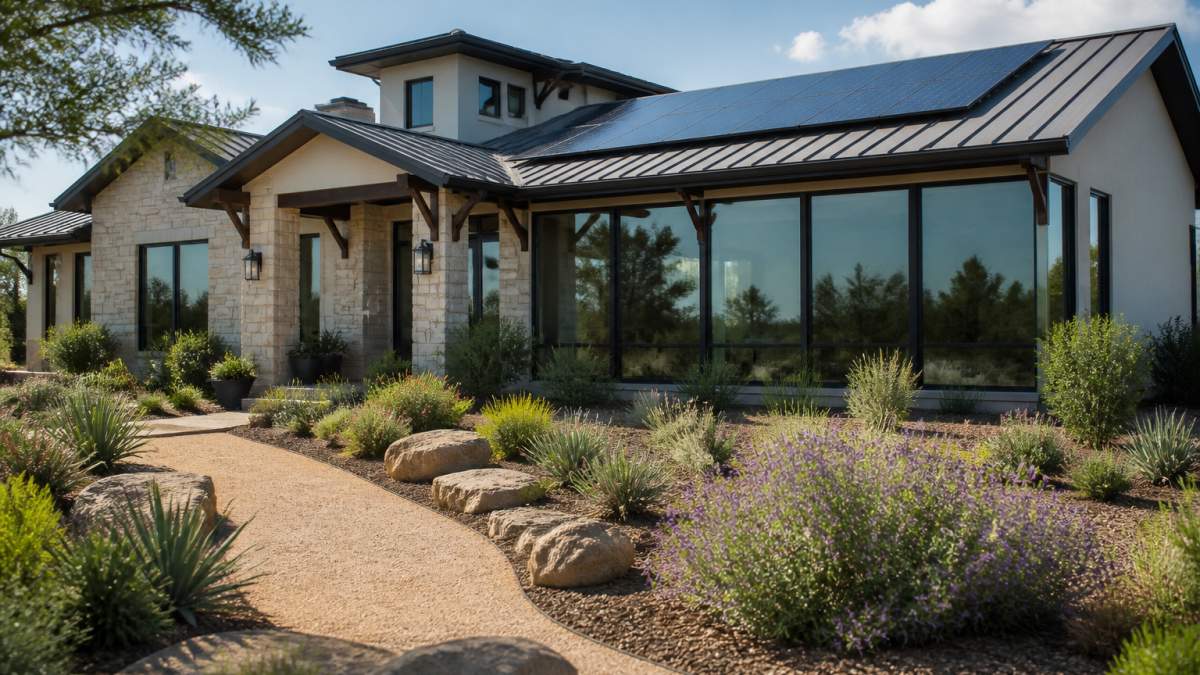
Solar Panels, Battery Backup, and Smart Energy Management
Solar panels paired with battery backup let a home generate and store its own power. Smart energy management then decides when to draw from the battery, when to pull from the grid, and when to run heavy appliances. The payoff is a lower bill in normal weeks and a livable house when the grid goes down.
Insulation, Windows, and Passive Solar Design
Insulation, windows, and passive solar design work together as a single system. High-performance windows reduce heat gain, while home orientation and shading keep direct sun off the hottest exposures. A common mistake is upgrading one piece and ignoring the rest. A great window in a poorly insulated wall still leaks money.
3. Sustainable Building Materials for Custom Homes That Last Decades
Sustainable building materials for custom homes are chosen for durability and lower environmental impact, not just appearance. The best options in a luxury build are the ones that still look right in twenty years.
Recycled, Reclaimed, and Natural Materials That Fit a Luxury Aesthetic
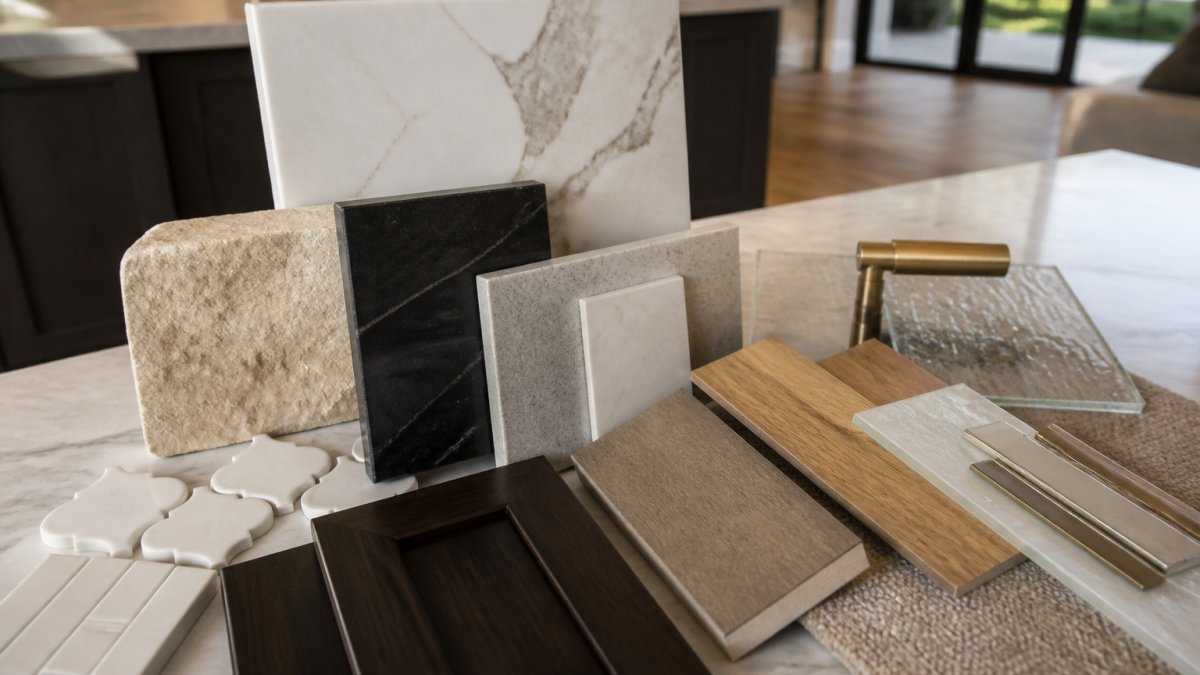
Reclaimed hardwood, recycled-content countertops, and natural stone all fit a high-end look while reducing demand for new raw material. Engineered and recycled materials often outperform their conventional counterparts on stability and moisture resistance.
What most guides miss is that material choice is a maintenance decision. A material that needs refinishing every few years costs more over its life than one that does not, even when the sticker price is higher.
| Material Choice | Upfront Cost | Maintenance | Best For |
|---|---|---|---|
| Reclaimed hardwood | Higher | Periodic refinishing | Feature floors, character |
| Recycled-content countertops | Moderate | Low | Kitchens, baths |
| Natural stone | Higher | Sealing required | High-traffic surfaces |
| Engineered wood | Lower | Low | Broad flooring areas |
4. Healthier Indoor Air Quality and a More Comfortable Living Environment
Healthier indoor air comes from controlling what gets into the house and what stays in it. Tight construction, proper ventilation, and low-emission finishes reduce pollutants that build up in sealed homes.
The EPA's indoor air quality guidance outlines how ventilation and source control work together to protect indoor air.
Comfort is the quiet benefit. Fewer drafts, steadier temperatures room to room, and less dust add up to a home that simply feels better to live in.
5. The Long-Term ROI of Green Home Building: Resale Value and Buyer Appeal
The long-term ROI of green home building shows up at resale, where documented efficiency attracts buyers willing to pay for lower ownership costs. Efficiency stops being an abstract selling point once it is backed by numbers.
Buyer appeal is shifting. A home with verified performance stands out in a market full of listings that make vague claims. Documentation is what turns a feature into a premium.
6. Resilience, Water Conservation, and a Smaller Carbon Footprint
These three benefits are often lumped together, but they work through different mechanisms and should be evaluated separately. Treating them as one blurry "green" claim is how homeowners end up paying for features that do not deliver.
Resilience: Passive Survivability and Backup Power
Resilience in a high-performance home has two layers. The first is passive survivability, the ability of the building itself to stay habitable when power is out.
The second layer is active backup: battery storage paired with solar, or a properly sized standby generator.
Site water management belongs here too. Grading that moves water away from the foundation, permeable surfaces, and thoughtful drainage reduce the risk of water intrusion during heavy rain, a resilience issue that has nothing to do with energy.
Water Conservation: Where the Gallons Actually Go
Outdoor irrigation is typically the largest single household water use in hot, dry regions, which is why landscape choices move the needle more than any indoor fixture. Native and adapted plantings, hydrozoning (grouping plants by water need), and drip irrigation instead of spray heads can cut outdoor use substantially.
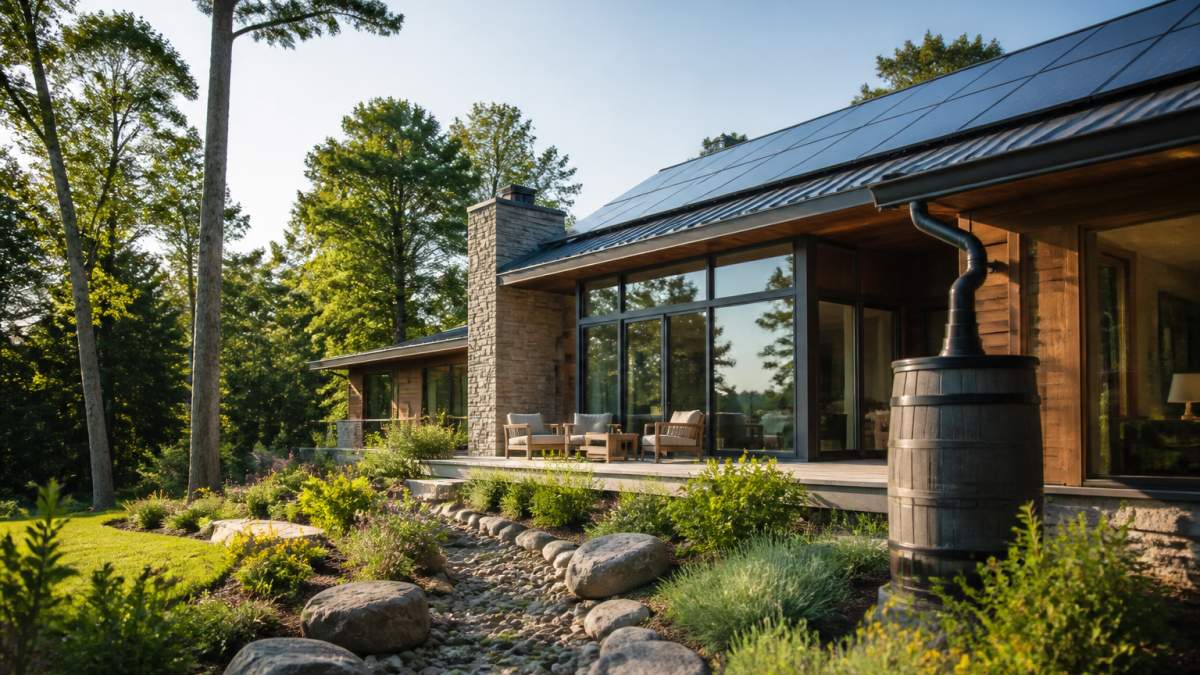
Rainwater harvesting and greywater systems are options in some jurisdictions, but they are regulated at the state and local level and are not universally permitted. Confirm local rules before designing around them.
Carbon Footprint: Operational Plus Embodied
Most discussions of a home's carbon footprint stop at operational energy, the power drawn over the life of the building. That is only half the picture. Embodied carbon is the emissions associated with extracting, manufacturing, transporting, installing, maintaining, and eventually disposing of the materials themselves.
The practical implication is that a home can be highly efficient in operation and still carry a large upfront carbon debt from its materials.
Resilience, water, and carbon are related but not interchangeable. A home can be resilient without being low-carbon, and low-carbon without being water-efficient. Decide which of the three matters most to you, and design for that first.
7. How to Verify Performance: Certifications, Commissioning, and Common Mistakes
Verification is what separates a genuinely efficient home from one that claims to be. Without testing, you are trusting a label instead of a measurement.
- Request a blower door test to measure air leakage
- Ask for duct leakage testing before drywall goes up
- Confirm insulation is installed to the specified R-value
- Review the HVAC commissioning report, not just the install receipt
- Get third-party certification documentation in writing
- Keep all test results for future resale
The most common mistakes are skipping commissioning, accepting verbal assurances instead of test data, and treating efficiency as a finish item rather than a design decision. Fixing these after the fact costs far more than getting them right the first time.
A high-performance home only delivers its benefits when the build is executed correctly, and that is where the right crew matters.
Frequently Asked Questions
What are the primary long-term financial benefits of sustainable luxury home construction?
The biggest financial wins come from lower monthly costs and stronger resale value. Energy-efficient systems cut utility bills year-round, and water-efficient landscaping reduces outdoor consumption. Over a 10 to 15 year window, those savings can offset a meaningful share of the upfront investment. Sustainable luxury homes also tend to sell faster and at higher prices because buyers increasingly prioritize efficiency and healthy interiors when shopping in affluent suburbs. A digital quote that breaks down materials, labor, and timeline helps you see exactly where your money goes before work begins.
Which energy-efficient luxury home features deliver the fastest payback?
High-performance insulation and air sealing typically pay back fastest because they reduce heating and cooling demand immediately. Next come high-efficiency HVAC systems and LED lighting throughout the home. Solar panels and battery backup have longer payback windows but add resilience during grid outages, which matters in storm-prone regions. Smart thermostats and energy management systems are inexpensive add-ons that squeeze additional savings out of every other upgrade. Ask your builder to model expected annual savings for each feature so you can prioritize what fits your budget.
What sustainable building materials are commonly used in custom homes?
Common choices include reclaimed hardwood, recycled-content drywall, bamboo and cork flooring, low-VOC paints and finishes, and regionally sourced stone or brick. Structural insulated panels and engineered lumber reduce waste and improve thermal performance. For countertops, recycled glass and quartz composites offer durability without the environmental cost of virgin stone. The best material choices depend on your climate, design goals, and maintenance preferences. A builder with deep trade experience can recommend materials that balance aesthetics, durability, and sustainability for your specific project.
How does sustainable construction impact the resale value of high-end properties?
Efficiency and healthy interiors are now selling points that buyers actively look for. Homes with documented energy performance, low utility costs, and clean indoor air quality often command higher prices and spend less time on the market. Certifications such as ENERGY STAR for Homes and LEED give buyers third-party proof that the home performs as promised. In competitive luxury markets, these features can be the deciding factor between two similar properties. Keep records of your systems, certifications, and utility history to make the value visible at listing time.