 listicle
Best Kitchen Cabinet Materials for Dallas Homes
Table of Contents
- Why Kitchen Cabinet Material Matters in Your Climate
- Cost of Kitchen Cabinet Replacement: Budget Considerations
- Eco-Friendly and Sustainable Cabinet Options
- Cabinet Construction Quality: What Separates Good from Great
- Frequently Asked Questions
Last Updated: October 6, 2026
Why Kitchen Cabinet Material Matters in Your Climate
Your kitchen cabinets face a unique challenge in this region. Summer heat, humidity swings, and occasional temperature drops mean your materials must handle moisture and movement better than in drier climates.
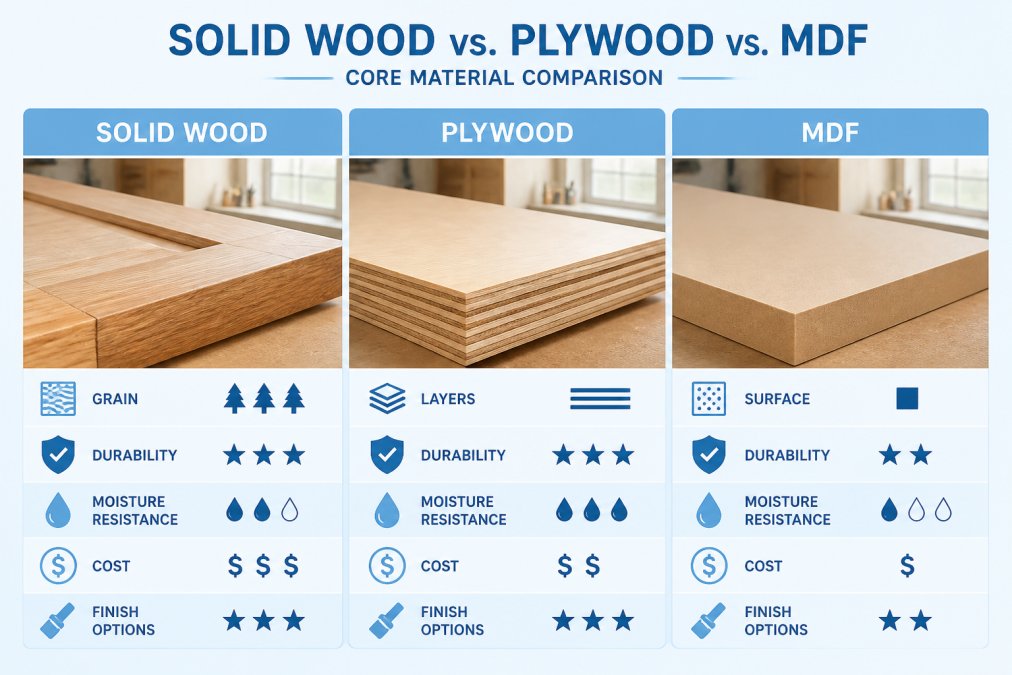
At Handy Gonzo's Home Improvements, we've guided hundreds of homeowners through this decision. After 35 years of kitchen renovations in the DFW area, we've learned which kitchen cabinet materials hold up and which fail.
The best kitchen cabinet materials for Dallas homes balance three factors: moisture resistance, structural stability, and budget. Some cost more upfront but save over decades; others perform well if you understand their limits.
(https://www.gonzoservices.com/kitchen-remodeling), the finish is where you should not cut corners.Cost of Kitchen Cabinet Replacement: Budget Considerations
Cabinet replacement is one of the largest kitchen renovation expenses. The total cost depends on cabinet size, material, finish quality, and installation complexity. Understanding your options helps you allocate budget where it matters most.
Semi-Custom and Stock Cabinet Options
Stock cabinets are pre-manufactured in standard sizes and finishes: most affordable and available immediately, but with limited customization, you fit your kitchen to the cabinet sizes, not the reverse. They work for straightforward layouts but struggle with odd corners, sloped ceilings, or specific design requirements.
Semi-custom cabinets offer more flexibility: manufacturers adjust depths, heights, and widths within standard ranges. You get more design control than stock at less cost than fully custom, the sweet spot for most homeowners.
Fully custom cabinets are built to your exact specifications, fitting any layout, accommodating unusual dimensions, and offering unlimited design options. The cost is significantly higher, but for high-end renovations or challenging spaces, custom cabinetry delivers value.
Ready-to-Assemble Cabinets
Ready-to-assemble (RTA) cabinets ship flat and are assembled on-site: most affordable and ideal for straightforward kitchens. Assembly quality depends on your installer, and poor assembly leads to squeaky doors, misaligned drawers, and loose joints. RTA makes sense for budget renovations or rentals; for permanent homes, the savings often don't justify the compromises.
The real cost of cabinet replacement includes more than materials: installation, hardware, finishing, and contingency add up fast. Get quotes that break down materials, labor, and timeline. Transparent pricing prevents surprises, exactly what Handy Gonzo's Home Improvements provides through digital quoting that shows materials, labor, and schedule upfront.
Eco-Friendly and Sustainable Cabinet Options
If environmental impact matters, cabinet material choices carry real consequences.
Reclaimed wood and salvaged materials offer sustainability with character, carrying history and unique grain patterns. However, reclaimed wood is expensive and requires skilled craftsmanship, best for statement pieces, not full kitchen cabinets.
Bamboo is a fast-growing renewable resource harder than many hardwoods, performing well in humid climates and taking finishes beautifully at a cost comparable to mid-range hardwoods. Cork is another sustainable option, though softer and less durable than wood.
Finishes matter too. VOC-free (volatile organic compound) paints and stains minimize air quality impacts, and water-based finishes are lower-VOC than solvent-based options, though solvent-based often performs better. Ask your cabinet manufacturer about finish options and VOC content.
Cabinet Construction Quality: What Separates Good from Great
Two cabinets with identical materials can perform very differently based on construction quality, joinery, hardware, and assembly methods.
Dovetail joints, where drawer sides interlock, are stronger than stapled or glued joints. Hardwood face frames add structural integrity and allow adjustable shelving.
Cabinet box construction matters too: thicker sides and bottoms resist racking and sagging, adjustable shelves flex as storage needs change, and quality fasteners (not staples) hold joints long-term.
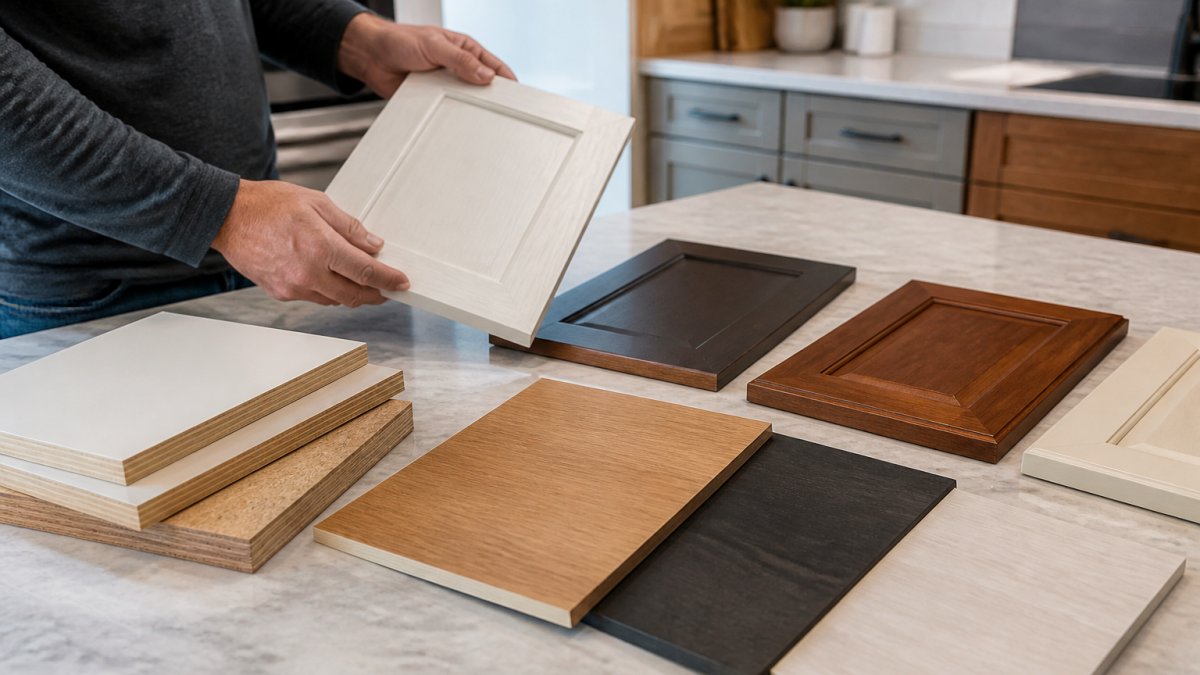
When evaluating cabinets, ask about construction details: Are boxes plywood or particleboard? What joinery is used? Are hinges and slides name-brand or generic? Are shelves adjustable or fixed?
Choosing the right kitchen cabinet materials means balancing durability, aesthetics, and budget. Plywood cabinet boxes with quality finishes outperform cheaper alternatives in humid climates.
When you're ready for cabinet replacement, get a clear quote that breaks down exactly what you're paying for. With over 35 years of experience managing kitchen renovations across the DFW area, we've learned which materials and finishes actually perform in your climate. Get a Free Estimate and let's talk through the right solution for your kitchen.
Frequently Asked Questions
Which kitchen cabinet materials hold up best in high-humidity environments?
Plywood and MDF with proper sealant finishes resist humidity better than solid wood, which expands and contracts with moisture swings. Maple and birch hardwoods are more stable than softer woods like pine. For maximum protection, ensure cabinet boxes use plywood construction with quality paint or polyurethane finishes that create a moisture barrier. In humid climates, avoid particleboard and unfinished wood.
Is solid wood or plywood better for custom kitchen cabinets?
Plywood offers superior structural integrity and moisture resistance for cabinet boxes, while solid wood works well for doors and frames where appearance matters. Many quality cabinets use plywood boxes with solid wood face frames and doors. Plywood resists warping and racking better under heavy loads, making it ideal for kitchens with significant humidity fluctuations. Solid wood can be refinished over time, providing long-term value.
What are the most durable kitchen cabinet finishes for high-traffic kitchens?
Polyurethane and conversion varnish finishes outperform standard lacquer for durability. Paint-grade finishes on MDF or HDF provide excellent scratch and moisture resistance when applied correctly. Stain-grade finishes work well on hardwoods like maple and oak but require regular maintenance. Hard-wearing finishes should include a sealer coat for protection against spills and daily wear. Quality finishing matters as much as base material selection.
Are MDF cabinets a good choice for kitchen renovations?
MDF works well for painted cabinet doors and frames in stable temperature environments, offering a smooth, grain-free surface ideal for flat-front or shaker styles. However, MDF is vulnerable if the finish is compromised and moisture penetrates. For cabinet boxes in humid kitchens, plywood is the better choice. MDF is cost-effective and stable, making it suitable for kitchens where aesthetic appeal and budget are priorities over maximum moisture resistance.