 ultimate-guide
How Long Does a Bathroom Remodel Take in DFW?
Table of Contents
- Average Bathroom Remodel Timeline in DFW
- Bathroom Renovation Phases: What Happens and When
- Bathroom Remodel Cost Breakdown and How It Affects Time
- DFW Permitting and Inspection Delays That Add Weeks
- Material Lead Times and Supply Chain Realities in DFW
- Hiring a Bathroom Contractor: What to Ask Before You Sign
- Living Through a Remodel: Keeping Your Home Functional
- Punch List and Final Walkthrough: Closing Out the Project
- Frequently Asked Questions
Last Updated: September 10, 2026
Average Bathroom Remodel Timeline in DFW
A typical bathroom remodel timeline in DFW runs six to ten weeks for a full gut renovation, while a cosmetic update can wrap in two to three weeks (homeadvisor.com). That range assumes permits clear quickly, materials arrive on schedule, and no hidden water damage turns up once the walls open. This guide from Handy Gonzo's Home Improvements breaks down where every week actually goes, so you can plan around the delays that catch most homeowners off guard.
The honest answer to how long does a bathroom remodel take DFW homeowners ask is: it depends less on the size of the room than on the scope of the work and how fast the paperwork moves.
Cosmetic Update vs. Full Gut Renovation Timelines
The gap between these two project types is wider than most people expect. A cosmetic update means new paint, a vanity swap, new fixtures, and maybe a tub-to-shower conversion that reuses the existing plumbing. A full-scale remodel moves drains, runs new electrical wiring, and rebuilds the waterproofing from the studs out.
| Project Type | Typical Timeline | What Drives the Length |
|---|---|---|
| Cosmetic update | 2-3 weeks | Fixture swaps, paint, no permit usually required |
| Mid-range remodel | 4-6 weeks | Vanity installation, tile work, minor plumbing |
| Full gut renovation | 6-10 weeks | Rough-in, inspections, custom tile, cabinetry |
Bathroom Renovation Phases: What Happens and When
Every bathroom renovation phases out the same way, and knowing the sequence helps you spot when a project is falling behind. The work splits into three blocks: design and demolition, rough-in and inspection, then finish work.
Design Consultation Through Demolition
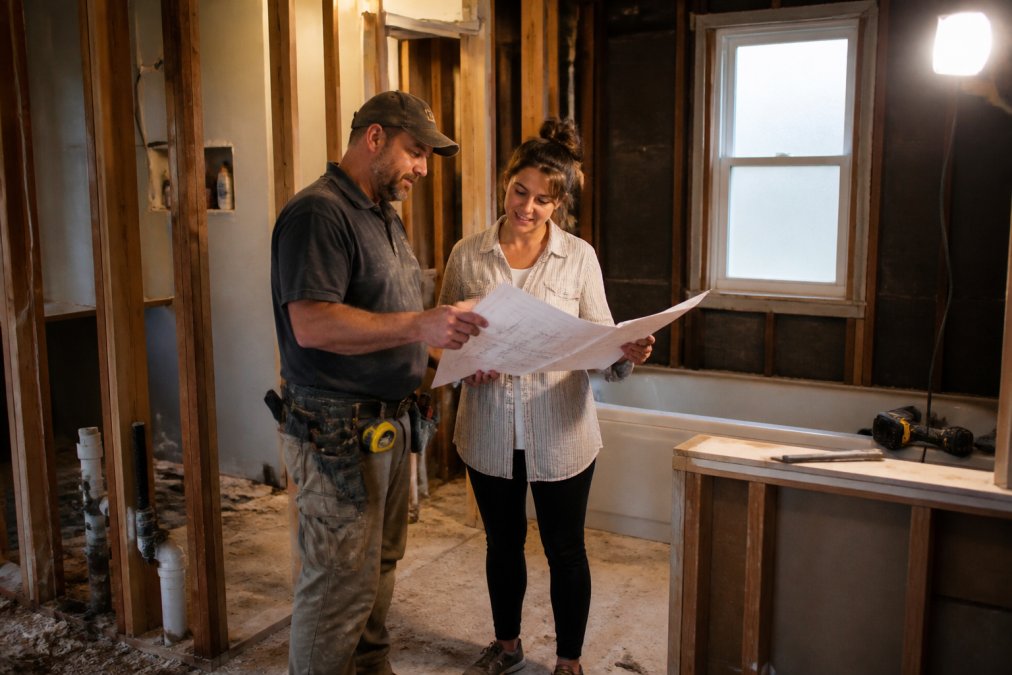
Design consultation typically takes one to two weeks, covering measurements, material selections, and a written project scope. Demolition runs two to four days for most primary bathrooms. Site preparation and debris hauling often take longer than the tear-out itself.
Rough-In, Inspection, and Finish Work
Plumbing rough-in and electrical wiring come next, and this is where the schedule usually slips. A rough-in inspection has to pass before any drywall or tile goes up, and inspection delays push everything downstream. After that comes waterproofing, custom tile work, grouting, and fixture installation. Finish work is meticulous but predictable, usually one to two weeks.
Bathroom Remodel Cost Breakdown and How It Affects Time
Time and money move together on a bathroom remodel cost breakdown. The line items that cost the most also take the longest, which is why a tight budget and a short timeline rarely coexist.
Labor for plumbing and electrical typically consumes the largest share, followed by tile and cabinetry. Material procurement for custom cabinetry and specialty tile adds lead time you can't compress. A common approach is to lock in long-lead materials before demolition begins, so the finish phase never stalls waiting on a shipment.
We provide digital quoting with a clear breakdown of materials, labor, and timeline, so you see the cost drivers before work starts rather than discovering them mid-project.
DFW Permitting and Inspection Delays That Add Weeks
The permitting process is the single biggest variable in any renovation timeline, and it is also the one most articles flatten into a single sentence. In reality, review times swing widely across the Metroplex because each jurisdiction runs its own building department, its own submission portal, and its own inspection queue. A project that clears in one suburb in a week can sit three weeks in the next city over.
What actually drives the difference is not the code itself, most cities adopt a version of the International Residential Code, but staffing, submission format, and how complete your packet is on the first pass.
How Review Timelines Differ Across the Metroplex
A few patterns show up repeatedly across local jurisdictions:
- Large central cities tend to have the highest volume and the longest queues, but also the most predictable online portals and published turnaround targets. Expect longer review windows but fewer surprises.
- Fast-growing northern suburbs often have newer, faster digital submission systems, but their inspection calendars fill quickly because so much new construction is competing for the same inspectors.
- Smaller outlying cities may have shorter review queues but limited inspection windows, sometimes only certain days of the week, which can stretch a project just as much as a slow review.
The practical takeaway: the review clock and the inspection clock are two separate delays, and a city that is fast on one can be slow on the other.
What Triggers a Permit vs. What Doesn't
Not every bathroom project needs a permit, and knowing the line saves weeks:
- Usually permitted: moving or adding plumbing drains or supply lines, adding or relocating electrical circuits, removing or altering load-bearing walls, converting a tub to a shower when the drain location changes.
- Usually not permitted: paint, replacing a vanity in the same location, swapping a like-for-like fixture, re-grouting or re-caulking, replacing a toilet or faucet on existing rough-in.
When in doubt, call the local building department before demo day. Filing for a permit you did not need costs a little time; skipping one you did need can cost you the entire project when a resale inspection or a neighbor complaint surfaces it.
The Inspection Sequence and Why One Failure Cascades
Inspections are sequential, not parallel. Each stage must pass before the next trade can legally cover the work:
- Rough-in inspection, plumbing and electrical before any wall closure.
- Framing or structural inspection, if walls moved.
- Waterproofing inspection, in jurisdictions that require it for shower pans and wet areas.
- Final inspection, after fixtures, trim, and finishes are installed.
A failed rough-in does not just cost you the re-inspection fee. It costs you the days until the next available inspection slot, plus the days of work that could not proceed in the meantime. On a tight schedule, one failed inspection can push a project a full week.
How to Protect Your Timeline
- Confirm in writing which permits your contractor is pulling and who is paying for them.
- Ask for the permit number once it is issued so you can track status yourself.
- Lock your layout before submitting plans, revisions restart the review clock.
- Build a one-to-two-week permitting buffer into any full gut renovation schedule.
Based on guidance from the International Code Council on residential permitting, inspections are sequenced, meaning each stage must pass before the next begins. That sequencing is why a single failed inspection ripples through the whole schedule.
Material Lead Times and Supply Chain Realities in DFW
Lead times for cabinetry, specialty tile, and custom glass can run several weeks, and they do not care about your contractor's schedule. Material lead times are the quiet killer of renovation timelines, a project can be perfectly sequenced on the labor side and still stall for two weeks because a single made-to-order vanity has not shipped.
The reason this hits harder in this market than in most is the volume of concurrent renovation activity. When demand is high across the Metroplex, local showrooms and fabricators run tighter queues, and the difference between an in-stock item and a made-to-order item can be the difference between a six-week project and a ten-week one.
Typical Lead Time Ranges by Category
These are the ranges most practitioners see in this market. Treat them as planning bands, not guarantees, always confirm the specific SKU or finish with your supplier in writing.
| Category | Typical Lead Time | What Extends It |
|---|---|---|
| Stock vanity (in-stock finish) | 3-7 days | None, if truly in stock |
| Semi-custom vanity | 3-5 weeks | Non-standard size, custom finish |
| Custom cabinetry | 6-10 weeks | Frameless construction, painted finish |
| Stock ceramic or porcelain tile | 3-10 days | None, if in stock locally |
| Made-to-order or imported tile | 4-8 weeks | Container shipping, dye-lot matching |
| Natural stone slab | 1-3 weeks | Fabrication and edge profile |
| Frameless glass shower enclosure | 2-4 weeks | Measure-after-tile requirement |
| Special-order plumbing fixtures | 2-6 weeks | Finish selection, brand backorder |
Why the Glass Enclosure Is the Classic Trap
A frameless glass shower enclosure cannot be measured until the tile is set and the walls are finished. That means the clock on a two-to-four-week fabrication window does not start until the very end of the project. Homeowners who assume the glass is 'ordered with everything else' are the ones staring at an unusable shower for a month.
The fix is to select the glass vendor and style early, confirm the lead time in writing, and schedule the measurement the day tile is grouted.
Build a Material Lead Time Tracker
Before you order anything, build a simple tracker. One row per material, with four columns: order date, confirmed lead time, promised delivery date, and a status note. Review it at every project check-in.
- Vanity and cabinetry: confirm delivery date in writing, not verbally
- Tile and stone: verify in-stock vs. made-to-order, and confirm dye lot
- Glass shower enclosure: measure after tile, not before
- Fixtures and trim: order early, store safely on site
- Grout, caulk, and setting materials: confirm color match to tile lot
Sequencing Procurement Ahead of Construction
The projects that finish on time are the ones where long-lead materials were ordered before demolition, not after. A practical rule: anything with a lead time longer than two weeks should be ordered and confirmed before the first hammer swings.
That means the design and selection phase is not just about aesthetics, it is the procurement window that protects your construction schedule. Homeowners who treat material selection as a 'we'll figure it out during demo' task are the ones whose projects run long.
Hiring a Bathroom Contractor: What to Ask Before You Sign
Hiring a bathroom contractor comes down to verifying three things: who will actually be on site, what the quote includes, and how you'll hear about problems. Ask directly whether the same crew starts and finishes the job. Crews that rotate daily lose time relearning your project.
Ask what happens if the project runs over schedule. Get the answer in writing. A transparent contractor will spell out the milestones and the communication cadence up front.
For a fuller picture of what to verify, the FTC's consumer guidance on hiring home improvement contractors outlines the contract terms and payment protections every homeowner should confirm before signing.
Living Through a Remodel: Keeping Your Home Functional
You can keep a home livable during construction, but it takes planning. If you have a second bathroom, designate it the household's only one and stock it fully. If you don't, expect to arrange temporary facilities for the duration.
Construction dust travels further than you think. Plastic sheeting over doorways and a daily clean-up routine make the difference between a tolerable project and a miserable one. We keep job sites clean daily and maintain a dedicated, multi-trade crew from start to finish, which keeps disruption contained.
Punch List and Final Walkthrough: Closing Out the Project
The punch list and final walkthrough are where a project actually ends. Walk the room with your contractor, note every defect in writing, and agree on a completion date for each item. Don't release final payment until the punch list is closed.
A walkthrough should cover grout lines, caulk joints, door swings, water pressure, and every fixture. Bring a flashlight and check under the vanity.
Frequently Asked Questions
How long does a full bathroom remodel typically take in DFW?
A full gut renovation in the DFW area usually runs 6 to 10 weeks from demolition to final walkthrough. Cosmetic updates like new paint, fixtures, and a vanity swap can finish in 2 to 3 weeks. The biggest variables are permitting approval from your local city office, material lead times for custom tile or cabinetry, and whether any plumbing or electrical rough-in changes are needed. Adding a tub-to-shower conversion or relocating fixtures extends the bathroom remodel timeline by 1 to 2 weeks.
What are the primary factors that delay bathroom remodeling projects?
Inspection delays top the list, especially when rough-in work fails the first check and requires rework. Material lead times for custom tile, specialty vanities, and glass shower enclosures can add 2 to 4 weeks if not ordered early. Scope changes mid-project, like deciding to move a toilet or add heated floors, also push the schedule. Subcontractor availability matters too; plumbing and electrical crews often juggle multiple jobs, so gaps between phases add up. Locking your project scope before demolition prevents most of these delays.
How does the scope of work affect the duration of a bathroom renovation?
Scope is the single biggest driver of your bathroom renovation phases. A cosmetic update (paint, fixtures, mirror, lighting) stays within the existing layout and takes 2 to 3 weeks. A full-scale remodel that moves plumbing, replaces the tub with a shower, and installs custom tile work runs 6 to 10 weeks. Primary bathroom projects with double vanities, freestanding tubs, and heated floors take longer than guest baths because they involve more trades, more inspections, and more material procurement.
Can I speed up a bathroom remodeling timeline without cutting corners?
Yes, with early planning. Order tile, fixtures, and cabinetry before demolition starts so material procurement never stalls the crew. Finalize your design and sign off on the layout before work begins; mid-project changes are the most common schedule killer. Choose in-stock or quick-ship materials over custom orders when timing matters. Also confirm your contractor has a dedicated crew rather than rotating subs, since consistent crews move between phases faster. A clear scope and pre-ordered materials can shave 1 to 2 weeks off a typical DFW remodel.
A bathroom remodel rewards homeowners with better function and stronger home equity, but only when the schedule is realistic from day one. Handy Gonzo's Home Improvements brings over 35 years of experience, digital quoting with a clear breakdown of materials, labor, and timeline, and a dedicated multi-trade crew that stays on your job from demolition to final walkthrough. Get a Free Estimate and start your project with a timeline you can actually plan around.