 ultimate-guide
Hidden Costs of Kitchen Remodeling Projects: 2026 Guide
Table of Contents
- Hidden Costs of Kitchen Remodeling Projects: What Homeowners Miss
- Surprise Expenses When Walls Come Down
- Kitchen Remodeling Permit Requirements: Fees Most Homeowners Forget
- Why You Need a Kitchen Remodel Contingency Budget
- How to Vet a Kitchen Contractor Before Signing Anything
- Change Orders and Upgrades That Quietly Add Up
- How to Prevent Budget Creep During a Kitchen Remodeling Project
- Frequently Asked Questions
Last Updated: October 8, 2026
Hidden Costs of Kitchen Remodeling Projects: What Homeowners Miss
The hidden costs of kitchen remodeling projects rarely appear in the first quote, and that gap between estimate and final invoice is where most budgets collapse. A kitchen remodel is one of the highest-return renovations a homeowner can make, but it is also the one most likely to run past its projected number. At Handy Gonzo's Home Improvements, we have watched enough budgets stretch and snap over three and a half decades to know the pattern: the surprises are almost never random. They cluster around a handful of predictable categories, and once you know them, you can plan for them.
Below, we break down where the money actually goes, why a contingency line is not optional, and how to protect yourself before the first hammer swings.
The single most important number in any kitchen budget is not the cabinet cost or the countertop quote. It is the contingency line you set aside before work begins. Homeowners who skip it are the ones who end up making rushed decisions mid-project, and rushed decisions are expensive ones.
Surprise Expenses When Walls Come Down
Opening a wall is the moment a renovation stops being a design project and becomes a construction project. Behind the drywall, you may find outdated wiring that no longer meets current electrical code, plumbing that was never sized for a modern sink and dishwasher, water damage from a slow leak, or structural framing that was altered by a previous owner. None of this shows up in a visual walkthrough, and none of it is anyone's fault. It is simply what older homes hide.
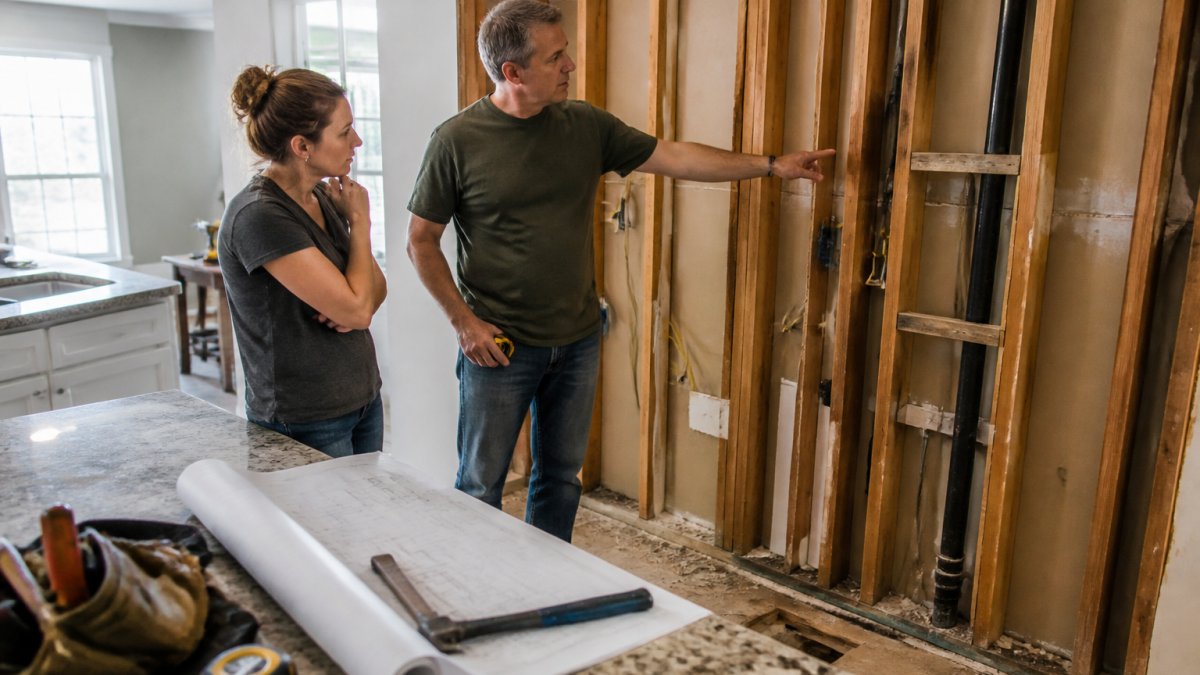
A common mistake is assuming a cosmetic remodel will stay cosmetic. If your home predates modern wiring standards, the U.S. Department of Energy guidance on home electrical safety is worth reviewing before demolition day. Budget for the possibility that one or two of these systems need attention, and treat anything you do not find as a bonus rather than a given.
Kitchen Remodeling Permit Requirements: Fees Most Homeowners Forget
Kitchen remodeling permit requirements vary by city and county, but most jurisdictions require permits for work involving electrical, plumbing, structural, or gas changes. The permit fee itself is usually modest. The costs homeowners forget are the ones attached to it: inspection scheduling that can delay your crew, re-inspection fees if work fails the first check, and the cost of bringing non-permitted existing work up to code once an inspector is on site.
Your contractor should pull the permits and factor inspection timing into the schedule. If a quote does not mention permits at all, ask why. Unpermitted work can complicate a future home sale and may need to be redone entirely.
Why You Need a Kitchen Remodel Contingency Budget
A kitchen remodel contingency budget is money set aside specifically for the unknowns that surface once work begins. Industry practice is to reserve a percentage of the total project cost for surprises, and homeowners who build it in from day one are the ones who stay calm when a wall opens up.
Think of the contingency as insurance, not padding. It covers the wiring you did not know was outdated, the subfloor that needs replacing, or the delivery delay that pushes your timeline. If you never touch it, you keep it. If you do, you are not scrambling for a credit card at the worst possible moment.
How to Vet a Kitchen Contractor Before Signing Anything
Knowing how to vet a kitchen contractor is the difference between a smooth project and a stressful one. Start with three things: a written, itemized quote; a current license and insurance certificate; and recent references you can actually call.
Then ask the questions most homeowners skip. Who exactly will be on site each day, and will it be the same crew from start to finish? How often will you receive updates? What happens if the schedule slips? A contractor who answers these clearly and in writing is showing you how they will behave when a problem arises.
At Handy Gonzo's Home Improvements, we provide transparent digital quoting with a clear breakdown of materials, labor, and timeline, so you know what is included before work begins. Our dedicated, multi-trade crew stays on your project from start to finish, and we keep job sites clean daily so your home stays livable during construction.
| What to Check | Why It Matters | Red Flag |
|---|---|---|
| Itemized written quote | Shows what is included | Vague lump-sum pricing |
| License and insurance | Protects you legally | Refuses to provide copies |
| Recent references | Confirms current quality | Only old or unreachable references |
| Crew consistency | Predictable workmanship | Different faces every day |
| Update schedule | Keeps you informed | No communication plan |
Change Orders and Upgrades That Quietly Add Up
Change orders are the quiet budget killers. Each one feels small in the moment: moving an outlet, upgrading a faucet, adding a drawer, swapping a light fixture. Individually, they are manageable. Stacked together over six weeks, they can push a project well past its original number.
The pattern is predictable. Once the old kitchen is gone, homeowners see the space clearly for the first time and want to improve it. That instinct is understandable, but every change triggers labor, materials, and often a schedule adjustment. Decide your finishes and layout before demolition, and hold the line on changes unless something is genuinely wrong.
How to Prevent Budget Creep During a Kitchen Remodeling Project
Preventing budget creep comes down to decisions made before work starts, not willpower during it. Lock your scope, set your contingency, and put your change-order process in writing so every adjustment is priced and approved before it happens.
- Finalize layout and finishes before demolition begins
- Reserve a contingency you do not touch for upgrades
- Require written, priced approval for every change
- Review a weekly budget tracker against the original quote
- Keep a small reserve for delivery delays and material price shifts
A clear process protects both sides. It keeps you from guessing, and it keeps your contractor from working without approval.
A kitchen remodel will always involve some unknowns, and the difference between a stressful project and a smooth one is how well you planned for them. Handy Gonzo's Home Improvements brings over three and a half decades of experience, transparent digital quoting with a clear breakdown of materials, labor, and timeline, and a dedicated multi-trade crew that stays on your project from start to finish. We keep your home livable during construction and offer flexible payment options so the process stays manageable. Get a free estimate from Handy Gonzo's Home Improvements and start your kitchen with a clear picture of what it will actually cost.
Frequently Asked Questions
What is the biggest hidden cost in a kitchen remodel?
The biggest hidden cost is usually what's behind the walls: outdated wiring, corroded plumbing, water damage, or missing structural support. These problems only become visible after demolition starts. Because repair work often requires licensed trades and permits, the cost can climb quickly. A thorough pre-remodel inspection and a healthy contingency fund are your best protection against this kind of surprise.
How much should I budget for unexpected costs in a kitchen renovation?
It is recommended to set aside a percentage of your total project budget as a contingency for surprises. Older homes or projects that involve moving walls or plumbing may need even more. Treat this money as part of the budget, not extra savings, so you are not scrambling when something unexpected comes up.
Are permit fees and inspections considered hidden costs?
Yes. Permits, plan reviews, and required inspections are real costs that many homeowners overlook. The exact fees depend on your local building department and the scope of work, so confirm the amounts before construction begins. Your contractor should list permit costs as a separate line item in the quote. If a quote does not mention permits at all, ask who is pulling them and who pays.
How can I prevent budget creep during a kitchen renovation?
Lock your selections before demolition starts, put every change in writing, and keep a running total of change orders. Even small upgrades, like switching to a larger sink or adding a tile backsplash, add up fast. Ask your contractor for a written change-order process and review the numbers weekly. A dedicated kitchen remodel contingency budget gives you room to absorb surprises without derailing the whole project.