 ultimate-guide
Benefits of Master Bathroom Renovation in Dallas
Table of Contents
- Why Dallas Homeowners Are Investing in Master Bathroom Renovation
- Bathroom Remodeling ROI: What You Get Back at Resale
- Increasing Home Resale Value with a Primary Suite Upgrade
- Dallas-Specific Climate and Code Considerations
- Bathroom Renovation Timeline: What to Expect Week by Week
- Hiring a Bathroom Contractor in the DFW Metroplex
- Frequently Asked Questions
Last Updated: September 14, 2026
Why Dallas Homeowners Are Investing in Master Bathroom Renovation
A master bathroom renovation is the process of updating the primary bathroom's layout, fixtures, finishes, and systems to improve function, comfort, and property value. In the DFW Metroplex, that project has moved from a luxury line item to a standard part of home ownership. At Handy Gonzo's Home Improvements, we've watched this shift firsthand over 35 years of remodeling work.
The reason is simple: the primary suite sells houses. When buyers tour a home, the master bath is one of the few rooms they mentally renovate on the spot. A dated vanity, cracked tile, or a cramped shower instantly becomes a discount on their offer.
The 2026 Dallas Real Estate Landscape
Home equity is the engine behind most renovation decisions. Many DFW homeowners find themselves sitting on substantial equity after years of steady appreciation, and a master bathroom renovation is one of the most reliable ways to convert that equity into livable value rather than leaving it locked in the walls.
Competition for listings in affluent suburbs remains tight. A renovated primary suite helps a home stand out in a market where buyers compare dozens of similar floor plans. For sellers, that edge often translates into faster showings and stronger offers.
Bathroom Remodeling ROI: What You Get Back at Resale
Bathroom remodeling ROI is the share of your project cost that comes back to you at resale. The most-cited benchmark in the industry is the annual Cost vs. Value report published by Zonda (formerly Hanley Wood) in Remodeling magazine. In recent editions, a midrange bathroom remodel has recouped somewhere in the low-to-mid 60% range nationally, while an upscale bathroom remodel, the tier that more closely matches a true master bath gut job, has landed in the low-to-mid 50% range (2025 Cost vs. Value Report). Treat those as directional, not gospel: the numbers shift every year with material costs and buyer demand, and they are national averages that don't account for how competitive a specific neighborhood is.
The more useful way to read ROI is as a range you can influence. Two homeowners can spend the same amount and recover very different shares, because ROI is driven by four levers:
- Scope discipline. Cosmetic refreshes (paint, hardware, lighting, re-grouting) recover a higher percentage per dollar than full gut renovations, because the cost base is smaller and the visual payoff is large.
- Layout changes. Moving a toilet, drain, or supply line means breaking slab, re-running plumbing, and pulling additional permits. Every one of those adds cost that resale rarely rewards dollar-for-dollar.
- Material tier. Buyers respond to how a bathroom looks and functions, not to the brand name on the faucet. Mid-tier fixtures from a reputable manufacturer photograph as well as luxury brands in most listing photos.
- Neighborhood ceiling. If comparable homes nearby have standard builder-grade bathrooms, an ultra-high-end renovation can exceed what the local market will pay for.
A common planning pattern is to set a target of recovering at least half of project cost at resale and to treat anything above that as a bonus. If a proposed upgrade pushes you below that threshold, it's usually a personal-preference purchase rather than an investment, which is fine, as long as you're honest about which one you're making.
ROI is also not the only return. A master bathroom renovation lowers maintenance headaches, improves water efficiency (which shows up on every monthly utility bill), and removes the daily friction of a bathroom that never quite worked. Those benefits don't appear on a spreadsheet, but they show up in how you live.
Understanding the 30% Rule for Renovations
The 30% rule is a common budgeting guideline that caps a single room's renovation at roughly 30% of the home's value. On a $400,000 home, that puts the ceiling around $120,000, though most master bath projects land far below it. The rule exists to prevent over-improving, where you invest more in one room than the neighborhood can support.
| Project Tier | Typical Scope | Best For |
|---|---|---|
| Refresh | Paint, fixtures, hardware, lighting | Tight budgets, quick turnarounds |
| Mid-range | Vanity, tile, walk-in shower, flooring | Most homeowners seeking ROI |
| High-end | Layout changes, freestanding tub, custom cabinetry | Luxury resale positioning |
Increasing Home Resale Value with a Primary Suite Upgrade
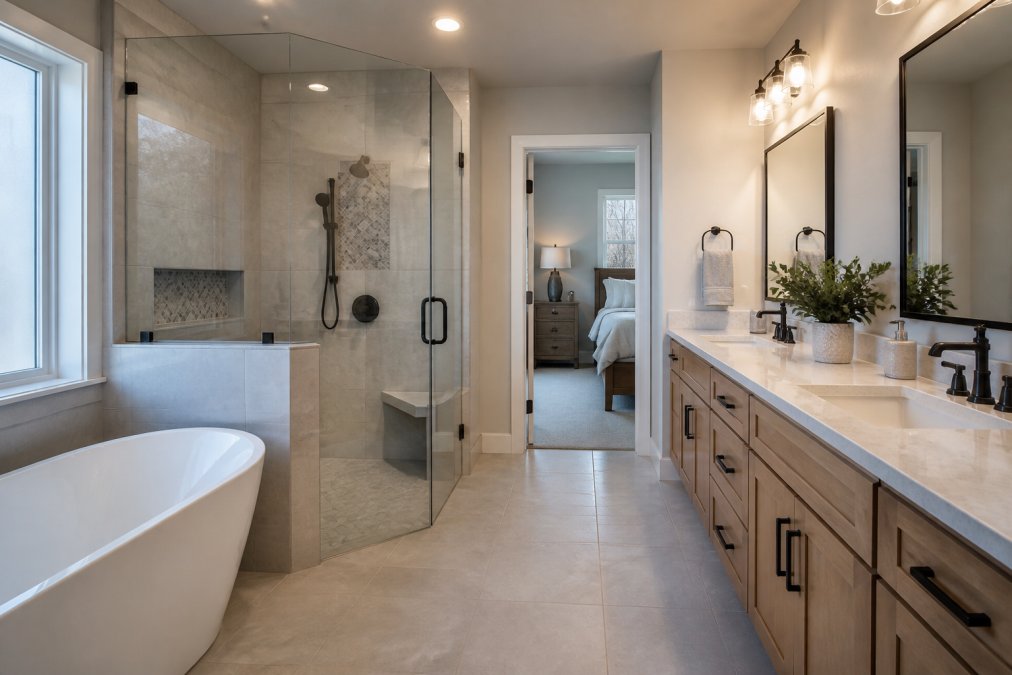
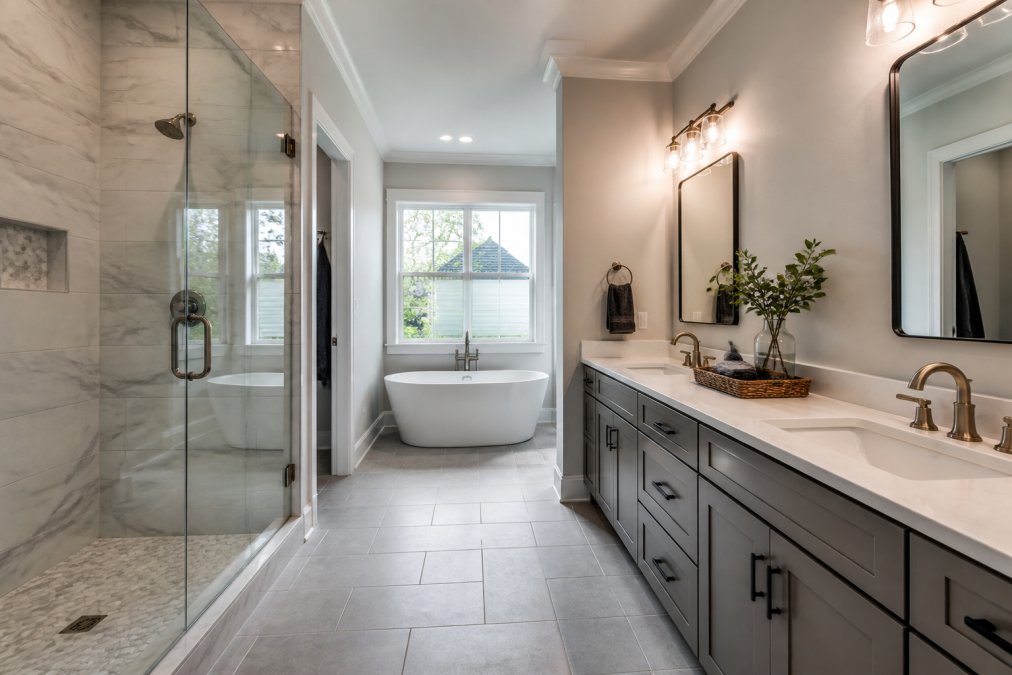
Resale value climbs when a primary suite feels intentional. Buyers reward layouts that flow, storage that hides clutter, and finishes that photograph well. A double vanity, a walk-in shower, and a freestanding tub remain the three features that generate the strongest reactions during showings.
Square footage matters less than how that footage is used. Layout optimization can make a modest bathroom feel generous, while a poorly planned large bathroom can feel awkward. Custom cabinetry and smart storage solutions often deliver more perceived value than a bigger footprint.
Dallas-Specific Climate and Code Considerations
Dallas homes face a specific combination of heat, humidity, and expansive clay soil that stresses building materials year-round. Bathrooms sit at the intersection of all three. Ventilation is not optional here; without proper exhaust, moisture lingers, and mold takes hold behind walls within a single season. Water conservation features, including low-flow fixtures and efficient toilets, also matter more as regional water planning tightens.
Flooring materials should be chosen with slab movement in mind. Tile installation over a shifting foundation demands proper substrate preparation, or you'll see cracks within a year. This is one of the most common mistakes we correct on repair jobs.
Permitting and Local Building Codes
Most structural, electrical, and plumbing work requires a permit, and skipping one can derail a sale. Local building codes govern everything from vent termination to GFCI outlet placement near water sources. Accessibility features, including universal design elements like curbless showers and reinforced blocking for grab bars, are increasingly written into code for aging-in-place modifications.
Before any work begins, confirm which permits apply and who pulls them. A reputable contractor handles this as part of the project scope. U.S. Department of Housing and Urban Development guidance on home improvements outlines federal resources and consumer protections worth reviewing before signing anything.
Bathroom Renovation Timeline: What to Expect Week by Week
A bathroom renovation timeline for a typical master bath runs four to eight weeks, depending on scope and material lead times. Here's how that usually breaks down:
- Week 1: Demolition, haul-away, and rough framing adjustments
- Week 2: Rough plumbing and electrical, inspection scheduling
- Week 3: Insulation, drywall, and waterproofing membrane
- Week 4: Tile installation on floors, walls, and shower
- Weeks 5-6: Vanity, fixtures, lighting, and paint
- Weeks 7-8: Final trim, glass, punch list, and cleaning
That schedule assumes permits are already in hand. In practice, the permitting step is where most timelines quietly slip, and it's the part most renovation guides skip entirely.
The Permitting Step Most Timelines Leave Out
Most structural, electrical, and plumbing work requires a permit, and most jurisdictions require the permit to be issued before demolition begins. The sequence typically looks like this:
- Application submitted with scope drawings and, for some work, a licensed trade listed as the responsible party.
- Plan review by the local building department. Simple fixture swaps may clear in a few business days; layout changes that move walls or plumbing can take longer.
- Permit issued and posted at the job site.
- Rough-in inspection after plumbing and electrical are run but before drywall closes the walls.
- Final inspection after fixtures, outlets, and finishes are complete.
Two practical consequences follow. First, a contractor who says "we'll pull the permit after demo" is either misinformed or cutting a corner, either way, it's a red flag. Second, if your project includes a rough-in inspection, the inspection must be scheduled and passed before drywall goes up. A missed or failed inspection can add a week on its own.
Confirm three things before signing: who pulls the permit, who pays for it, and who is responsible for scheduling inspections. Get those answers in writing.
What Actually Causes Delays
Delays come from four places, in roughly this order of frequency:
- Hidden water damage. Once tile comes off, rotted subfloor or framing is common in older bathrooms. Repairing it is non-negotiable and adds days.
- Backordered materials. Tile, glass shower enclosures, and specialty vanities are the usual culprits. A three-week backorder turns a six-week project into a nine-week one.
- Inspection scheduling. Rough-in and final inspections depend on the building department's calendar, not yours.
- Change orders. Every mid-project scope change resets part of the schedule.
Locking in materials before demolition starts is the single biggest thing you can do to protect the schedule. The second is confirming the permit is issued before the first hammer swings.
Hiring a Bathroom Contractor in the DFW Metroplex
Hiring a bathroom contractor is the decision that determines whether your project finishes on time and on budget. The right contractor brings a consistent crew, transparent pricing, and a clear schedule. The wrong one brings change orders, rotating subs, and silence when you call.
Here's what separates the two:
- Dedicated crew: The same team from demo to final walkthrough
- Transparent quoting: Line-item breakdown of materials, labor, and timeline
- Clean job sites: Daily cleanup so your home stays livable
- Clear communication: Regular updates, not radio silence
- Verifiable references: Recent projects you can actually call
Handy Gonzo's Home Improvements built its process around these five points. Our digital quoting shows exactly what's included, our multi-trade crew stays on your job start to finish, and we keep the workspace clean daily so your home remains livable during construction. For homeowners who've been burned by ghosting contractors and surprise costs, that structure is the difference.
Questions to Ask Before You Sign
Ask these before any contract is signed:
- What's included in the quote, and what triggers a change order?
- Who pulls the permits, and who pays for inspections?
- Will the same crew be on my job every day?
- How often will I get updates, and through what channel?
- Can I see references from the last 12 months, with photos?
- What happens if the project runs over schedule?
A contractor who can't answer these clearly is telling you something. Federal Trade Commission consumer advice on hiring contractors recommends getting everything in writing and never paying the full amount upfront.
Frequently Asked Questions
Is it worth remodeling a master bathroom?
Yes, for most homeowners. A master bathroom renovation improves daily comfort and adds measurable resale value. Bathrooms are one of the few rooms where updates directly influence buyer decisions. Even a mid-range remodel that addresses layout, lighting, and storage can make your home stand out in a competitive DFW market. The key is focusing on quality materials and smart design choices rather than overspending on trends that may date quickly.
What is the 30% rule for renovations?
The 30% rule suggests your renovation budget should not exceed 30% of your home's current value. If your home is worth $400,000, keep the project under $120,000. This guideline helps prevent over-improving for the neighborhood. In practice, most master bathroom renovations fall well below this threshold, making them a relatively safe investment when planned with a clear scope and realistic material selections.
How does a master bathroom renovation impact home resale value?
An updated master bathroom signals a well-maintained home to buyers. Features like a walk-in shower, double vanity, and energy-efficient fixtures appeal to modern buyers in the DFW area. While exact returns vary by neighborhood and project scope, bathroom remodels consistently rank among the top interior projects for cost recovered at resale. A licensed contractor can help you prioritize upgrades that deliver the strongest ROI for your specific market.
What are the most popular bathroom design trends for 2026?
Freestanding tubs, large-format tile, smart mirrors with integrated lighting, and water-conserving fixtures are leading trends. Homeowners in Dallas are also requesting accessibility features like curbless shower entries and grab bar blocking, which support universal design. Warm neutral tones and natural stone finishes remain popular. Consulting a contractor with local experience ensures your selections work with Dallas humidity and temperature swings.
The hardest part of a master bathroom renovation isn't the tile or the tile saw. It's trusting the crew in your home for six weeks. Handy Gonzo's Home Improvements addresses that with a dedicated multi-trade crew, transparent digital quoting that shows materials, labor, and timeline line by line, and job sites kept clean every single day. Get a free estimate and see the full scope before you commit.