 listicle
Best Air Purifiers for Home Renovation Dust
Table of Contents
- Why Air Purifiers Matter During Home Renovations
- How Construction Dust Affects Indoor Air Quality
- Key Features to Look for in a Construction-Grade Air Purifier
- How to Minimize Construction Dust in Your Home
- Air Scrubber vs. Air Purifier for Renovation Projects
- Top Air Purifiers for Renovation Dust
- How Long to Run Your Air Purifier After Sanding
- Maintenance and Filter Replacement During Renovations
- Frequently Asked Questions
Last Updated: October 2, 2026
Why Air Purifiers Matter During Home Renovations
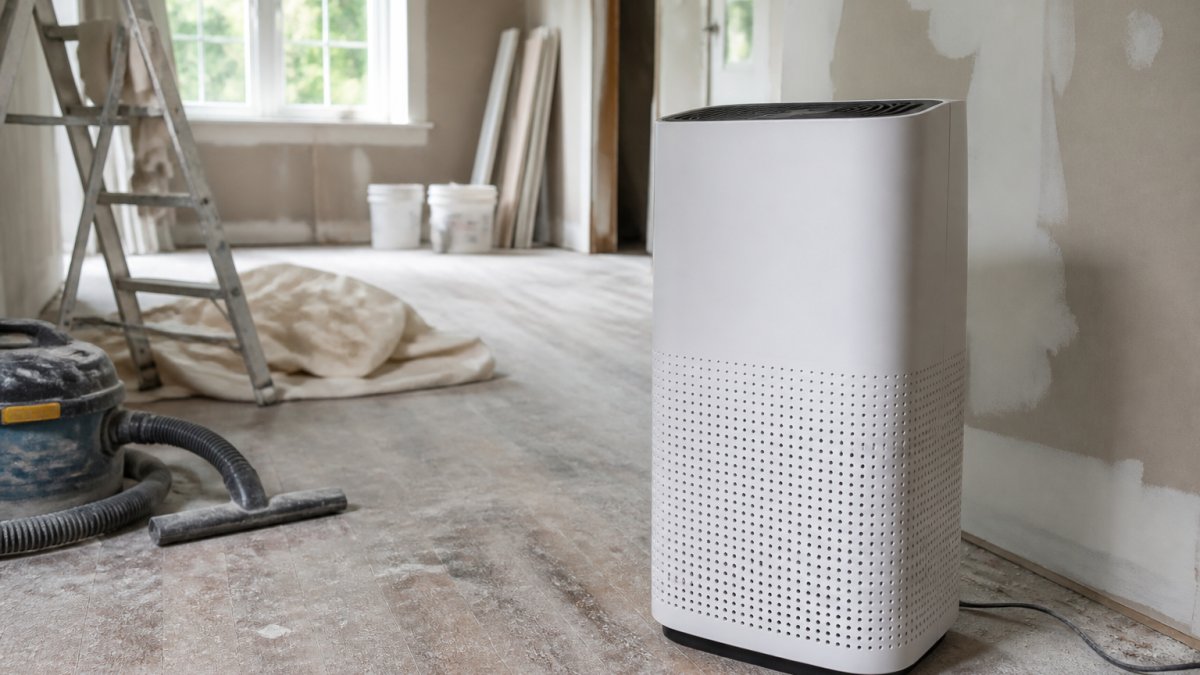
Home renovation projects create serious indoor air quality problems. Construction dust, drywall particles, and sawdust spread rapidly through your home, traveling through air vents and under doors into living spaces where your family breathes it daily.
The best air purifiers for home renovation dust become essential. A quality air purifier running continuously during your project captures particles before they settle into furniture and bedding, reducing cleanup time and protecting your family's respiratory health.
Construction projects also introduce volatile organic compounds from fresh paint, stains, and adhesives. You need a purifier engineered for these conditions, not a standard household model designed for pet dander and pollen.
How Construction Dust Affects Indoor Air Quality
Construction dust particles are far smaller than typical household dust. Drywall dust contains fine particles measuring just a few microns, small enough to lodge deep in your lungs (NIOSH hazard controls HC30 - control of drywall sanding dust exposures.). Sawdust, concrete cutting, and drywall sanding spread these contaminants throughout your home within minutes.
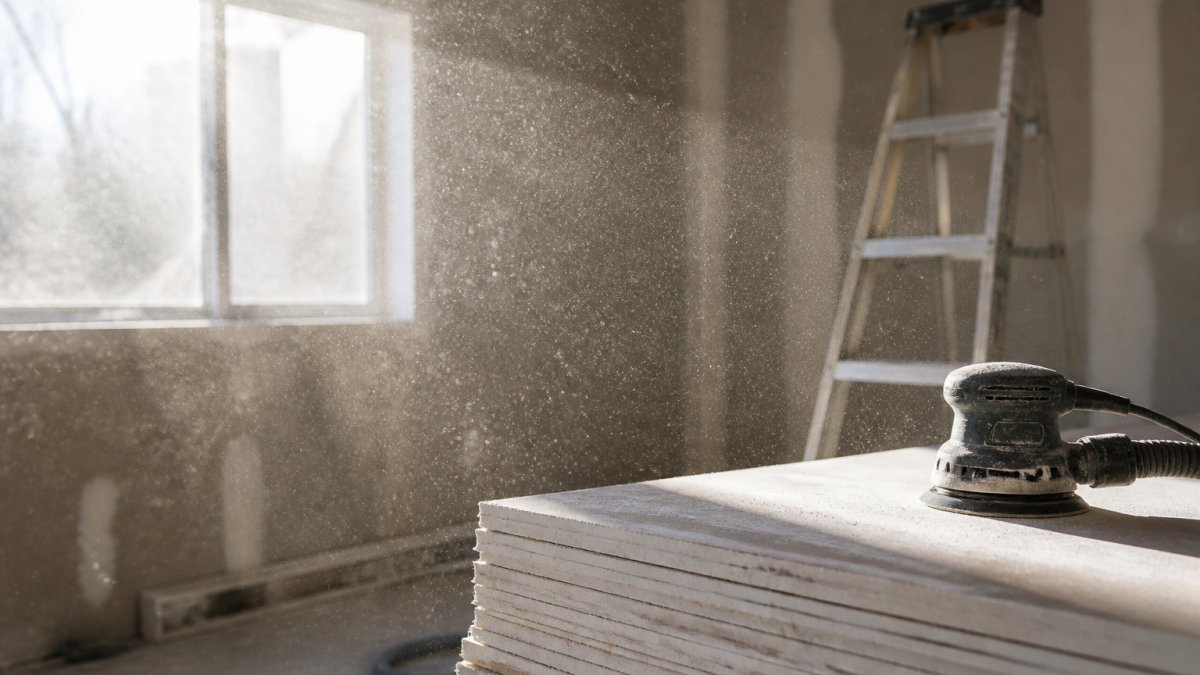
Dust accumulation in your HVAC system creates a serious problem. Standard ventilation wasn't designed for renovation dust volumes. Without proper filtration, dust clogs air returns and recirculates contamination back into living spaces.
Fresh paint releases volatile organic compounds that linger for days. Adhesives, sealants, and wood stains off-gas continuously. Combined with dust particles, these chemical vapors create indoor air quality worse than outdoor pollution. Families with children, elderly members, or anyone with asthma face health risks without proper air filtration.
Key Features to Look for in a Construction-Grade Air Purifier
Standard models lack the filtration capacity and airflow power needed during active construction. When shopping for the best air purifiers for home renovation dust, focus on these critical specifications.
HEPA Filtration vs. Standard Filtration
True HEPA filtration captures 99.97% of particles as small as 0.3 microns (the EPA). A HEPA filter with a pre-filter system (washable coarse filter) extends filter life significantly. Without a pre-filter, your main HEPA element clogs rapidly, forcing replacements every few weeks instead of every 3-6 months.
Activated carbon layers capture volatile organic compounds and chemical odors from paint, stains, and adhesives. A three-stage system handles both particulate matter and chemical off-gassing.
Understanding CADR and Air Changes Per Hour
CADR (Clean Air Delivery Rate) measures cubic feet per minute filtered. For renovation work, you need CADR high enough to process your room's entire air volume multiple times per hour. A 1,000-square-foot room requires CADR around 300+ for meaningful air changes per hour.
Air changes per hour (ACH) tells you how many times the unit cycles all air through filters each hour. During heavy construction, aim for 4-6 air changes per hour. Calculate by dividing CADR by room square footage. For a 400-square-foot zone, a CADR of 300 delivers approximately 4.5 air changes per hour.
How to Minimize Construction Dust in Your Home
While air purifiers capture airborne particles, preventing dust generation in the first place reduces the load on your filtration system. Smart dust suppression practices work alongside your purifier to keep your home more livable during renovation.
Seal the work zone with plastic sheeting and duct tape around doorways and vents. This containment prevents dust from traveling into adjacent rooms, reducing the dust your air purifier must handle.
Use water misting during cutting and sanding work. Lightly misting the surface suppresses dust generation at the source, reducing airborne dust by 50% or more.
Run your air purifier continuously during active work and for several hours afterward. Running on high speed during work hours, then medium speed for 4-6 hours after, balances noise and dust capture.
Air Scrubber vs. Air Purifier for Renovation Projects
The terms "air scrubber" and "air purifier" are often used interchangeably, but they address different problems. Understanding the distinction helps you choose the right tool for your renovation.
An air purifier draws air through filters passively. An air scrubber actively circulates air using a fan, forcing air through filters. Air scrubbers have higher CADR ratings and more aggressive airflow for heavy-duty construction.
For most home renovations, a portable air purifier with high CADR rating delivers sufficient performance. For major construction or multiple rooms simultaneously, an air scrubber's superior airflow becomes worthwhile, though it costs more and consumes more electricity.
The practical choice for best air purifiers for home renovation dust in residential settings is a high-capacity portable unit. Portable purifiers offer flexibility, are quieter than air scrubbers, cost less, and deliver excellent results when properly sized.
Top Air Purifiers for Renovation Dust
Budget-Friendly Options
Levoit Vital 200S, Best Value for Small Rooms
The Levoit Vital 200S delivers solid performance at an accessible price point. Its washable pre-filter can be rinsed weekly, extending HEPA filter life and reducing replacement costs during months-long projects.
The unit handles rooms up to 400 square feet, suitable for single-room renovations. Its quiet operation and smart sensor adjust fan speed automatically based on air quality, reducing energy consumption.
Limitation: The Vital 200S struggles in large, open-concept spaces or heavy demolition. The activated carbon filter is basic, adequate for light paint odors but not heavy chemical off-gassing.
Winix C909, Best Smart Features for the Price
The Winix C909 combines strong dust filtration with automated smart sensors. Its PlasmaWave technology targets airborne pollutants beyond particulate matter. The 360-degree air intake allows flexible positioning.
Auto-mode detects dust spikes from active work and automatically adjusts fan speed, keeping your home quieter during non-work hours while maintaining protection.
Limitation: Filter replacement costs accumulate with continuous use. The activated carbon layer is adequate but not heavy-duty for extensive chemical off-gassing.
Coway Airmega Mighty2, Best Compact Option
The Coway Airmega Mighty2 prioritizes space efficiency. Its compact footprint fits easily in work zones. The real-time air quality sensor shows how effectively your containment and dust suppression efforts are working.
This unit excels in smaller renovation areas like bathrooms or bedrooms. Its quiet operation maintains normalcy during construction.
Limitation: Not heavy-duty for major projects.
Mid-Range Performance
Levoit Core 400S-P, Best Balance of Power and Price
The Levoit Core 400S-P hits the sweet spot for most home renovations. It handles rooms up to 600 square feet with strong dust capture and smart sensor technology at mid-range pricing.
Honeywell HPA300, Best for High-Volume Dust Removal
Levoit Core 600S, Best for Large Open Spaces
Professional-Grade Solutions
Blueair Blue Signature Large, Top Performance for Demanding Projects
The Blueair Blue Signature Large represents the highest tier of residential air purification. Its HEPASilent technology delivers powerful air cleaning with quiet operation. Large filters extend replacement intervals, reducing costs during extended construction.
Coway Airmega 450, Best Professional-Grade Value
Coway Airmega 400S, Best for Large Homes
| Air Purifier | Starting Price | Best For | Key Advantage |
|---|---|---|---|
| Levoit Vital 200S | $189.99 | Small room renovations | Washable pre-filter saves money |
| Winix C909 | $219.99 | Smart dust adjustment | Auto-mode adapts to work schedule |
| Coway Airmega Mighty2 | $229.00 | Compact spaces | Space-efficient design |
| Honeywell HPA300 | $249.99 | Heavy-duty dust removal | High CADR, simple reliability |
| Levoit Core 400S-P | $219.99 | Medium-sized renovations | Balance of power and price |
| Levoit Core 600S | $299.99 | Large open spaces | High capacity for sprawling areas |
| Blueair Blue Signature Large | $599.99 | Demanding major projects | Top-tier performance and quiet operation |
| Coway Airmega 450 | $649.00 | Professional-grade needs | Consistent lab-tested results |
| Coway Airmega 400S | $749.00 | Large homes, multiple zones | Smart features plus capacity |
How Long to Run Your Air Purifier After Sanding
Most homeowners underestimate how long dust circulates after work stops. Fine particles remain suspended for hours, continuing to settle on surfaces and infiltrate your HVAC system.
Maintenance and Filter Replacement During Renovations
Static pressure increases as filters clog. Your purifier must work harder, consuming more electricity and generating more noise. If your unit becomes noticeably louder or runs continuously on high, check filters immediately.
Frequently Asked Questions
Do HEPA filters remove drywall dust?
Yes. HEPA filters capture 99.97% of particles 0.3 microns and larger, which includes drywall dust. During renovations, drywall generates fine particulate matter that standard filters miss. HEPA filtration is essential for construction-grade air purifiers because it traps the smallest dust particles that cause respiratory irritation. Look for models with true HEPA filters, not HEPA-type alternatives, to ensure effective drywall dust removal.
How long should I run an air purifier after sanding?
Run your air purifier for 2-4 hours after sanding stops, depending on room size and purifier capacity. Larger rooms and heavy sanding sessions require longer run times. Continue running the unit on a lower fan speed for several additional hours to capture settled dust that may become airborne again. If your purifier has an auto-mode with particle sensors, let it run until the air quality reading returns to normal baseline levels.
What is the difference between an air scrubber and an air purifier for renovation work?
Air scrubbers actively pull dust from the air and surrounding surfaces using high-velocity fans and sealed ductwork, making them ideal for containing dust at the source during active construction. Air purifiers filter ambient air in a room but don't prevent dust generation. For ongoing renovation work, air scrubbers work better; for managing dust after work stops, air purifiers maintain indoor air quality. Many contractors use both during major renovations.
Can construction dust make you sick?
Yes. Construction dust contains respiratory irritants and hazardous particles like silica, which can cause coughing, throat irritation, and long-term lung damage with repeated exposure. Fine particulate matter penetrates deep into airways and can trigger asthma or allergies. Drywall dust and wood particles also accumulate in sinuses and lungs. Using a HEPA air purifier and minimizing dust generation significantly reduces health risks during home renovations.