 listicle
5 Best Kitchen Lighting Trends for 2026
Table of Contents
- Kitchen Lighting Trends Taking Over in 2026
- 1. Layered Lighting with Smart Dimmer Control
- 2. Oversized Sculptural Fixtures as Statement Pieces
- 3. Warm Metal Finishes and Organic Materials
- 4. Backlit Stone and Architectural Integration
- Kitchen Lighting Design Best Practices for Your 2026 Renovation
- Understanding Kitchen Renovation Lighting Cost and Budget Strategies
- Frequently Asked Questions
Last Updated: September 18, 2026
Kitchen Lighting Trends Taking Over in 2026
Kitchen lighting has evolved far beyond simple overhead fixtures. Today's best kitchen lighting trends blend practical task illumination with design-forward aesthetics. At Handy Gonzo's Home Improvements, we've spent over three decades helping homeowners understand that lighting is the foundation of a kitchen that actually works.
Modern homeowners want flexibility: ambient illumination for entertaining, focused task lighting for cooking, and accent lighting that highlights architectural features. The 2026 trends emerging make that flexibility accessible without requiring a degree in electrical engineering.
1. Layered Lighting with Smart Dimmer Control
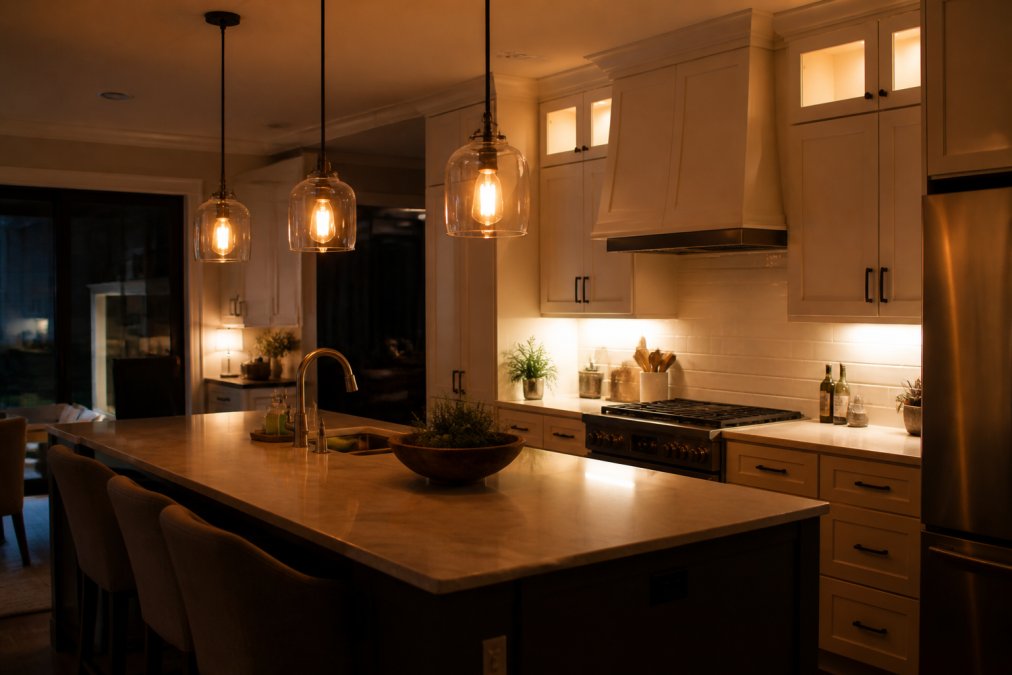
Layered lighting creates distinct zones: ambient illumination (overhead), task lighting (work surfaces), and accent lighting (architectural details). This approach eliminates shadows, reduces eye strain, and transforms the kitchen's mood depending on the time of day or activity.
Why Layered Lighting Matters
Most kitchens rely on a single overhead fixture, creating harsh shadows and institutional feel. Layered lighting solves this by distributing light across multiple sources and heights.
A typical setup includes recessed downlights for ambient light, pendants or under-cabinet LEDs for task lighting, and wall sconces for accent. Control each layer independently to adjust mood without rewiring.
Zone-Based Lighting Design: The Technical Framework
Effective layered lighting requires planning zones before installation. Most kitchens benefit from three distinct zones:
Ambient Zone (Overhead/General): Recessed downlights or flush-mount fixtures positioned 12-18 inches from the ceiling, spaced 4-6 feet apart depending on ceiling height. These provide baseline illumination without creating shadows. Aim for 30-50 foot-candles of ambient light across the entire kitchen.
Task Zone (Work Surfaces): Pendant fixtures suspended 30-36 inches above islands or peninsulas, or under-cabinet strips mounted 12-18 inches from the front edge of upper cabinets. Task lighting should deliver 75-100 foot-candles directly onto work surfaces. This is where precision matters, inadequate task lighting makes food prep difficult and creates eye strain during extended cooking.
Accent Zone (Architectural Features): Wall sconces flanking a range hood, strip lighting behind open shelving, or backlit stone backsplashes. Accent lighting operates at 10-20 foot-candles and serves primarily aesthetic purposes, though it contributes to overall ambiance.
Color Temperature Strategy and Circadian Alignment
Color temperature, measured in Kelvin (K), affects both functionality and circadian rhythms. Smart, adjustable systems reflect growing awareness of how light influences sleep and alertness.
Task Areas (4000-5000K): Cooler light enhances focus and color discrimination when chopping or reading recipes.
Ambient/Entertaining (2700-3000K): Warmer light promotes relaxation, flatters skin tones, and supports melatonin production for better sleep.
Transition Spaces (3000-4000K): Hallways and dining areas work best in neutral white, bridging task and ambient zones.
Smart dimmer systems allow color temperature shifts throughout the day without rewiring. A kitchen using 4500K during morning prep can automatically shift to 2700K by evening, supporting natural sleep-wake cycles. Smart dimmer systems allow color temperature shifts throughout the day without rewiring.
Smart Integration for 2026
Smart dimmer switches enable preset scenes: "dinner mode" dims pendants to 40% while keeping task lighting bright; "entertaining mode" sets everything to warm 60%. This aligns with circadian rhythm principles, helping your body recognize when to wind down.
Verify compatibility with existing fixtures, LED fixtures require LED-rated dimmers to avoid flickering. Verify compatibility with existing fixtures, LED fixtures require LED-rated dimmers to avoid flickering.
2. Oversized Sculptural Fixtures as Statement Pieces
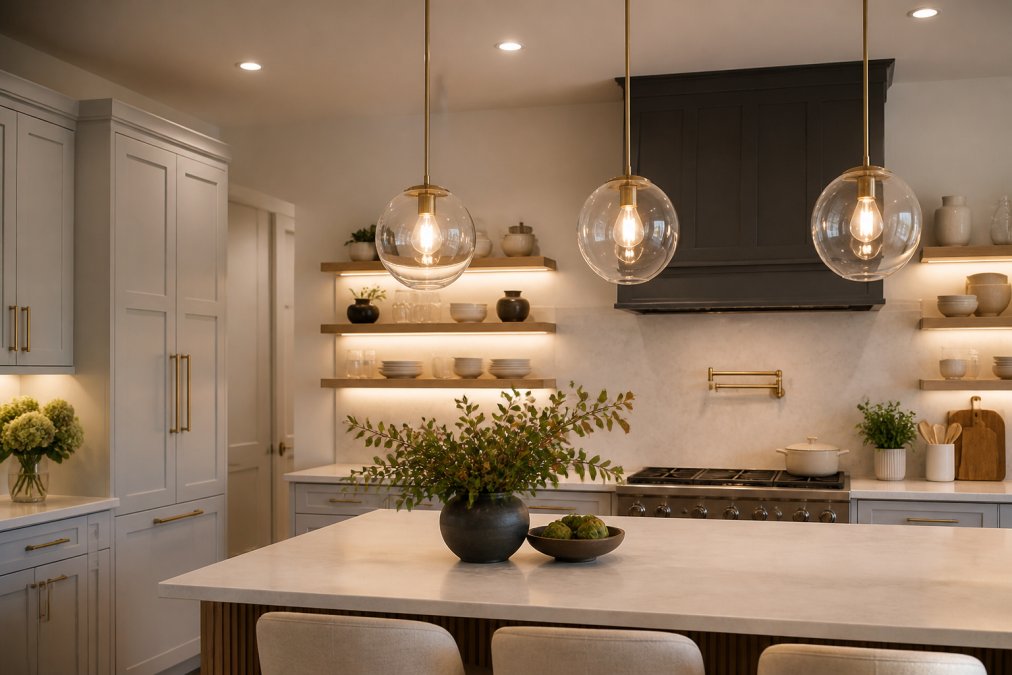
Kitchen islands are now focal points, and 2026 trends celebrate lighting as functional art. Oversized sculptural fixtures serve as conversation starters while delivering task lighting islands require.
Hand-Forged Metal and Artisanal Design
Oversized sculptural fixtures serve as conversation starters while delivering task lighting islands require.
| Fixture Type | Starting Price | Best For | Key Advantage |
|---|---|---|---|
| Hammerton Studio Sculptural Pendants | $1,200 | Luxury renovations | Hand-forged artisanal quality |
| Schoolhouse Electric Dome Pendants | $299 | Character-driven islands | Durable, accessible price point |
| Visual Comfort Alabaster Sconces | $450 | Accent lighting | Organic texture and soft glow |
3. Warm Metal Finishes and Organic Materials
Warm metals like brass, copper, and bronze age gracefully, developing patina that adds character. They pair naturally with stone, wood, and alabaster, creating grounded kitchens. Warm metals like brass, copper, and bronze age gracefully, developing patina that adds character. They pair naturally with stone, wood, and alabaster, creating grounded kitchens. Choose finishes that echo materials elsewhere in the space, brass with warm wood and marble, copper with granite or limestone.
4. Backlit Stone and Architectural Integration
Backlit stone transforms countertops and backsplashes into glowing architectural features. Backlit stone transforms countertops and backsplashes into glowing architectural features. Use warm white (2700-3000K) to complement stone tones. Handy Gonzo's Home Improvements ensures proper placement, electrical integration, and dimmer compatibility for maximum visual impact.
Kitchen Lighting Design Best Practices for Your 2026 Renovation
Effective kitchen lighting requires planning before installation begins. The best approach involves identifying functional zones, selecting appropriate fixture types for each zone, and integrating controls that allow flexibility.
Task Lighting and Under-Cabinet Solutions
LED under-cabinet strips are the standard for task lighting, mounting to cabinet undersides without glare. Position them toward the front edge to avoid shadows. For islands, combine top-mounted pendants with under-cabinet lighting to illuminate work surfaces from multiple angles.
Color Temperature and Visual Comfort
Cooler light (4000-5000K) enhances focus for cooking; warmer light (2700-3000K) creates intimacy for dining. Sophisticated designs use different temperatures in different zones. Smart dimmer systems make switching seamless, allowing your kitchen to adapt to its purpose.
Understanding Kitchen Renovation Lighting Cost and Budget Strategies
Lighting represents 5-10% of renovation budgets but has disproportionate impact. Modern islands serve as food prep, homework, and home office areas, requiring flexible lighting that adapts throughout the day.
Multi-Functional Island Lighting: Solving the Food Prep + Home Office Challenge
Modern kitchen islands are no longer purely cooking surfaces. Many homeowners use islands for meal prep, dining, homework, remote work, and craft projects. This functional diversity demands lighting that transitions between task-focused (bright, cool) and ambient (warm, relaxed) modes without requiring fixture changes.
Dual-layer island lighting combines overhead pendants with under-island or side-mounted accent lighting.
Budget-Friendly DIY Upgrades: Get the Look for Less
Strategic DIY replacements can deliver 70-80% of visual impact at 30-40% of the cost.
High-Impact, Low-Cost DIY Projects:
Projects Requiring Professional Help:
- Adding new circuits or outlets (requires licensed electrician)
- Installing recessed downlights (requires ceiling access and proper spacing)
- Backlit stone or architectural integration (requires planning during renovation)
- Hardwiring under-cabinet lighting without existing outlets (requires electrical work)
Where to Invest for Maximum Impact
Task lighting over islands and work surfaces deserves your primary investment. Inadequate task lighting creates a kitchen that's difficult to use, and upgrading later is expensive. Quality pendants, under-cabinet LEDs, and proper dimmer controls justify their cost through daily usability.
Budget Allocation Framework
Handy Gonzo's Home Improvements ensures your installation meets code, functions reliably, and delivers aesthetic results. Our transparent digital quoting breaks down materials, labor, and timeline. Whether tackling DIY upgrades or comprehensive renovation, identify functional zones, select appropriate fixtures, and integrate flexible controls.
Frequently Asked Questions
What are the main kitchen lighting trends for 2026?
The top kitchen lighting trends for 2026 center on layered lighting schemes combining ambient illumination, task lighting, and accent lighting. Oversized sculptural fixtures serve as statement pieces over islands, while warm metal finishes like brass and copper dominate. Smart dimmer integration allows homeowners to adjust color temperature and brightness, supporting both functionality and mood. Backlit stone and under-cabinet LED lighting continue to gain popularity for both aesthetic and practical reasons.
How do I layer kitchen lighting effectively?
Effective layered kitchen lighting uses three zones: ambient illumination from recessed downlights or flush-mount fixtures for overall brightness; task lighting via under-cabinet strips and focused pendant rows over work areas; and accent lighting through wall sconces or backlit architectural features. Install dimmer switches or smart controls to adjust each layer independently. This approach creates visual comfort while allowing you to adapt lighting for cooking, dining, or entertaining. Start with ambient as your base, then add task and accent layers where needed.
What lighting styles should I avoid in 2026 kitchen renovations?
Avoid overly bright, flat fluorescent lighting that lacks warmth or dimension. Single-source overhead lighting without layering is outdated. Mismatched metal finishes create visual chaos; stick to one or two coordinated metals like brass or copper. Avoid undersized fixtures that look lost over large islands. Steer clear of cold color temperatures (above 4000K) in main living areas, as they feel institutional. Lastly, avoid fixtures without dimming capability, as fixed brightness limits flexibility for different activities and times of day.
How much does kitchen lighting typically cost in a renovation?
Kitchen lighting costs vary based on fixture type and scope. Basic LED under-cabinet strips, sculptural pendant fixtures, and smart dimmer switches are all options. A complete layered lighting system for an average kitchen typically requires multiple fixtures and controls, so total investment depends on your choices and existing electrical infrastructure. For accurate pricing tailored to your project, request a free estimate from a professional contractor who can assess your specific layout and goals.
Are warm metals still popular for kitchen lighting in 2026?
Yes, warm metal finishes remain a dominant trend in 2026. Brass, copper, and bronze finishes provide warmth and sophistication that complements modern and traditional kitchens alike. These metals work particularly well with natural stone countertops and create visual interest when paired with sculptural or oversized fixtures. Warm metals pair beautifully with diffused light sources and organic materials like alabaster, making them ideal for achieving the layered, textured aesthetic that defines 2026 kitchen design.