 ultimate-guide
Questions to Ask Before Kitchen Remodeling in 2026
Table of Contents
- How to Set Project Goals Before Kitchen Remodeling
- What Should Be in Your Kitchen Remodel Budget Breakdown?
- How Long Does a Kitchen Renovation Timeline Take?
- Permitting and Structural Requirements to Ask About
- Hiring a Kitchen Remodeling Contractor: Key Questions
- Design Choices: Cabinetry, Countertops, Flooring, and Lighting
- Common Mistakes to Avoid During Kitchen Remodeling
- Frequently Asked Questions
Last Updated: September 24, 2026
How to Set Project Goals Before Kitchen Remodeling
The most important questions to ask before kitchen remodeling are the ones that define what "done" means to you. At Handy Gonzo's Home Improvements, we've spent more than three and a half decades watching projects succeed or stall based on how clearly the homeowner answered one question: what is this kitchen supposed to do for you?
Assessing Your Current Kitchen's Functionality
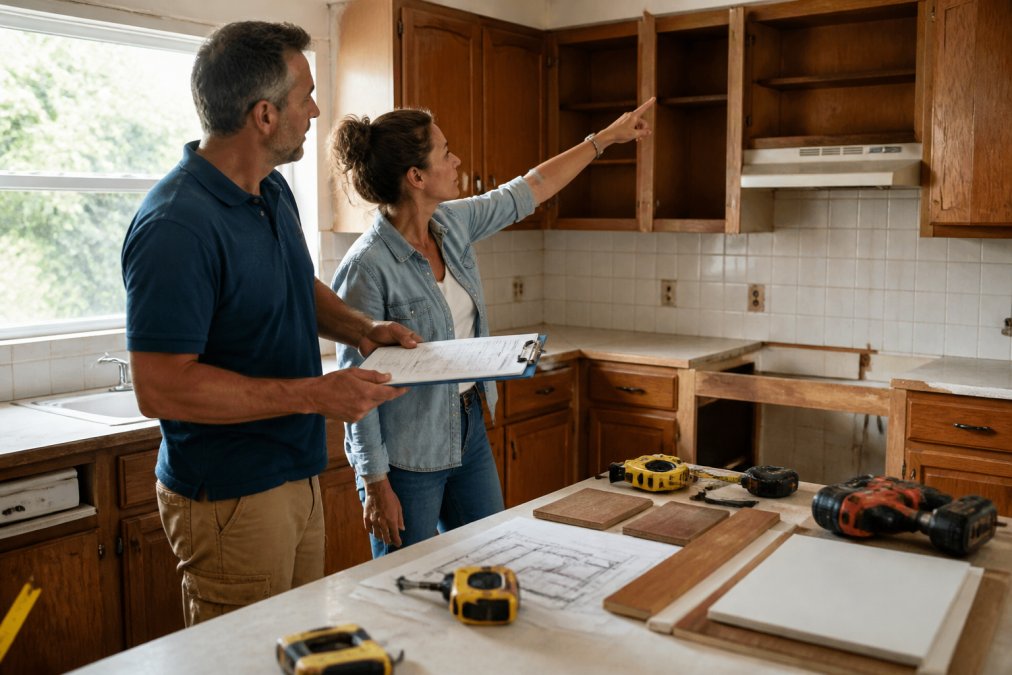
Walk through your kitchen at peak usage, after grocery shopping or during a holiday meal, and note where people collide: a refrigerator door blocking a walkway, a dishwasher that forces you to stand sideways, counter space that vanishes when two people cook. The common mistake is measuring the room and not the workflow: how far you carry a hot pot from stove to sink, how many steps it takes to unload groceries.
Resale Value vs. Personal Enjoyment
A kitchen renovation can pay back a meaningful share of its cost at resale, but the payback depends on how closely your choices match what buyers in your area expect. The bold tile you love may narrow your buyer pool; the safest palette may leave you underwhelmed.
What Should Be in Your Kitchen Remodel Budget Breakdown?
A kitchen remodel budget breakdown should separate hard costs (materials and labor), soft costs (design fees, permits, inspections), and contingency, lumping them together is how projects run out of money.
| Budget Category | Typical Share | What It Covers |
|---|---|---|
| Cabinetry and hardware | Largest single line | Boxes, doors, drawer slides, pulls |
| Labor and installation | Second largest | Demolition, trades, finish work |
| Countertops and backsplash | Mid-range | Fabrication, templating, install |
| Appliances and fixtures | Varies widely | Range, hood, sink, faucet |
| Contingency fund | Reserve | Hidden damage, change orders |
The 30% Rule and Contingency Fund
Set aside a contingency fund and treat it as untouchable until the project closes out. Older homes hide surprises: water damage under a sink, aluminum wiring, an unlevel floor. When a contractor opens a wall and finds rot, you either have the reserve or you start cutting scope mid-project.
Which Upgrades Actually Pay Back at Resale
Sort every upgrade into one of three buckets before you commit.
Where the Money Actually Goes Wrong
The three most common budget failures: ordering cabinets before the layout is final (reorders and restocking fees), choosing appliances after cabinetry is built (forcing a compromise on the range or refrigerator you wanted), and treating contingency as a slush fund for upgrades. Each is a decision-sequencing problem, preventable with a written plan before demolition.
How Long Does a Kitchen Renovation Timeline Take?
A kitchen renovation timeline runs several weeks to a few months for a full gut remodel, with stretches spent waiting on cabinetry and countertop fabrication. It depends on three variables: scope of structural changes, material lead times, and how quickly decisions get made.
The sequence usually follows this order:
- Design and material selection
- Permits and inspections
- Demolition and disposal
- Rough plumbing and electrical
- Drywall, paint, and flooring
- Cabinet and countertop installation
- Appliance integration and final punch list
Temporary Kitchen Solutions During Construction
Set up a temporary kitchen before demolition starts, not after. A folding table, microwave, coffee maker, and cooler in the dining room or garage will carry most families through. Keep one sink accessible if the plumbing schedule allows, and stock paper plates so you aren't washing dishes in a bathroom.
Permitting and Structural Requirements to Ask About
Ask your contractor which permits your project requires and who is pulling them, because unpermitted work creates problems at resale and during inspection. Most jurisdictions require permits for electrical, plumbing, and structural changes. Removing a wall raises the question of whether it's load-bearing.
Electrical, Plumbing, and Ventilation Upgrades
Older kitchens rarely have enough circuits for modern appliances; a dedicated circuit for a microwave or induction range is standard practice, not an upgrade. Evaluate plumbing for supply line condition and drain capacity, especially if you're moving the sink. Ventilation matters more than most homeowners expect: an outdoor-venting range hood removes moisture and cooking residue that otherwise coats your new cabinets.
Hiring a Kitchen Remodeling Contractor: Key Questions
Hiring a kitchen remodeling contractor comes down to verifying three things: licensing and insurance, a clear written scope, and a crew you'll actually see on your job. Confirm the license number, request a certificate of insurance, and ask whether the same crew will be on site from demolition through punch list.
The questions worth asking before you sign anything:
- Who is my point of contact, and how often will I hear from them?
- What's included in the quote, and what's explicitly excluded?
- How are change orders priced and approved?
- Can I call recent references, and can I see photos of work from the last year or two?
- What happens if the project runs over schedule?
What to Look for in a Kitchen Remodeling Contract
A solid kitchen remodeling contract names the scope, materials by brand and model where possible, payment schedule, start and completion dates, and the change process. It should also state who pulls permits, who handles cleanup, and how disputes get resolved. Never sign a contract with blank line items or vague language like "standard cabinetry."
Design Choices: Cabinetry, Countertops, Flooring, and Lighting
Design choices should follow function. Before you pick a finish, answer three questions: what do you store, how do you cook, and how much maintenance are you willing to do? The right choice matches your habits, not a photo you saved.
Cabinetry: Storage You Can Actually Reach
Cabinetry determines how much you can store and how easily you can reach it. Prioritize drawer banks over deep base cabinets, a 24-inch-deep base with a single shelf is where Tupperware goes to die, while a stack of drawers at the same footprint holds twice the usable volume.
Countertops: Durability vs. Maintenance
Countertop materials trade off durability, maintenance, and appearance, and the honest answer is that there is no material that wins on all three.
- Quartz (engineered stone) resists staining, needs no sealing, and comes in consistent slabs, but it can be damaged by sustained high heat, so you still need trivets.
- Natural stone (granite, marble, soapstone) offers unique character and, for granite and soapstone, good heat tolerance, but marble etches from acids like lemon and vinegar, and most natural stone needs periodic sealing.
- Solid surface (acrylic-based) is seamless and repairable, which is a real advantage in a busy kitchen, but it scratches and can scorch.
- Butcher block is warm, affordable, and knife-friendly, but requires regular oiling and is vulnerable to standing water around the sink.
- Laminate has improved dramatically and is the budget-friendly choice, but it can't be repaired invisibly and seams show.
Flooring: Moisture, Traffic, and the Sink Zone
Flooring should account for moisture and traffic. Tile handles spills but grout lines need sealing and can stain. Hardwood brings warmth and can be refinished, but needs protection near the sink and dishwasher, where slow leaks go unnoticed. Luxury vinyl plank is water-resistant, comfortable underfoot, and the most forgiving option for kids or pets.
Lighting: Layer It or Live in the Dark
A single ceiling fixture can be a design failure in a kitchen: it lights the floor and can leave the counters in shadow. Layer three types: ambient ceiling light, task lighting under cabinets and over the sink and range, and accent lighting for depth at night. Put under-cabinet task lights on a separate switch so you can run them alone in the evening.
Sustainable and Eco-Friendly Material Choices
A growing share of homeowners ask about sustainable options, and some carry longer lead times that affect your schedule. Raise these with your contractor early:
- Low-VOC and zero-VOC paints, caulks, and adhesives for cabinets, walls, and trim, these reduce the off-gassing that lingers for weeks after a paint job.
- Formaldehyde-free cabinetry and plywood, which matters most in a room where you store and prepare food.
- Recycled or rapidly renewable countertop options, including some paper-composite and recycled-glass surfaces.
- FSC-certified wood flooring and cabinetry, which verifies the wood came from responsibly managed forests.
- Reclaimed or salvaged materials, old-growth beams, brick, or barnwood, for accent surfaces, though supply is unpredictable.
- Energy-efficient appliances and LED lighting, which reduce long-term operating cost alongside the environmental footprint.
Finishes: Pick Two or Three and Repeat
Finish selection, from cabinet hardware to backsplash, is where a coherent aesthetic comes together or falls apart. Pick two or three finishes, a warm metal for hardware and faucet, a neutral backsplash, one accent, and repeat them throughout. A kitchen with five metals and three tile patterns reads as busy, not curated.
Common Mistakes to Avoid During Kitchen Remodeling
Planning errors can be expensive mistakes in kitchen remodeling. Changing the layout after cabinets are ordered, choosing appliances after cabinetry is built, and skipping the contingency fund can all cost more than any single material upgrade.
| Mistake | The Fix | Why It Matters |
|---|---|---|
| Changing layout after ordering cabinets | Finalize the floor plan first | Reorders add weeks and cost |
| No contingency fund | Reserve roughly 30% | Hidden damage stalls the project |
| Hiring on price alone | Compare full written scopes | Cheap bids hide exclusions |
| Skipping a temporary kitchen plan | Set one up before demo | Keeps the home livable |
Frequently Asked Questions
What is the 30% rule for renovations?
The 30% rule suggests keeping your total housing costs, including your mortgage, taxes, insurance, and renovation loan payments, within a manageable percentage of your gross monthly income. For a kitchen remodeling budget, this helps you avoid overextending. If your combined housing costs would exceed that threshold after financing the project, you may need to scale back the scope or save more before starting.
What are common mistakes to avoid during a kitchen renovation?
The most frequent mistakes include skipping a contingency fund, choosing materials before finalizing the layout, and hiring a contractor without checking recent references. Homeowners also underestimate the kitchen renovation timeline and fail to plan temporary cooking arrangements. Another common error is making structural changes without confirming permits. Addressing these questions before kitchen remodeling begins saves money and stress.
In what order should a kitchen remodel be done?
Demolition comes first, followed by structural work, then rough plumbing and electrical upgrades. After inspections, insulation and drywall go in. Next comes cabinetry and countertop installation, then backsplash, flooring, and finally plumbing fixture and appliance hookups. Painting and cabinet hardware complete the job. Knowing this sequence helps you ask your contractor about scheduling and avoid delays.
What should be included in a kitchen remodeling contract?
A solid contract lists the full scope of work, material specifications, the kitchen renovation timeline with milestones, payment schedule, and change order procedures. It should also cover the contingency fund, permit responsibilities, and cleanup expectations. Ask about penalties for schedule overruns and how the contractor handles unforeseen structural issues. Get everything in writing before signing.